The global events industry is under increasing pressure to deliver sustainability that is credible, measurable and practical. While many organisers focus on reducing carbon footprints and improving reporting standards, one persistent challenge continues to demand attention: the vast volume of materials created for short-term use at events.
From large-scale signage and custom staging to furniture, plants and branded installations, events generate substantial physical assets. Yet once the show is over, many of these materials are discarded- not because they lack value, but because there is no structured system in place to manage them responsibly. The result is unnecessary landfill waste, avoidable carbon emissions and missed opportunities to create social impact within host communities.
Transforming Event Waste into Community Assets
Founded to address this gap, Event Cycle operates as a specialist resource management partner for events, live productions and temporary projects. The organisation challenges the traditional “build and dispose” model by helping clients reframe event materials as valuable assets rather than waste.
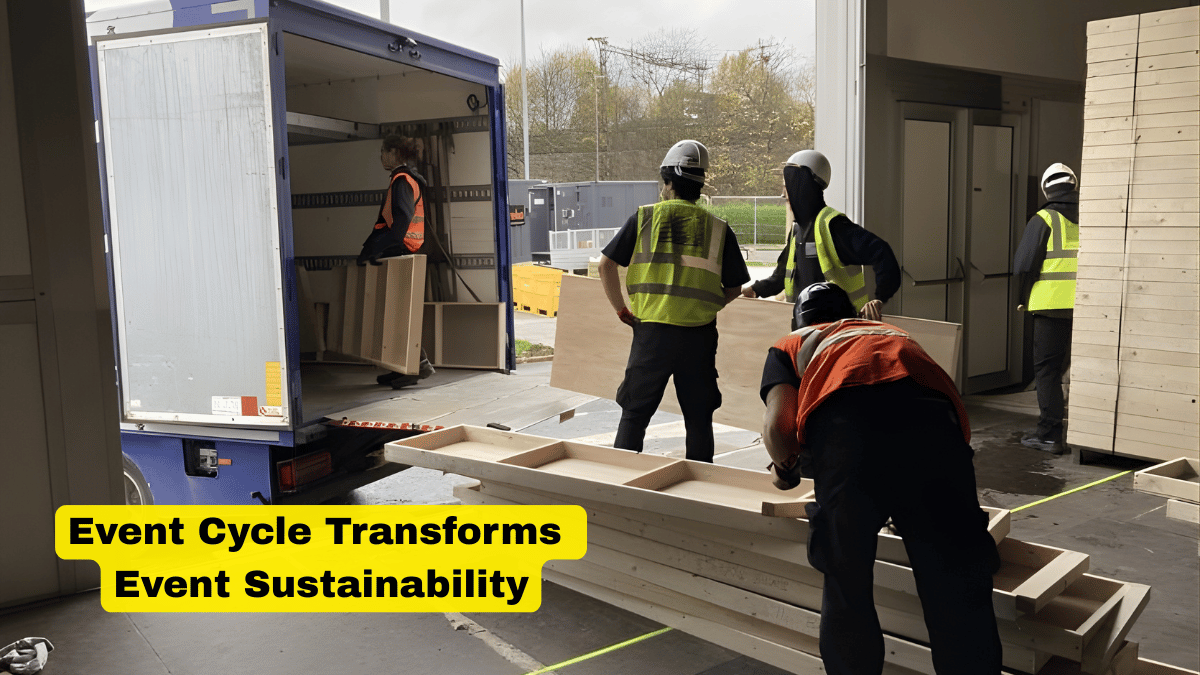
At the heart of its approach is a service known as Asset Dissolution. Instead of dismantling and discarding items post-event, Event Cycle identifies reusable materials and redistributes them to charities, schools, community groups and social enterprises. This model extends the lifecycle of event assets and ensures they continue to deliver value long after the final delegate has left the venue.
Measurable Social and Environmental Impact
Sustainability in events increasingly requires more than good intentions—it demands data-driven outcomes. Over the past five years, Event Cycle has generated more than £3.2 million in social value through the redistribution of donated materials. In that time, the organisation has supported 1,163 charities and community organisations, helping transform surplus event assets into meaningful community resources.
The environmental impact is equally significant. By diverting materials from landfill, Event Cycle has prevented 247 tonnes of CO2e emissions. Additionally, by reducing the need for new products to be manufactured, a further 1,085 tonnes of CO2e have been avoided. These figures demonstrate how smarter resource management strategies can materially reduce the carbon footprint of events while delivering tangible social benefit.
Sustainability Begins at the Planning Stage
One of the most effective ways to reduce event waste is to start early. Event Cycle works with organisers during the planning and procurement stages to identify which materials can be reused, repurposed or redistributed before installation even begins.
By advising on supplier engagement, material choices and design decisions, the organisation ensures sustainability is embedded into the event lifecycle from concept to breakdown. This proactive approach not only reduces waste and carbon emissions but can also lower costs and enhance brand reputation-without compromising creative ambition or operational efficiency.
Long-Term Partnerships Driving Change
The value of structured resource management is best demonstrated through long-term collaboration. Through its ongoing partnership with the Institute of Travel Management (ITM), Event Cycle has helped evolve the ITM Conference into a model for sustainable event delivery.
Across multiple host cities, event materials have been locally created and then repurposed within those same communities. Standard networking sessions have been reimagined into community-focused delegate activities, enabling attendees to directly contribute to local causes. This integrated approach shows how conventional event elements can be redesigned to generate broader social and environmental value.
A Shift Towards Circular Event Design
As the events sector accelerates its sustainability journey, circular economy principles are becoming increasingly important. Treating materials as assets rather than waste supports both environmental responsibility and community engagement, while aligning with corporate ESG objectives.
With measurable outcomes, established redistribution networks and a clear operational framework, Event Cycle is positioning itself at the forefront of sustainable event resource management. Its model demonstrates that responsible material management is not only achievable- but commercially viable and socially impactful.
In an industry defined by temporary experiences, Event Cycle is proving that the legacy of an event does not have to end when the lights go down.