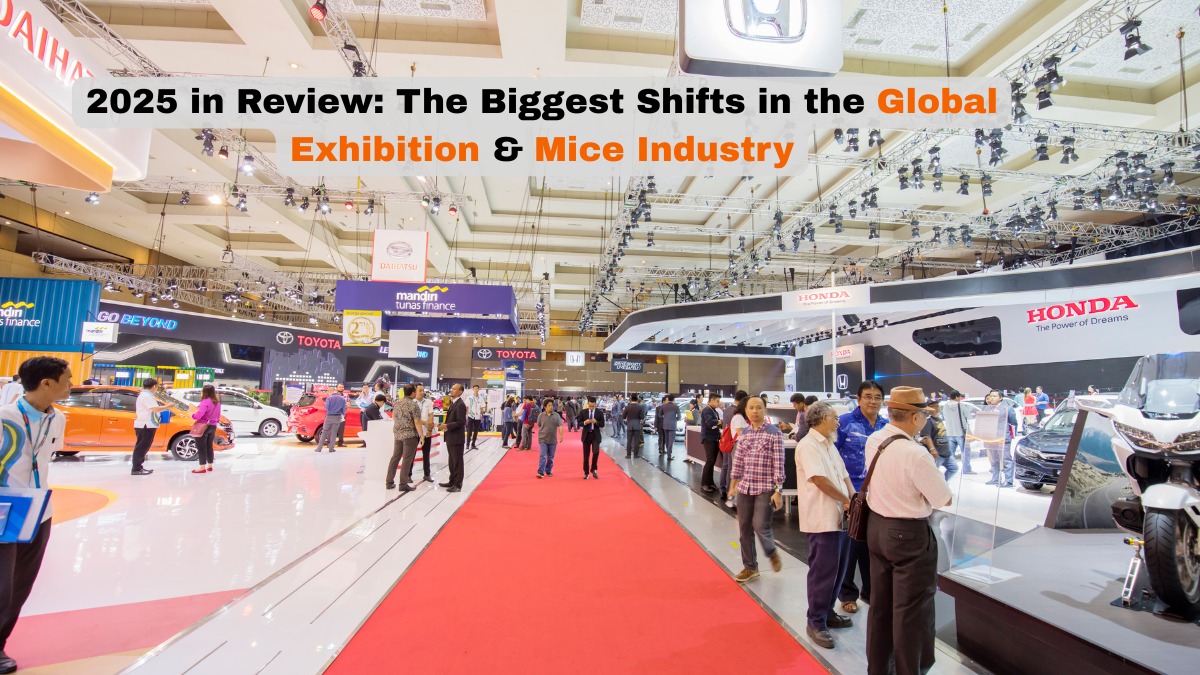
2025 in Review: The Biggest Shifts in the Global Exhibition & Mice Industry
INTRODUCTION: 2025—THE YEAR THAT RESET THE GLOBAL EVENTS INDUSTRY
If 2023–24 were years of recovery and experimentation, 2025 was the year the global exhibition and MICE industry finally stabilized, scaled, and surged. Footfalls returned
to pre-pandemic levels, corporate budgets opened up, and global organisers adopted technology and sustainability faster than ever before.
From Dubai’s Expo City to Singapore’s Marina Bay Sands, from Chicago’s McCormick Place to India’s Pragati Maidan—2025 marked the official transition from “traditional exhibitions” to “intelligent trade platforms.” Here are the biggest shifts that defined the industry this year.
1. EXHIBITIONS REGAINED FULL GLOBAL MOMENTUM
By mid-2025, global exhibitions achieved:
- 96–110% of pre-pandemic footfall
- 30–45% rise in exhibitor spending
- 20% higher international participation
The world returned to on-ground business strongly led by:
- Manufacturing
- Food & beverages
- Packaging
- Automotive & EV
- Pharma & medical
- Construction & real estate
- Technology & innovation sectors
2. AI BECAME THE MOST
DISRUPTIVE FORCE IN THE
INDUSTRY
2025 will be remembered as the year the exhibition industry embraced AI—not as a feature but as infrastructure.
a. AI Matchmaking Became Universal Matchmaking platforms now:
- Suggest business opportunities
- Auto-schedule meetings
- Predict which exhibitors a visitor is likely to buy from
- Reduce irrelevant footfall
- Exhibitors reported 25–30% improved lead quality.
b. AI-Generated Booth Content A breakthrough:
Brands began using AI to create:
- Instant brochures
- Product explainers
- Multilingual scripts
- Booth visitor responses
This cut content creation costs by 50–70%.
c. Smart Navigation & Heatmaps Organisers
deployed smart systems to map:
- Visitor movement
- Crowd hotspots
- Booth performance
- Session popularity
Data became the new backbone of exhibition planning.
3. ORGANISERS SHIFTED FROM “EVENT MANAGEMENT” TO “BUSINESS ORCHESTRATION”
2025 changed how organisers see their role. Instead of simply managing logistics, organisers became:
- Business catalysts
- Trade enablers
- Platform creators
- Innovation drivers
a. Conferences became “knowledge marketplaces”
Panels turned into workshops. Workshops turned into micro-learning modules. Attendees paid for value, not just entry.
b. Exhibitions Connected With Year-Round Digital Communities Platforms offered:
- Webinars
- Monthly buyer–seller meet-ups
- Supplier directories
- On-demand product demos
- AI-curated content
This converted exhibitions into 365-day business ecosystems.
4. CROSS-BORDER PAVILIONS EXPLODED IN SCALE
2025 saw a record-high presence of country pavilions:
- Japan
- South Korea
- UAE
- India
- Germany
- Italy
- Turkey
- Singapore
Why the surge?
Because countries realized exhibitions are the fastest way to:
- Attract buyers
- Boost exports
- Promote national brands
- Support MSMEs
- Build diplomatic ties
Trade diplomacy became a major feature of global exhibitions.
Hybrid events peaked in 2021–23. But 2025 proved something: People preferphysical events—but smarter, more immersive ones.
a.Mixed Reality Demos Rise
MR headsets enabled:
- 3D product experiences
- Virtual walkthroughs
- On-the-spot customization
b.Multi-Sensory Booths Took Center Stage Booths used:
- Sound
- Scent
- Touch-responsive displays
- LED storytelling walls
Visitor dwell time increased dramatically across major expos.
c.Gamification Became a Lead Magnet Brands used:
- AR challenges
- Quiz tournaments
- Interactive screens
- Digital passports
This made exhibitions more engaging for younger buyers.
5. USTAINABILITY BECAME A MUST-HAVE, NOT A NICE-TOHAVE
2025 marked the global enforcement of sustainability models
a.Eco-Friendly Booth Norms Organisers required:
- Reusable structures
- Eco-printing
- Recycled flooring
b.Zero-Waste Mandates Venues introduced:
- Central recycling hubs
- Digital brochures
- Carbon tracking dashboards
c.Green Certifications Became Marketing Tools Sustainable exhibitors gained:
- Premium locations
- Global recognition
- Government incentives in Europe, UAE & Singapore.
2025 forced the industry into a green transformation that will intensify in 2026
6. EXHIBITIONS BECAME CRITICAL FOR SME & STARTUP GROWTH
Startups and MSMEs made a historic comeback.
Key Drivers:
- Industry buyers looking for fresh suppliers
- Government support schemes
- Global marketplaces seeking innovation
- Low-cost marketing via exhibitions
Exhibition-led deals rose across food, agri-tech, packaging, EV, fintech, and D2C segments.
7. THE ULTIMATE SHIFT: DATADRIVEN DECISION MAKING
Exhibitors and organisers in 2025 no longer relied on guesswork.
This changed budgeting, booth design, and marketing strategies forever.
In 2025, a trade show isn’t judged by how many booths it has — but by how deeply each attendee feels seen, heard and catered to.
CONCLUSION: 2025 LAID THE FOUNDATION FOR A NEW GLOBAL EXHIBITION ECONOMY
2025 was not just a recovery year—it was a turning point.
It set the stage for:
- AI-dominated exhibitions
- Sustainability-led experiences
- Immersive product storytelling
- Intelligent scheduling
- Cross-border trade acceleration
- Data-backed business outcomes
2026 will now build on this explosive momentum. The future of exhibitions is bigger, smarter, greener, and more globally interconnected than ever before.