3. AI BOOTH ASSISTANTS WILL BECOME STANDARD ACROSS GLOBAL EXHIBITIONS
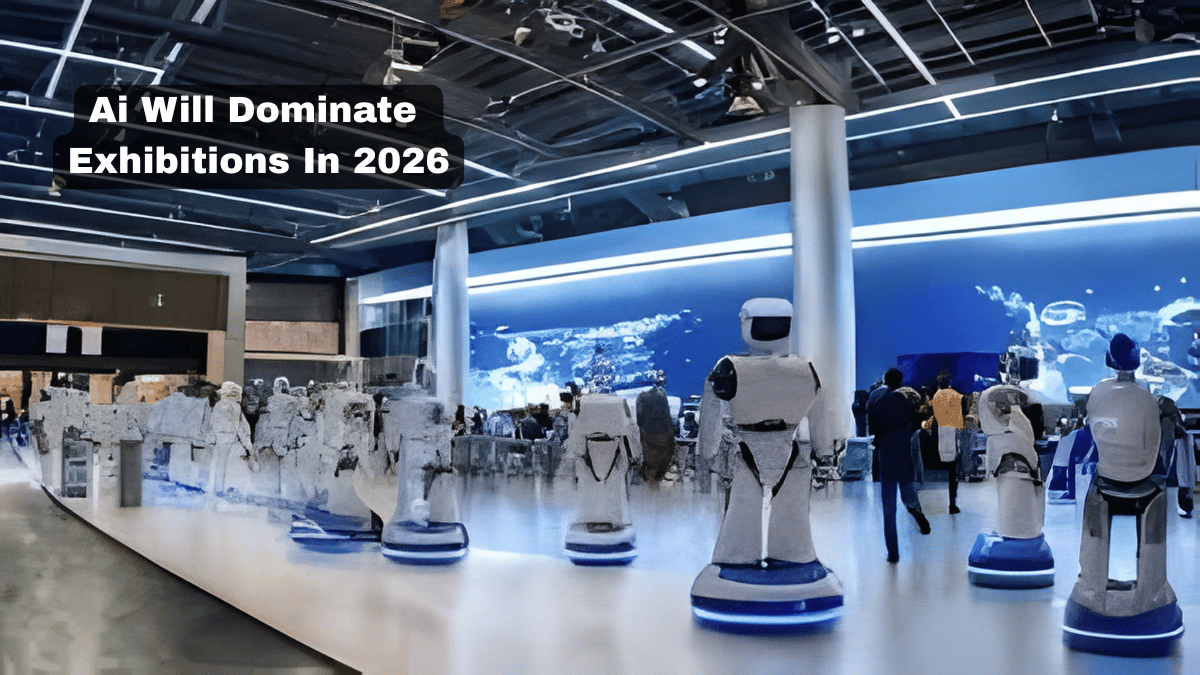
By 2026, AI booth assistants—deployed through interactive touchscreens, holographic displays, and voice-based agents—will become a common sight across major exhibitions. These assistants will explain product features, answer technical questions, demonstrate comparisons, showcase videos, pull up catalogues, and conduct live translations in multiple languages.
This will be especially valuable for exhibitors facing manpower shortages or dealing with large visitor flows. AI assistants will also collect visitor data, sync it with CRM systems, and help in lead qualification. By automating repetitive tasks, booth staff will be able to focus on high-value conversations, making AI an essential productivity driver.
4. AI-ENABLED SMART VENUES WILL ORCHESTRATE THE FLOW OF MILLIONS
Major venues in UAE, Singapore, Europe, China, and the U.S. are integrating AI systems to manage crowd density, adjust climate control, optimise security, and improve hall navigation. AI-powered cameras and IoT sensors will map visitor movement across the venue, identifying hotspots, managing queues, and ensuring comfortable spacing.

Organisers will receive real-time heatmaps showing booth performance, hall density, and session turnout. In emergencies, AI will guide visitors to the safest exits and activate coordinated responses in seconds. This intelligent venue infrastructure will reduce congestion, enhance safety, and make large-scale exhibitions smoother and more efficient.
5. AI-GENERATED MARKETING & CONTENT WORKFLOWS WILL BOOST EXHIBITOR PRODUCTIVITY
In 2026, AI will reshape exhibitor marketing by automating content creation across brochures, product sheets, social media posts, booth presentations, catalogue descriptions, and promo videos. Exhibitors will input product details once, and AI systems will generate marketing collaterals personalised to target buyers.
This will reduce branding costs, speed up campaign execution, and ensure consistent messaging. AI-generated booth content will include voiceovers, holographic demos, interactive guides, and dynamic product comparisons. Exhibitors will rely on AI not only for content creation but also for real-time booth analytics, lead scoring, and post-event follow-up sequences making the marketing process fully intelligent.
6. PREDICTIVE SALES ANALYTICS WILL CHANGE HOW EXHIBITOR ROI IS CALCULATED
AI will allow exhibitors to forecast sales outcomes based on visitor engagement data, pre-event registrations, historical behaviour, and industry trends. Predictive analytics will show exhibitors:
- Which visitors are likely to convert
- Which products will attract maximum interest
- Which pavilions will deliver highest footfall
- What time slots are best for product demos
which geographies will bring high-value buyers For the first time, exhibitors will have datadriven ROI visibility even before the event begins. Organisers will use this intelligence to position booths strategically, balance visitor flow, and create “high-opportunity zones” inside halls. Predictive analytics will become the most powerful tool for exhibitors seeking measurable outcomes.
7. AI WILL TRANSFORM POSTEVENT EXPERIENCE & FOLLOWUP EFFICIENCY
Post-event follow-up is traditionally one of the weakest points of the exhibition journey. AI will revolutionise this. Leads captured during the event will be automatically analysed and categorised. Follow-up sequences will be auto -generated, personalised, and routed to the right sales teams. AI will evaluate lead potential, draft email sequences, create post-event reports, and track follow-up engagement. Instead of manually sorting hundreds of leads, exhibitors will receive ready-to-execute sales pipelines within hours of the event ending. This will drastically improve conversion rates and shorten deal cycles.
8. AI-DRIVEN SUSTAINABILITY SOLUTIONS WILL BECOME MANDATORY FOR GLOBAL EVENTS
As global regulators enforce stricter sustainability mandates, AI will play a major role in tracking environmental impact. Systems will measure energy usage, water consumption, booth construction waste, digital vs physical material usage, and carbon footprint. AI dashboards will auto-generate sustainability reports for organisers, exhibitors, and government authorities. Smart material recommendations, modular booth guidelines, and waste optimisation algorithms will help exhibitions become greener. Sustainability, once a marketing add-on, will become a datadriven operational requirement.
CONCLUSION: AI IS NOT THE FUTURE OF EXHIBITIONS—IT IS THE PRESENT, AND IT IS UNSTOPPABLE
The integration of AI into the exhibition industry marks the beginning of a
transformative decade. AI will enhance every stakeholder experience—from visitors discovering relevant exhibitors to exhibitors optimising their sales strategy and organisers orchestrating complex events. By 2026, the world’s top exhibitions will function as intelligent ecosystems powered by predictive engines, real-time analytics, digital personalisation, and automated operations. AI will not replace human interaction—it will elevate it, making exhibitions more meaningful, efficient, and globally impactful. The next chapter of the exhibition world will be written by those who embrace AI first, fast, and fearlessly.