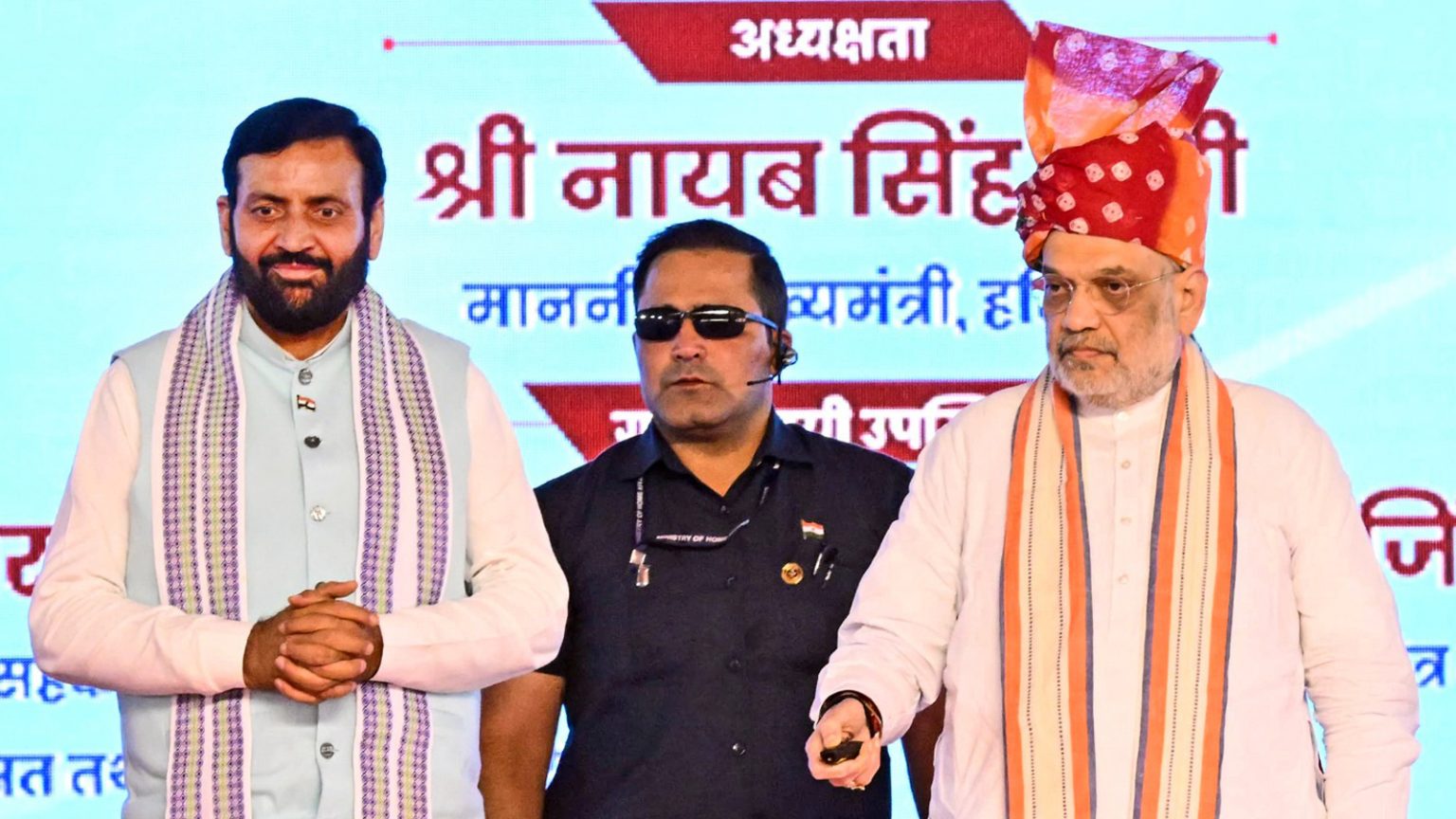
Union Home Minister Amit Shah inaugurated an insightful exhibition on new criminal laws in Kurukshetra, Haryana, reaffirming the government’s commitment to creating a transparent, efficient, and citizen-centric justice system. Alongside the exhibition, Shah also dedicated and inaugurated development projects worth ₹900 crore, marking a major milestone in Haryana’s growth and modernization journey.
The event, organized by the Ministry of Home Affairs in collaboration with the Haryana government, attracted top officials, law students, and citizens eager to understand India’s newly enacted legal framework — a reform that has been hailed as one of the most significant transformations in India’s justice system since independence.
Showcasing India’s Legal Transformation
The Amit Shah Exhibition on New Criminal Laws focused on educating citizens about the three newly introduced laws — the Bharatiya Nyaya Sanhita (BNS), Bharatiya Nagarik Suraksha Sanhita (BNSS), and Bharatiya Sakshya Adhiniyam (BSA) — which collectively replace the colonial-era Indian Penal Code (IPC), Code of Criminal Procedure (CrPC), and Indian Evidence Act.
Through interactive displays, digital infographics, and case study zones, visitors explored the key highlights of the reforms — simplified legal language, faster trial mechanisms, enhanced victim rights, and provisions that strengthen the digital handling of evidence. The exhibition offered an engaging walkthrough of how these laws will improve access to justice for every Indian citizen.
In his address, Amit Shah emphasized that these changes represent a decisive break from colonial governance. “The laws we have repealed were designed to protect rulers, not the ruled. The new laws empower citizens, ensuring justice is served swiftly, fairly, and transparently,” Shah stated.
Integration of Technology in Law Enforcement
One of the exhibition’s central attractions was a dedicated section on technology integration in policing and judicial processes. Visitors witnessed demonstrations of AI-based case tracking, e-FIR systems, and predictive policing tools. These exhibits highlighted how digitization is being used to reduce delays, streamline documentation, and enhance coordination between investigation and prosecution.
A live interactive kiosk allowed attendees to simulate registering an e-FIR, showcasing the efficiency of the upcoming digital criminal justice system. The initiative aims to ensure that justice delivery in India aligns with the pace of modern governance.
₹900 Crore Development Projects Unveiled
Alongside the exhibition, the Union Home Minister inaugurated a series of development projects worth ₹900 crore, spanning infrastructure, healthcare, and education sectors across Haryana. These projects include the construction of new roads, hospitals, community centers, and housing developments designed to improve the quality of life in both rural and urban regions.
Shah reiterated the government’s focus on balanced growth, saying, “Development and justice go hand in hand. A progressive nation needs both infrastructure for the body and justice for the soul.”
The projects are expected to generate new employment opportunities while strengthening Haryana’s position as a key contributor to India’s industrial and agricultural sectors.
Public Awareness and Legal Literacy
The Amit Shah Exhibition on New Criminal Laws also emphasized the importance of legal awareness among citizens. Panels and experts from the National Legal Services Authority (NALSA) conducted workshops on understanding rights, filing complaints, and accessing digital legal services.
Special sections targeted students and youth, explaining how the reforms encourage community participation and social accountability. Educational institutions were invited to organize guided tours for students to promote awareness of India’s evolving legal ecosystem.
Symbol of Progressive Governance
The exhibition concluded with a short documentary on India’s legal journey — from colonial impositions to modern empowerment. The film highlighted how the Bharatiya Nyaya Sanhita and related laws were drafted after extensive consultation with legal experts, law enforcement bodies, and state governments to ensure they reflect Indian values and realities.
In his closing remarks, Amit Shah said, “This exhibition is not just about laws; it’s about changing the mindset of governance. Justice delayed will no longer mean justice denied. India’s new criminal justice system will be transparent, tech-driven, and humane.”
The Kurukshetra exhibition thus served as a public education platform and a showcase of India’s legal and developmental progress, marking a powerful step toward building a just and equitable society.