2.MANUFACTURING ADVANTAGE: WHY CHINA’S EXHIBITIONS ATTRACT GLOBAL BUYERS
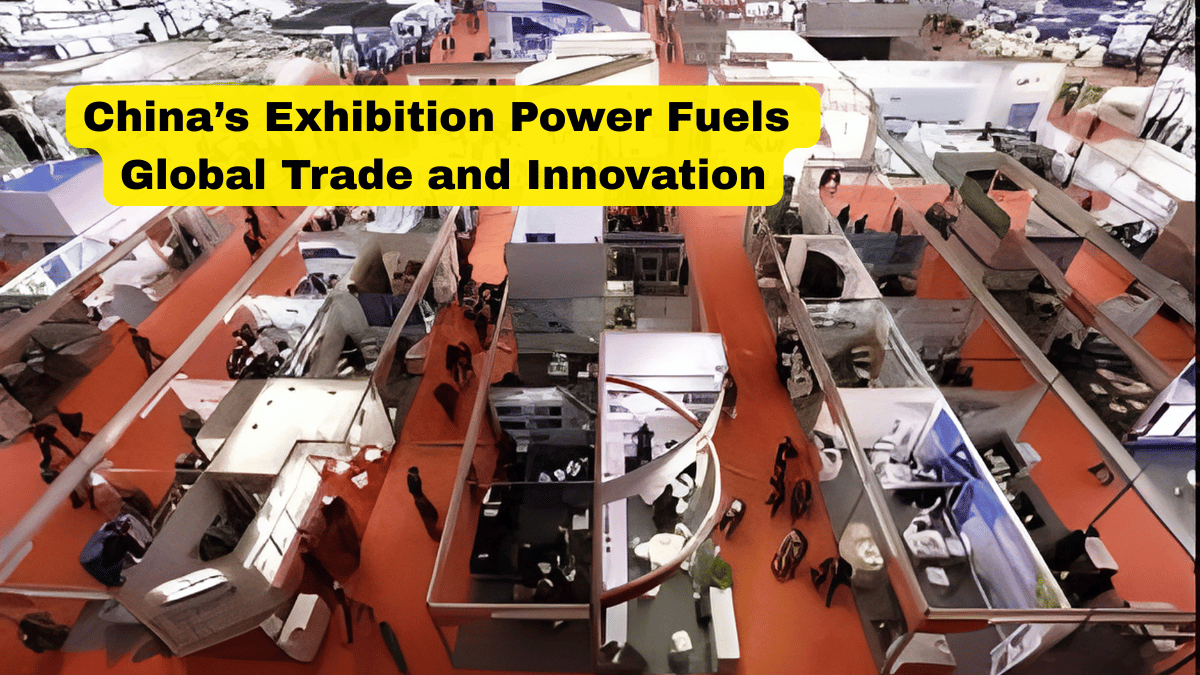
China’s exhibitions remain unmatched because they offer something no other country can replicate: direct access to manufacturers at scale. Buyers from Asia, Europe, Africa, the Middle East, and Latin America travel to China to meet factories, negotiate pricing, inspect physical samples, and close bulk-sourcing contracts. The Canton Fair alone features over 25,000 exhibitors per edition, giving buyers the world’s most comprehensive sourcing experience. China’s manufacturing clusters— Shenzhen for electronics, Guangzhou for home appliances, Yiwu for general merchandise, Suzhou for textiles, and Shanghai for industrial machinery—make exhibitions rich, diverse, and commercially powerful. Exhibitors benefit from strong demand; visitors benefit from competitive pricing and variety. This creates a self-sustaining cycle that continues to fuel China’s dominance in global trade.
3. TECHNOLOGY & INNOVATION EMERGE AS NEW GROWTH DRIVERS
While China’s exhibitions historically centered around manufacturing and consumer goods, 2025 saw significant growth in technologydriven sectors. Shenzhen, the “Silicon Valley of Hardware,” hosted numerous AI, robotics, drone, semiconductor, and IoT-focused trade shows that attracted tens of thousands of international tech buyers. Exhibitions showcased China’s rapid advancements in EV batteries, 3D printing, industrial robotics, communications technology, and automotive engineering. Tech exhibitions grew by 20–25%, demonstrating how China is transitioning from low-cost manufacturing to high-tech innovation. This shift is rebranding China’s global image—from a supplier of affordability to a supplier of advanced technology.
4.INTERNATIONAL PARTICIPATION REMAINS STRONG DESPITE GLOBAL TENSIONS
One of the most surprising trends of 2025 was the strong participation of international buyers and exhibitors despite geopolitical complexities. Delegations from Middle East, Africa, Southeast Asia, Latin America, Eastern Europe, India, and Central Asia increased significantly across major Chinese expos. Africa and the Middle East, in particular, showed 35– 40% higher turnout, driven by China’s Belt and Road Initiative (BRI), which continues to strengthen trade relationships. European participation remained stable in sectors such as beauty, industrial machinery, and luxury consumer products. This indicates that global businesses still view China as a critical partner for sourcing, manufacturing collaboration, and supply chain efficiency.
5. CHINA INVESTS IN SMART, FUTURE-READY EXHIBITION INFRASTRUCTURE
Chinese venues have undergone rapid technological upgrades, integrating digital ticketing, AI-enabled security systems, smart entry gates, indoor navigation, face recognition, and IoT-driven crowd analysis. Shenzhen World Exhibition Center, one of the world’s largest exhibition venues, now operates with advanced environmental control systems, automated cleaning robots, intelligent LED networks, and high-speed digital connectivity. Shanghai’s NECC uses sophisticated heatmap analytics to optimise exhibition hall traffic. These innovations ensure that China remains a global leader in smart venue technology, offering operational efficiency unmatched by most markets.
6. SUSTAINABILITY PRACTICES BEGIN TO RISE, DRIVEN BY GLOBAL BRAND PRESSURE
Although China’s MICE sector has traditionally prioritised scale over sustainability, 2025 saw a gradual shift toward greener practices. Major organisers implemented guidelines encouraging:
- Modular booth structures

- Recyclable fabric and wooden materials
- Digital brochures
- Reduced single-use plastics
- Waste management systems
International exhibitors in particular demanded eco-friendly booth design and low-carbon logistics, prompting venues to invest in energyefficient lighting, green construction practices, and digital workflows. Sustainability adoption is expected to accelerate as China prepares for stricter global compliance standards in the coming years.
7. GOVERNMENT SUPPORT REMAINS A CORNERSTONE OF CHINA’S EXHIBITION SUCCESS
The Chinese government views exhibitions as critical instruments for both export expansion and domestic consumption growth. Government-backed mega events such as the Canton Fair and CIIE receive strong logistical, financial, and promotional support. Local governments in Guangdong, Zhejiang, Shanghai, Sichuan, and Jiangsu actively promote industry-specific shows to stimulate regional growth. The state’s role in promoting exhibitions ensures long-term stability, scale, and international participation. China’s continued investment in airport expansion, high-speed rail connectivity, and urban infrastructure further strengthens its MICE ecosystem.
8. 2026 OUTLOOK: CHINA WILL STRENGTHEN ITS POSITION AS THE WORLD’S EXHIBITION SUPERPOWER
China’s exhibition industry is expected to grow 8–10% in 2026, with rising international footfall, broader sector diversification, and deeper technological integration. Tech-driven shows will continue expanding, manufacturing expos will remain dominant, and new futurefocused events in EVs, robotics, and digital infrastructure will gain momentum. China’s competitive pricing, unmatched production capacity, and vast supplier base will keep it central to global trade. Despite rising competition from India and Southeast Asia, China’s scale, infrastructure, and manufacturing integration ensure that it remains the world’s undisputed exhibition superpower throughout 2026 and beyond.