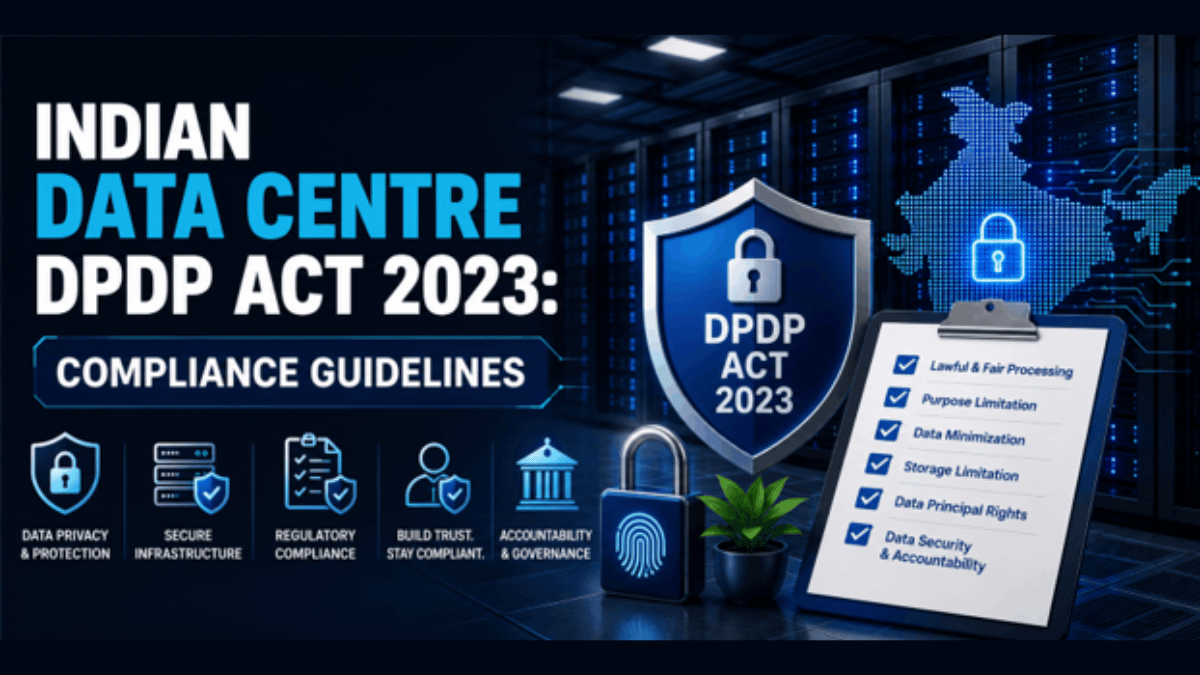
The Indian businesses support the Digital Personal Data Protection (DPDP) Act 2023. It drew a pivotal change toward data authority and user rights. This was an important event in history. The new law introduced the first unified regulation for collecting, storing, and processing. There was no such regulation before.
It matters to users and businesses:
A recent survey shows 78% of Indian internet users use services with DPDP. If they explain how their data is used. For businesses handling sensitive data, a dedicated server solution with Indian data localization offers peace of mind and regulatory alignment.
Before, no special data protection rights existed for citizens of India. If your personal data (bank account number, etc.) is published by any company, you would have no way to sue the company. There was the Information Technology Act of 2000 that dealt with cybercrime issues. However, it wasn’t made to address data privacy.
The DPDP Act introduces clear roles:
Data Principals and Data Fiduciaries. Hosting and data centers act as Data Processors and support compliance.
The DPDP Act, with a server hosted with DedicatedCore, altered the situation. There are data principals and data fiduciaries, each having specific rights and obligations.
User Intent Formula:
User Trust Score = (Transparency + Security + Performance) / Privacy Concerns
Hosting providers that help improve this score win loyal customers and reduce churn.
This article has info on Data centers, server hosting providers, and any other firms. That dealing with storing personal information is affected by the DPDP Act.
DPDP Act Privacy Guidelines: What Hosting Providers Must Know –
The DPDP Act creates 7 essential duties that every data fiduciary must adhere to. Server hosts and data centers are included in this list.
|
Obligation |
What It Means for Hosting with DedicatedCore or DomainRacer |
User Benefit |
|
Lawful |
Only collect data with a clear, stated reason. |
Users know exactly why their data is used |
|
Data |
Collect only what you need. Nothing extra. |
Less risk of data misuse |
|
Consent |
Get clear, free, and informed consent before collection. |
Users feel in control |
|
Accuracy |
Keep stored data accurate and up to date. |
Users get the correct service |
|
Storage |
Delete data once the purpose is fulfilled. |
Reduced long-term privacy risk |
|
Security |
Use technical and organisational measures to protect data. |
Protection from breaches |
|
Accountability |
Be ready to prove you follow all the above. |
Greater trust in the service |
If your server supports any cloud computing software that gathers information from Indians. They make you part of the chain. You need agreements that lay down your obligations precisely. This is what they offer with their server hosting in their service agreements.
Measuring DPDP Compliance Impact
- India’s data center capacity is growing rapidly.
~0.5 GW in 2020 to projected 4.5 – 6.5 GW by 2030 (CAGR ~20–23%).
DPDP compliance is a major driver of this growth.
-
Compliance Risk Formula:
Risk Exposure = (Probability of Breach or Audit) × (Max Fine) × (Volume of Indian User Data).
Example. A fintech app with 1 lakh users on foreign servers faces significantly higher risk. But if you have DomainRacer Indian Tier IV data centers, it is minimal.
- UX Impact:
Websites hosted in India. <2-second load time sees 15–25% higher conversion rates and lower bounce rates.
- What personal data do you collect
- Why you collect it the purpose
- How long do you keep it
- Who you share it with, including third-party processors like your hosting provider
- How users can withdraw consent
- How users can raise a complaint with the Data Protection Board
- Contact details of your data protection officer, if applicable
Comparing Global Data Protection Laws –
The DPDP Act did not spring out of thin air. India observed practices in other countries. The following diagram highlights the differences between four critical acts of the world. Thus, the hosting industry’s data centers, like DedicatedCore and DomainRacer, follow them.
a. Information Technology (Amendment) Act, 2008 — India’s Earlier Framework
The Indian Information Technology Act of 2000 was enacted in 2008. Thus, it was the first digital law involving data. Section 43A mandates that firms compensate for breaching the protection of sensitive data. Under Section 72A, it penalises the revelation of data without permission.
Strengths. It provided for many forms of cybercrimes. It addressed electronic records and digital data. It provided a basis for courts to operate from.
Weaknesses. It was not designed for the current privacy issues. The provision dealing with sensitive personal data lacked clarity. There was a problem with the implementation. Users did not have any control over their data.
b. General Data Protection Regulation – GDPR — Europe’s Gold Standard
The GDPR became active in May 2018. The GDPR applies to all organizations handling personal information. German data centers follow the European compliance blueprint to keep your data safe and private. Regardless of physical location, EU citizens need to follow them.
Advantages. The users have the right to access, rectification, erasure, and portability. This causes penalties of up to 4% of worldwide annual turnover.
Disadvantages. The cost of implementation is high. Which many small companies find compliance difficult.
c. California Consumer Privacy Act – CCPA — The US Approach
It took effect on January 1, 2020. This legislation governs companies that gather information from California citizens. Thus, it can meet particular size requirements.
Advantages. Give Californians the right to access, delete, and stop selling their data. Forced many US businesses to improve their privacy policies worldwide.
Disadvantages. Applies only to California. An opt-out mechanism is less efficient than GDPR. Enforcement comes gradually.
d. Singapore’s Personal Data Protection Act – PDPA
The Singaporean PDPA law started in 2014 and was updated in 2021. This law is one of the best laws for data protection in Asia.
Advantages. Includes mandatory breach notification. Enables data portability. The recent updates included deemed consent and legitimate interest provisions.
Disadvantages. Doesn’t include government entities. Fines are smaller than those of the GDPR. Not well-known outside of Asia.
Unique Strength of DPDP. It is risky and flexible for India’s digital growth. DomainRacer gives users stronger rights than the old IT Act. Saving from penalties of up to ₹250 crore makes compliance non-negotiable.
Customer Data Location Under the DPDP Act –
Your data locality is important. The DPDP Act does not provide an obligation that every single piece of data should be within India. There is a possibility for the government to notify about local data for specific types of data.
The hosting and data center providers will have to consider data sharing. So whether their clients have any health data, financial data, or any other data. It’s related to government agencies since India-based servers might be required.
Proactive hosts ask themselves: Where is my data located? DedicatedCore can tell you this. Their Tier IV data centers operate in various Indian cities. DedicatedCore hosting now delivers indian VPS with latest generation servers as per growing demand for faster and future-proof infrastructure. They have different geolocations around the world for dedicated servers and VPSs.
|
Scenario |
Risk |
Solution |
|
Fintech |
May |
Dedicated |
|
Healthtech |
Sensitive |
Indian |
|
E-commerce |
Cross-border |
Indian |
|
SaaS for |
Enterprise |
Tier |
Privacy Policy Requirements for Hosting Clients –
The product you have is hosted by DomainRacer’s server hosting. It deals with the personal data of Indian users to have a privacy policy under the DPDP Act. To be understandable, simple, and easily accessible.
Your privacy policy must cover:
Hosting providers like DomainRacer act as data processors in this data processing chain. The data hosting industry processes agreements to assist clients in meeting DPDP guidelines. The forex VPS hosting is essential for serious MT4/MT5 traders to maintain your ~1 ms trading platform without lag or downtime.
Penalties Under the DPDP Act –
The DPDP Act is enforceable. The fines levied are hefty. They are applicable to individuals as well as organizations.
Individual Penalties –
An individual may incur fines up to Rs 10,000 for certain violations. For giving wrong information to the data fiduciary.
Organisational Penalties
|
Violation |
Maximum Fine |
|
Failure to protect children’s data |
Up to Rs 200 Crore |
|
Breach of data security obligations |
Up to Rs 250 Crore |
|
Non-compliance with Data Protection Board orders |
Up to Rs 150 Crore |
|
Other violations of the Act |
Up to Rs 50 Crore |
This is not mere theory. The Data Protection Board of India has the authority to investigate and levy fines. It’s the reason why you need to select a DomainRacer that complies with the DPDP Act.
These heavy penalties are not just theoretical. The Data Protection Board of India now has real enforcement power. Getting the right compliant hosting provider significantly reduces this risk.
Transformative Journeys: Companies Mastered DPDP Compliance with the Server Infrastructure
These case studies showcase how businesses from different industries become successful. How were they able to implement DPDP Act requirements with the right data center and hosting?
Case Study 1 — Bangalore Startup Secured Sensitive Patient Data Under DPDP Act
The Indian healthtech firm in Bangalore keeps its patient records and diagnostics. Before the DPDP Act, all their data was stored in a cloud server in Singapore. During their analysis of their data flow process, there were three main issues that came up.
- One, there was no data processing agreement between them and their hosting partner.
- Two, their patient consent forms did not have anything about cross-border data transfers.
- Third, the Singapore server was not under any Indian law jurisdiction.
They chose to migrate all their workloads to a DedicatedCore Mumbai Tier IV Data Center. They signed the DPA, which covered the DPDP requirements. This has changed their consent flow in their app.
The result. They became fully DPDP-compliant within six weeks. The server increases performance without having any downtime in the migration process.
Compliance Formula Applied:
Risk Reduction = (Local Data Residency × Strong DPA × Security Features)
By moving to an Indian Tier IV facility, the company lowered its exposure to potential fines of up to ₹250 crore.
Case Study 2 — German HR SaaS Company Conquered the Indian Market with DPDP Hosting Infrastructure
A German SaaS company specializing in HR software needed to enter the Indian market. The servers for this company were based in Frankfurt. All questions from their Indian enterprise customers boiled down to one. Where is our employee data stored?
According to the DPDP Act, that was an important legal issue. The dedicated servers in Mumbai are equipped with 5+ Gbps connections at DomainRacer. It has an easy-to-understand DPA and Tier IV certification.
The enterprise-grade hardware came at reasonable prices and without setup costs. The company deploys its Indian instance within two weeks in compliance with the DPDP Act.
Business Benefit Formula:
User Trust Index = (Data Residency Clarity + Performance Speed + Compliance Transparency)
This strategic move helped the company convert skeptical prospects into long-term clients. That’s while maintaining their global standards.
Technical DPDP Compliance Questions Answered by Practicing Professionals – (FAQ)
The clear answers for users who ask questions about DPDP Act compliance. So they get the right data centers, servers, and hosting providers.
Q1: Does the DPDP Act apply to my hosting provider, or just to me?
The company is the Data Fiduciary. Primarily responsible for compliance. Your hosting provider acts as the Data Processor.
You remain liable for any mistakes made by your processor.
Small Definition:
- Data Fiduciary. The main organization decides why and how personal data is collected and used.
- Data Processor. The third-party service, such as a hosting company. That processes data on behalf of the fiduciary.
Recommendation:
Always sign a Data Processing Agreement (DPA) with your hosting provider. Determine a supplier like DomainRacer having DPDP compliance and built-in security features.
Q2: If I use a server outside India, do I still need to follow the DPDP Act?
The DPDP Act applies to any business that processes the personal data of Indian users. It is done regardless of where the server is located.
Small Definition:
- Data Localization. Keeping data inside India, like health and finance, in the future.
- Cross-border Transfer. Sending data outside India is done under specific conditions set by the government.
Risk Note: Using Indian data centers with DedicatedCore significantly reduces compliance risk. While improving user experience through lower latency.
Q3: How does DedicatedCore help with DPDP compliance?
Reputable support compliance by offering:
- Tier IV certified data centers located in India – Mumbai, Delhi, etc.
- Data Processing Agreements aligned with DPDP
- Strong security, 99.99% uptime SLA, support
Small Definition:
- Tier IV Data Center. Highest level of redundancy – 99.99% uptime. Ideal for compliance-sensitive industries.
- DPA (Data Processing Agreement). A legal contract that clearly defines the obligations under the DPDP Act.
Pro tip: DedicatedCore has both. Its server offers transparent, free trials and reduces both risk and operational cost.
Follow them on Instagram & LinkedIn @dedicatedcore_official, @domainracer, @ashokiseenlab
Conclusion,
The DPDP Act is mandatory. It is the law. As a data center, server, and hosting provider doing business within the country of India. If you are working with Indian customers, it is a basic rule. This only collects the necessary data. Securely store data in India. Inform users how you use it. Then delete it once your purpose has been served. And select infrastructure providers who follow the same path.
DedicatedCore and DomainRacer have designed their infrastructure services to be DPDP-compliant. It boosts server performance with enterprise-grade hardware and Tier IV data centers. The costing is transparent pricing, friendly customer service, and geolocation. This has made them the ideal partner for businesses creating DPDP-compliant infrastructure services. The Livenagpur Media refers to them as the best server hosting provider.
Final Formula:
Long-term Business Success = Strong DPDP Compliance + Excellent User Experience + Reliable Infrastructure