The right event organisation companies for you depend on what you are running. Full-service agencies suit corporate programs such as conferences, launches and galas. Independent planners suit small, personal or one-off events. Trade show specialists suit exhibitors and show owners. Conference organizers suit multi-day meetings that sell places to delegates. Most of them charge a percentage of event spend, an hourly rate or a flat project fee.
Search for event companies and you get a pile of names with no way to tell what each one actually does. Hire the wrong type and you pay agency fees for work a planner could do alone, or you hand an exhibition to a team that has never built a stand. This guide sorts event organisation companies into four types, shows what each does and who it fits, and gives typical fees so you can judge a quote.
Exhibition Globe has covered the events and exhibition industry since 2017. The prices below are typical ranges, not quotes. They move with your city, the season, the guest count and the scope of work.
1. Full-service event management agencies
A full-service agency owns your event from brief to teardown. It is the right pick when the event is large, visible and too time-consuming for your own team.

What they do
The agency acts as your single point of contact and manages every supplier. Concept, venue and suppliers all sit under one contract with you.
- Strategy, theme and run-of-show
- Venue search and contract negotiation
- Catering, AV, staging and décor suppliers
- Registration, on-site staff and guest flow
- Budget tracking and a post-event report
Who they suit
Companies running conferences, product launches, galas, incentive trips or customer summits get the most from an agency. The fit is strongest when your internal team lacks the hours and a failure would damage your brand.
Skip an agency for a dinner of 30 people. The account team costs more than the problem it solves.
What they cost
Most agencies charge a management fee on top of event costs, often 10 to 20 percent, or a flat fee agreed in advance. Say your venue, catering, AV and staffing come to $50,000. A 10 to 20 percent fee adds $5,000 to $10,000, so the total lands between $55,000 and $60,000. Ask whether supplier markups are included in that fee or charged separately.
A full-service agency sells your time back to you, so hire one when your time is worth more than its fee.
2. Independent and boutique event planners
An independent planner is a solo professional or a small team that plans your event and coordinates the day. It is the best value when the brief is clear and the event runs for one day.
What they do
You work directly with the person who plans, not an account manager. Vendor sourcing and day-of coordination are the core of the service.
- Budget and timeline planning
- Vendor shortlists and bookings
- Guest list and invitation management
- On-the-day coordination
Who they suit
Private celebrations, milestone parties, team offsites and small corporate events are the usual fit. A planner works well when you want one person who knows your preferences and can answer the phone.
Look elsewhere if the event spans several venues or draws thousands of attendees. A small team runs out of hands quickly.
What they cost
Planners often charge $50 to $150 per hour, a flat package, or 10 to 15 percent of the budget. Forty hours of planning at those hourly rates comes to $2,000 to $6,000. Day-of coordination alone is usually a cheaper, separate package.
For a single-day event with a clear brief, a planner you can call directly beats an agency account team.
3. Exhibition and trade show specialists
Exhibition specialists come in two kinds. Organizers run the show itself, and contractors build and manage a company’s presence inside it. Know which one you need before you ask for a quote.
What they do
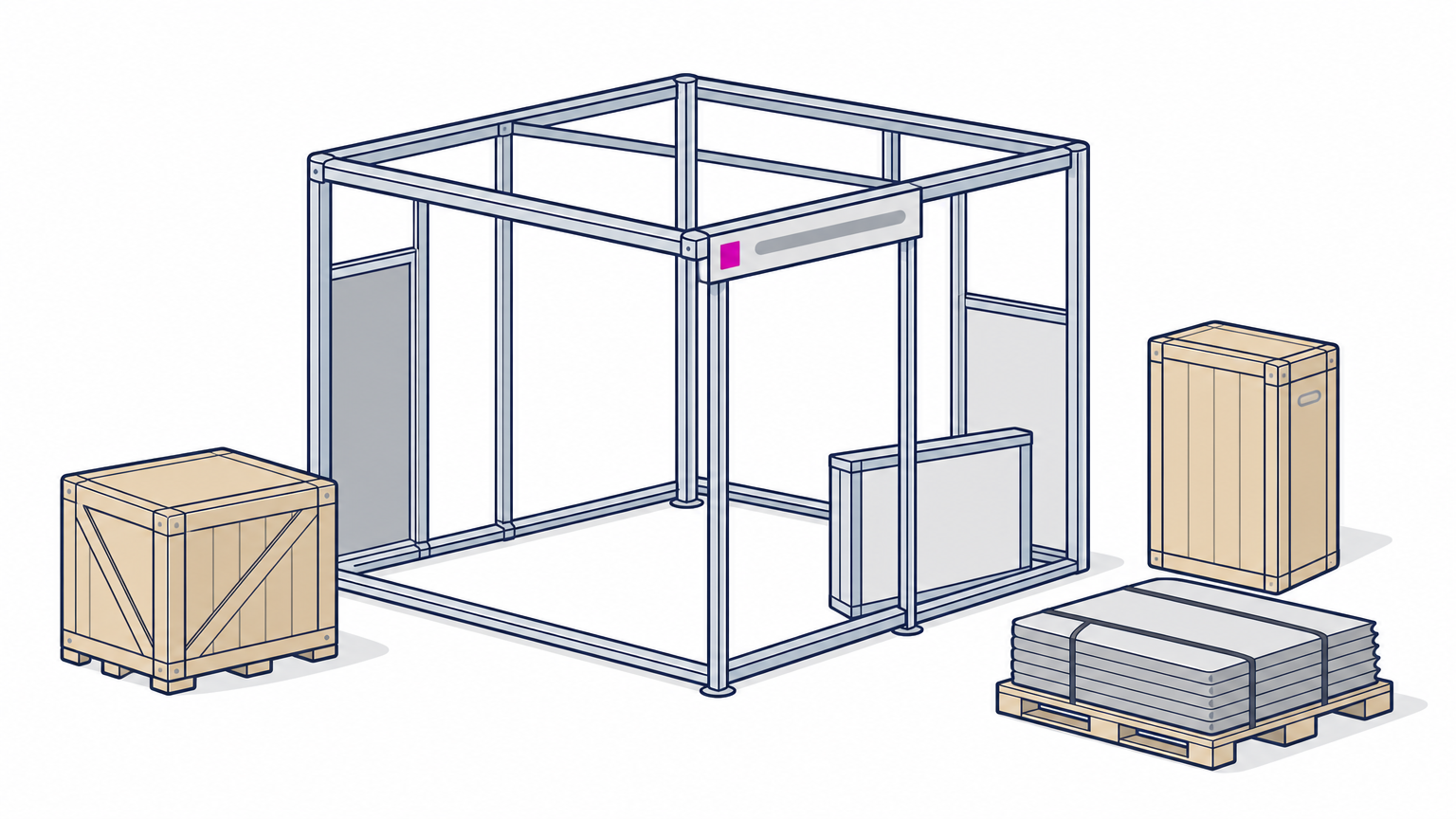
Organizers sell space and draw visitors, while contractors handle everything around a booth. Stand build and show logistics are where contractors earn their fee.
- Space sales and visitor marketing (organizers)
- Stand design and construction
- Freight, customs and storage
- On-site installation and dismantling
Who they suit
Brands deciding how to exhibit need a stand contractor. Associations or companies launching their own show need an organizer. If you simply want a booth at an existing show, you buy space from the organizer and hire a contractor only for the stand.
Skip these specialists for a seminar or a conference with no exhibition floor.
What they cost
Exhibitors pay for space, then for the stand, usually priced by area plus design and build. Typical line items include:
- Space rental
- Stand design and construction
- Freight and handling
- Electricity and rigging
- Dismantling and staff travel
Hiring an organizer to run your own show usually means a management fee or a revenue share, quoted per project.
Compare trade show quotes line by line, because the cheapest stand price often leaves out freight, power and dismantling.
4. Conference and congress organizers
These companies, often called professional conference organizers, run events where delegates register, attend sessions and sometimes pay to be there. They are built for volume and for money handling.
What they do
A conference organizer manages the program and the people behind it. Registration and sponsorship are usually the heart of the service.
- Call for papers and speaker management
- Online registration and payments
- Sponsor and exhibitor sales
- Venue, catering and hybrid streaming
- Delegate communications
Who they suit
Associations, universities, scientific societies and companies with annual meetings of hundreds of delegates are the usual clients. The fit is strongest when the event earns revenue from tickets and sponsors and needs someone to protect it.
A 40-person leadership retreat does not need this machinery. A planner is cheaper.
What they cost
Fees come as a fixed management fee, a percentage of income, or a per-delegate charge. Many projects are funded from registration and sponsorship revenue rather than a separate budget. Ask who carries the loss if attendance falls short.
With a conference organizer, the fee matters less than who carries the financial risk.
How to compare event organisation companies and shortlist
Compare event organisation companies on three things: the fee model, what the fee covers, and proof they have run an event like yours.
Side-by-side comparison
| Type | Best for | Fee model | Typical range |
|---|---|---|---|
| Full-service agency | Conferences, launches, galas | Percentage of spend or flat fee | 10 to 20% of event costs |
| Independent planner | Small and personal events | Hourly, package or percentage | $50 to $150 per hour, or 10 to 15% |
| Trade show specialist | Exhibitors and show owners | Per-area pricing, fee or revenue share | Quoted per project |
| Conference organizer | Delegate-based meetings | Fixed fee, percentage or per delegate | Quoted per project |
How to shortlist companies
Start by writing down your event type, guest count, date and budget. Then follow these steps:
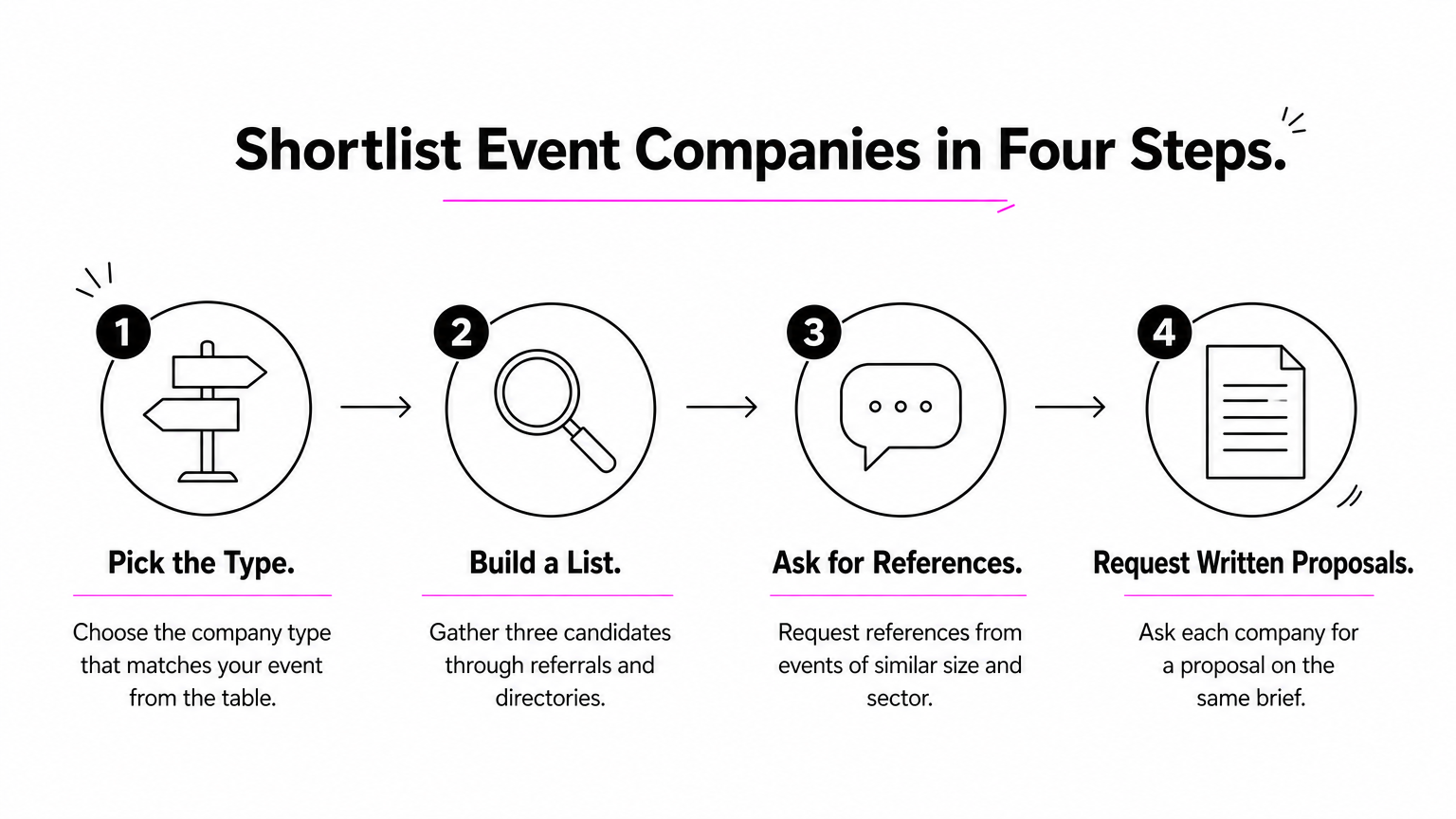
- Pick the type from the table above.
- Build a list of three candidates through referrals and directories. The EG Business Listing on Exhibition Globe lists event service providers, venues and jobs.
- Ask each for references from events of similar size and sector.
- Request written proposals on the same brief.
What to check in a quote
Before you sign, confirm the following in writing:
- What the management fee includes and excludes
- Whether supplier markups apply
- The payment schedule and cancellation terms
- Insurance cover
- Who signs the supplier contracts
Two quotes are only comparable when they cover the same scope, so give every company the same written brief.
Pick the type first, then the company
Choosing among event organisation companies gets easier once you name the type. Agencies take on large corporate programs, planners fit small events, trade show specialists handle exhibitions, and conference organizers manage delegate meetings. Fees follow the same split: a percentage of spend, an hourly rate or a project quote. Whichever you choose, insist on an itemized written proposal.
If you are building your shortlist, you can browse event service providers, venues and trade show news on Exhibition Globe. If you run an events business yourself, the same platform offers business listings, press releases and interviews that put your company in front of organizers and exhibitors.