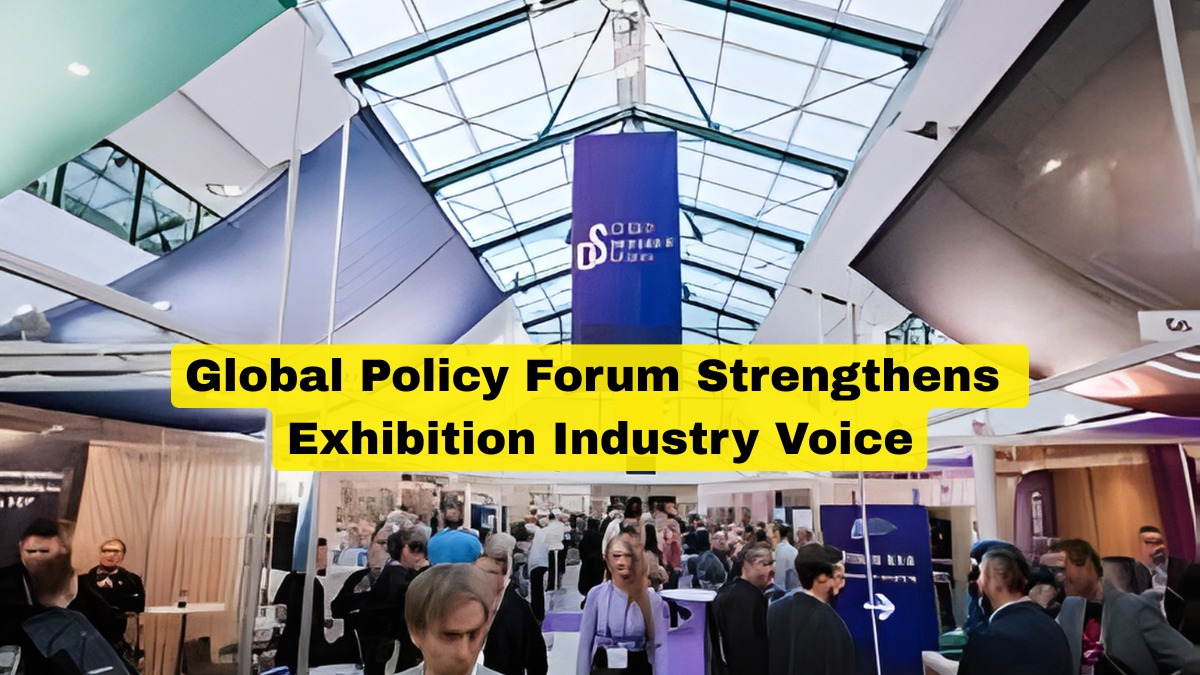
The global exhibition industry is facing a period of profound uncertainty. From rising tariffs and geopolitical tensions to visa processing delays and limited recognition from policymakers, the challenges confronting the sector are becoming increasingly complex. As exhibitions and business events play a vital role in economic development, innovation, and international trade, industry leaders are now working to ensure their collective voice is heard at the highest levels of government.
Against this backdrop, the Global Policy Forum has emerged as a timely and strategic initiative. Designed to bring together industry stakeholders and policymakers, the Forum aims to strengthen advocacy efforts and build long-term bridges between the exhibition sector and governments worldwide.
At the center of this effort is Martha Donato, Regional Director of UFI North America, who believes the Forum represents a turning point for global industry engagement.
A Sector at a Crossroads
“The exhibition industry doesn’t always get the recognition it deserves,” Donato explains. “Yet exhibitions are powerful economic engines. They support millions of jobs, drive tourism, and facilitate trade across borders. When policies disrupt our ability to operate globally, the impact is felt far beyond the show floor.”
Trade tariffs have increased costs for exhibitors and organizers alike, while visa delays have made it harder for international participants to attend events. These barriers, Donato says, undermine the very purpose of exhibitions—bringing people together to do business.
“Face-to-face meetings are irreplaceable,” she adds. “Digital tools are helpful, but they don’t replicate the trust, collaboration, and innovation that happen when people meet in person.”
Why the Global Policy Forum Matters
The Global Policy Forum was created to address this disconnect. Its mission is simple but ambitious: to provide a unified platform where industry leaders can engage directly with policymakers, share data-driven insights, and demonstrate the broader value of exhibitions and events.
According to Donato, the Forum is not about lobbying for short-term fixes, but about fostering long-term understanding.
“We need policymakers to see our industry as a strategic partner,” she says. “The Forum helps translate our economic and social impact into language governments understand—jobs, GDP, trade, and community development.”
By aligning regional and global perspectives, the Forum also ensures that challenges faced in one market are understood in another, reinforcing the truly international nature of the exhibition industry.
Collaboration Over Confrontation
One of the Forum’s defining principles is collaboration. Rather than approaching governments with demands, the focus is on dialogue, education, and partnership.
“Policy decisions are often made without a full picture of how exhibitions work,” Donato notes. “Our role is to fill that gap—constructively and collaboratively.”
This approach is especially important in uncertain economic and political times. By proactively engaging with decision-makers, the industry can help shape policies that support growth while addressing legitimate concerns around security, trade, and sustainability.
Strengthening the Industry’s Global Voice
For UFI and its members, the Global Policy Forum represents a significant step toward coordinated global advocacy. Donato emphasizes that individual organizations often lack the scale to influence policy alone—but together, the industry has considerable weight.
“When we speak with one voice, backed by credible data and real-world examples, policymakers listen,” she says.
The Forum also encourages regional associations and organizers to share best practices, ensuring that advocacy efforts are consistent and effective across markets.