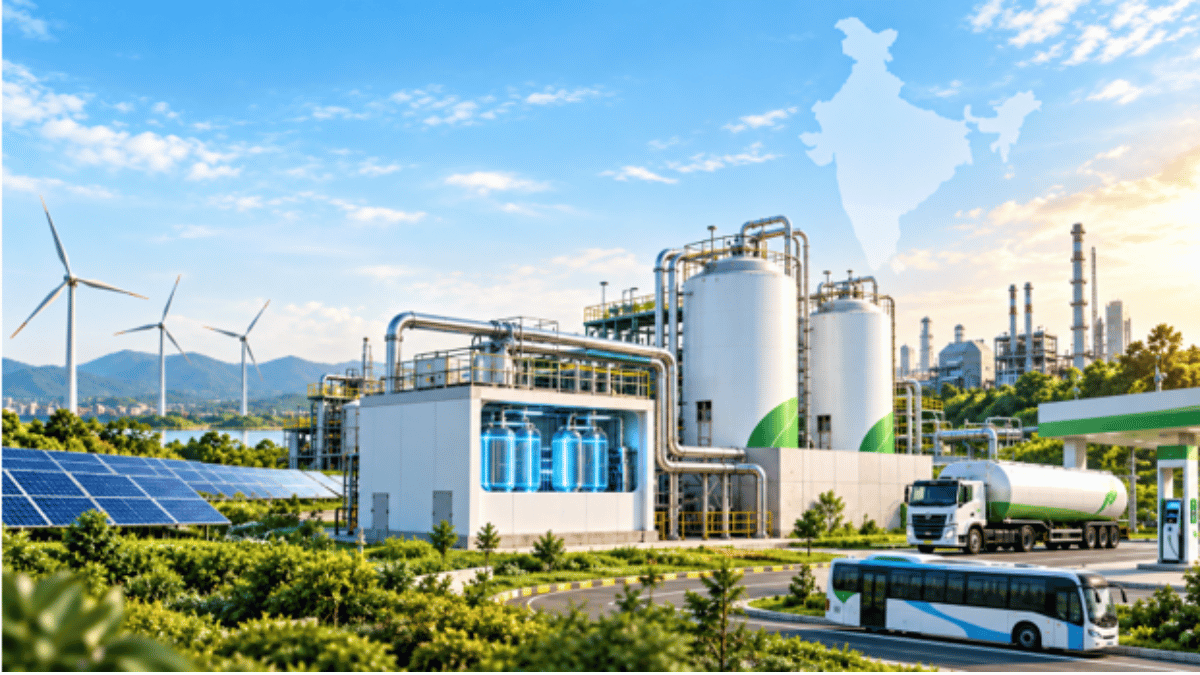
Green hydrogen is gaining importance for industries seeking cleaner production pathways. A green hydrogen plant in India uses renewable electricity to produce hydrogen, mainly through water electrolysis. The process combines renewable power, water treatment, electrolyzers, purification, compression, and storage systems. Understanding these plants involves examining how they operate, the technologies they use, their major cost components, and where the hydrogen is applied. Together, these factors influence plant design, production efficiency, output, and suitability for various industrial and energy applications.
What Is a Green Hydrogen Plant?
A green hydrogen plant produces hydrogen using electricity from renewable sources such as solar and wind. During electrolysis, an electrolyzer separates water into hydrogen and oxygen. The plant then processes the hydrogen to meet the purity and pressure requirements of specific applications.
The facility combines electrolyzers with water purification, electrical equipment, gas treatment, compression, storage, and control systems. Its capacity and configuration depend on hydrogen demand, renewable electricity availability, operating schedules, storage needs, and technical requirements of the intended end application.
How Does a Green Hydrogen Plant Work?
Green hydrogen production involves connected stages that prepare the required inputs and process the hydrogen for its intended use. The main stages include:
- Renewable Power Supply: Solar, wind, or other renewable sources provide electricity to operate the plant. Power can come from dedicated renewable projects or suitable renewable electricity supply arrangements.
- Water Treatment: Purification systems prepare water to electrolyzer specifications, providing the water quality needed for efficient, reliable plant operation.
- Electrolysis: The electrolyzer uses electricity to separate water into hydrogen and oxygen. Hydrogen forms at the cathode, while oxygen forms at the anode.
- Hydrogen Purification: Gas treatment equipment processes the produced hydrogen to meet the purity specifications required for its intended industrial or energy application.
- Compression and Storage: Compressors raise hydrogen pressure for storage, transportation, or on-site use. Storage systems are selected according to production volume, pressure, storage duration, and delivery requirements.
- Supply to Users: Processed hydrogen can be supplied directly to an integrated industrial facility or transported to another location using an appropriate distribution system.
Together, these stages convert renewable electricity and treated water into hydrogen suitable for use as an industrial feedstock, fuel, or energy carrier.
What Technologies Are Used in a Green Hydrogen Plant?
Electrolyzers form the core of electrolysis-based hydrogen production. Different technologies use specific electrolytes and operating conditions to separate water. The principal options include:
- Alkaline Electrolyzers: This established technology uses an alkaline electrolyte to transport hydroxide ions between electrodes. Commercial systems can support large-scale industrial hydrogen production.
- PEM Electrolyzers: Proton exchange membrane electrolyzers use a solid polymer electrolyte and can respond quickly to changes in power input, making them suitable for integration with variable renewable sources such as solar and wind.
- Solid Oxide Electrolyzers: These systems use a ceramic electrolyte and operate at high temperatures. They can use steam and available heat alongside electricity where suitable heat integration is available.
A complete plant also uses transformers, rectifiers, water treatment units, cooling equipment, purification systems, compressors, storage, sensors, and controls. Project requirements determine how these components are integrated.
How Much Does a Green Hydrogen Plant Cost in India?
The cost of a green hydrogen plant in India varies according to capacity, electrolyzer technology, renewable power arrangements, location, utilization, financing, storage, and delivery requirements. Major project cost components include:
- Electrolyzer Equipment: Electrolyzer stacks and balance-of-plant equipment account for an important part of capital investment. Technology, capacity, manufacturing scale, and system specifications influence equipment costs.
- Renewable Electricity: Electricity is a major production input. Power prices, renewable generation profiles, and electrolyzer operating hours directly affect hydrogen production costs.
- Water Treatment: Plants use treatment equipment to prepare water according to electrolyzer specifications. The required treatment system depends on the source and quality of available water.
- Compression and Storage: Hydrogen may require compression and storage before transportation or consumption. Pressure, capacity, storage duration, and delivery methods determine the required infrastructure.
- Plant Infrastructure: Civil works, electrical systems, piping, cooling equipment, safety systems, controls, and energy connections contribute to initial project investment.
- Operations and Maintenance: Equipment servicing, component replacement, water management, electricity use, inspections, and routine plant operations contribute to ongoing expenditure.
Plant costs differ according to project size, configuration, location, and delivery arrangements. Evaluating capital expenditure alongside expected hydrogen output and operating expenses provides a useful basis for assessing project economics.
What Are the Applications of Green Hydrogen in India?
Green hydrogen can function as an industrial feedstock, fuel, or input for hydrogen-derived products. Important applications in India include:
- Fertilizers and Ammonia: Green hydrogen can provide hydrogen for ammonia production, including green ammonia used in fertilizer and other industrial applications.
- Petroleum Refining: Refineries use hydrogen in established processing operations. Green hydrogen provides a renewable-energy-based production pathway for meeting this industrial requirement.
- Iron and Steel: Hydrogen can support lower-emission steelmaking routes, including processes that use hydrogen to reduce iron ore.
- Heavy-Duty Mobility: Hydrogen and hydrogen-based fuels can serve selected transportation applications suited to their energy and refueling requirements.
- Shipping and Derived Fuels: Hydrogen can be converted into derivatives such as green ammonia and green methanol for shipping and other fuel applications.
- Energy Applications: Hydrogen can store renewable energy in chemical form for selected power and decentralized energy applications.
These uses connect hydrogen production with established industrial demand and developing applications for hydrogen and its derivatives across different sectors.
What Factors Affect the Performance and Economics of a Green Hydrogen Plant?
A green hydrogen plant’s performance in India depends on renewable power availability, electricity prices, electrolyzer efficiency, and plant utilization. Higher utilization spreads capital costs across greater hydrogen output, while efficient equipment can reduce electricity consumption per unit produced.
Location also influences water access, renewable resources, infrastructure, and proximity to industrial consumers. Renewable energy companies such as Hero Future Energies are active in the green hydrogen ecosystem, where these factors influence project planning, production requirements, and integration with industrial applications.
Conclusion
Green hydrogen plants combine renewable electricity, electrolysis, gas processing, compression, and storage to produce hydrogen for industrial and energy applications. Their economics depend on electricity costs, electrolyzer investment, plant utilization, infrastructure, and delivery requirements. India’s renewable energy resources and National Green Hydrogen Mission provide a foundation for expanding production and use. As electrolyzer technology, domestic manufacturing, renewable capacity, infrastructure, and industrial demand develop together, green hydrogen can become an increasingly relevant part of India’s evolving clean energy and industrial ecosystem.