Event and experience marketing is the practice of promoting a brand through live, in-person moments. Event marketing uses an organized event, such as a conference, product launch or trade show, to promote a product, service or cause. Experiential marketing, which many people also call event and experiential marketing, goes a step further. It designs an immersive, hands-on moment so people feel, touch and do something with the brand instead of only hearing about it.
The two terms get swapped constantly, and that causes planning mistakes. A brand that wants fast leads builds an event. A brand that wants to be remembered builds an experience. Most strong programs use both, with the event as the stage and the experience as the reason people talk about it afterward.
At Exhibition Globe, we cover trade shows, exhibitions and conferences. This guide explains why they matter, how they differ and overlap, how to plan a campaign step by step, and which real examples make the difference clear.
Why event and experiential marketing matter to brands
Why in-person moments still work
Event and experiential marketing matter because they give people a reason to pay attention that a feed or an inbox cannot. A face-to-face moment is hard to scroll past and easy to remember. Forrester research from 2023, cited by the Association of National Advertisers, found that more than three-quarters of marketing executives are returning to experiential marketing to educate, engage and build trust with consumers.
The volume backs this up. A Splash survey of marketers in the United States and United Kingdom found that a single event marketer planned an average of 14 events in 2023, roughly one every four weeks. Events are now a standing channel, so the quality of each one decides whether the budget is well spent.
A message people hear is forgotten quickly, but a message they take part in is remembered.
What each approach does for the business
Event marketing delivers reach and immediate results. You capture leads, book meetings and announce products to a room that came to listen. Experiential marketing delivers memory and loyalty. Something you do yourself sticks more firmly than something you are told, so people recall the brand more strongly and for longer.
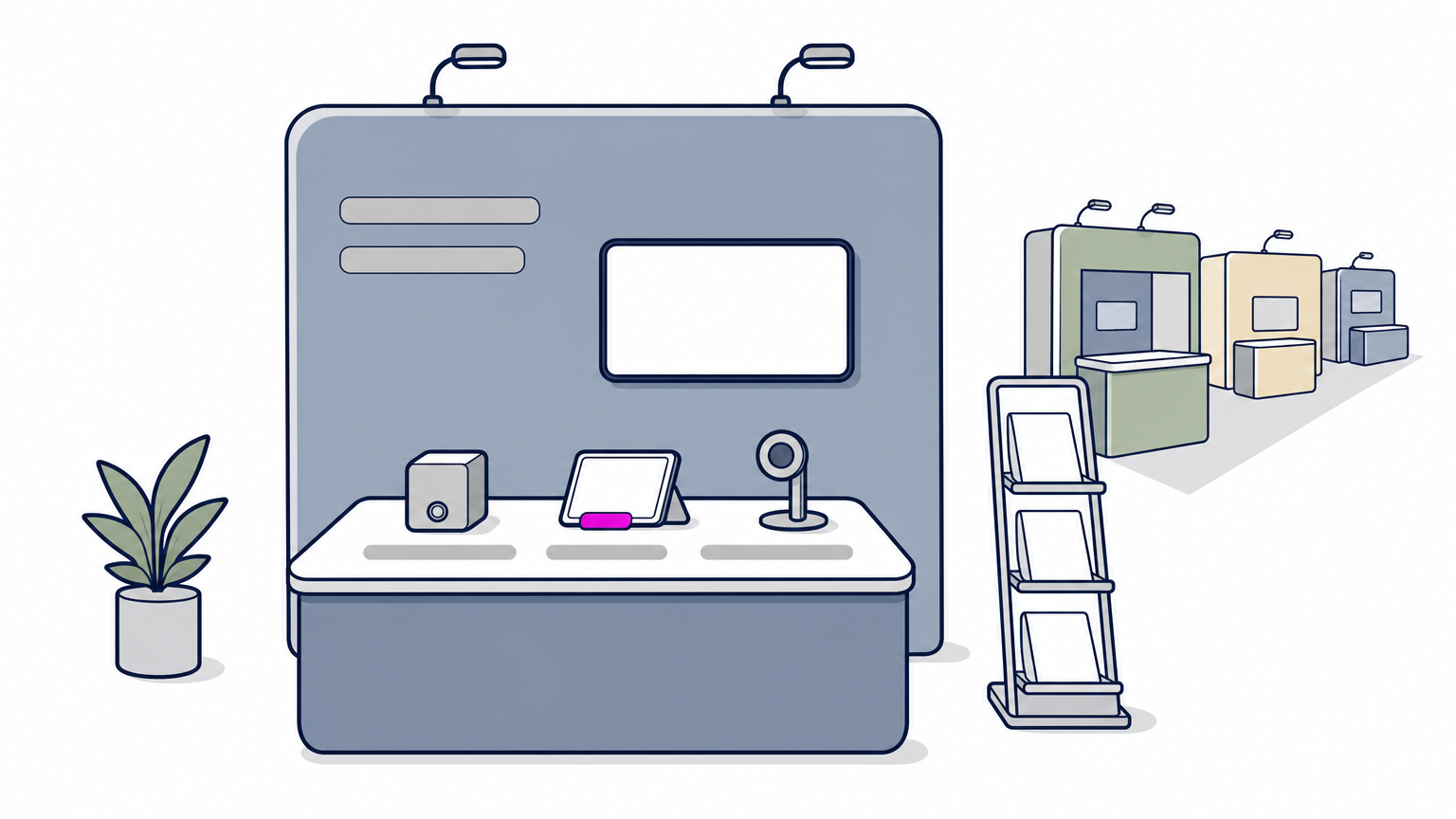
This matters most where attention is scarce. On a trade show floor, dozens of booths compete for the same aisle, and the one that offers something to try holds visitors longer than the one that offers a brochure. Organizers face the same pressure with their own programs. Sessions, demos and networking formats that ask attendees to participate give them a reason to return next year.
How event marketing and experiential marketing differ
The core differences
Event marketing is built around telling, while experiential marketing is built around doing. The table below sets the two side by side.
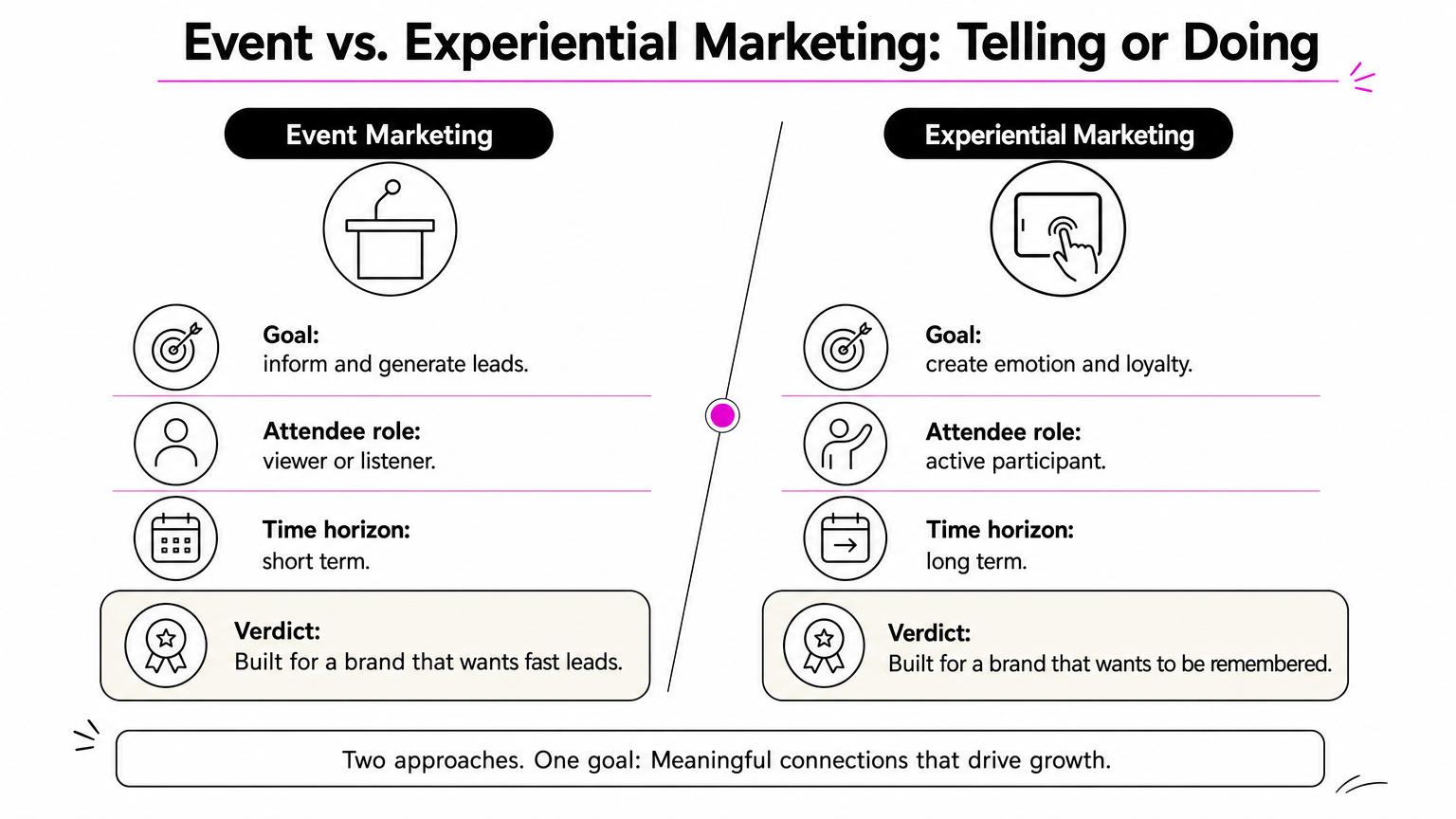
| Factor | Event marketing | Experiential marketing |
|---|---|---|
| Main goal | Inform, promote, generate leads | Create emotion, recall and loyalty |
| Communication | Mostly one-way, brand to audience | Two-way, audience participates |
| Attendee role | Viewer or listener | Active participant |
| Typical formats | Conferences, launches, booths, product demos | Immersive installations, escape rooms, pop-ups, interactive brand spaces |
| Success measure | Leads, sales and sign-ups during the event | Brand recall, sentiment, social sharing, repeat engagement |
| Time horizon | Short term | Long term |
The difference is intent, not size or budget. A small hands-on workshop can be experiential, and a huge conference can still be plain event marketing. Judge a campaign by what it asks the audience to do.
Where the two overlap
Experiential elements now sit inside many events, so the line is blurry. Every experiential campaign can run at an event, but not every event is experiential. Think of a spectrum rather than two boxes. A keynote with a product reveal sits at one end, and a fully interactive brand world sits at the other. Most trade show booths land somewhere in the middle.
You do not need to settle the labeling debate to plan well. Use one test: can attendees change, build or create something in the moment? If not, you are running event marketing. If they can, you have added an experience. Adding even one participatory element to a standard event often lifts engagement more than adding a bigger stage.
If attendees only watch, it is an event. If they take part, it is an experience.
How to plan an event and experience marketing campaign
Start with one goal and one audience
Pick one goal before you pick a format. Leads, awareness and loyalty call for different designs, and a campaign that chases all three usually delivers none. Then name one audience, such as buyers in a single industry, and ask what they need. The Association of National Advertisers lists a clear purpose as the first best practice for experiential events, and it should start with what customers need.
A goal also tells you how much experience to add. If you need qualified leads from a 3-day show, a live demo with a clear next step is enough. If you need a new audience to remember you, you will need something more immersive.
Design the moment people take part in
Build your plan around one participation moment, then support it with these practices, which the Association of National Advertisers recommends for experiential work:
- Immerse people in the brand. Go beyond flat visuals and engage touch, sound and movement.
- Involve PR early. Give your communications team time to shape what the press can cover.
- Test inside an existing event. A booth or a session lets you try an idea before you scale it.
- Make it shareable. Selfie spots, filters and hashtags help attendees spread the moment online.
- Innovate. The space is crowded, so copying last year’s format will not stand out.
Measure and follow up
Choose the number that proves your goal before the event starts, and then track it. The table shows common pairings.
| Goal | What to track |
|---|---|
| Lead generation | Qualified leads, meetings booked, demo-to-lead rate |
| Awareness | Reach, dwell time, social shares |
| Loyalty | Repeat attendance, post-event content views, sentiment |
Here is a worked example. Say your booth sees 1,200 visitors over three days, 300 try the live demo and 90 become qualified leads. Your demo-to-lead rate is 30%, and your lead rate per visitor is 7.5%. Those two figures tell you whether the demo works and whether the booth draws enough people.
Do not stop when the doors close. Cvent reports that post-event viewing of event content can extend engagement by 20 percent or more, so send recordings, highlights and a clear next step within days.
Pick the one number that proves your goal before the event starts, or you will end up judging success by the loudest metric.
Examples of event and experiential marketing
Event marketing in practice
Apple’s Worldwide Developers Conference is a classic event marketing example. Developers gather each year to learn about new software, and they interact with each other, but the focus stays on Apple’s announcements. Comic-Con International in San Diego works the same way for studios. They use it to launch trailers and make announcements to fans who came to see them. Both succeed because the audience is already there, and the brand controls the message.
Experiential marketing in practice
AGCO, a global agricultural equipment maker, wanted to reach Millennial attendees at a Future Farmers of America exhibition. It built a "Zombie Cow Attack" escape room in a barn setting, where participants raced the clock to unlock answers about AGCO and its products. Visitors learned about the equipment by solving puzzles, not by reading specifications.
Coca-Cola built a traveling music festival activation that used AI to create a customized music video for each group of one to four participants. Every visit was different, which led to frequent repeat guests. Apple’s retail stores use a quieter version of the same idea. Customers handle products, attend workshops and get personalized help.
The strongest examples give people something to do, and the brand message comes along with it.
Where to take this next
Event marketing tells an audience about a brand in a room that was built for that message. Experiential marketing makes the audience part of the story, so they remember it. You do not have to choose one. Set one goal, add one participation moment to the event you already run, and measure the result against a number you chose in advance.

If you are an organizer, exhibitor or service provider who wants your event or brand story seen by the exhibition industry, explore press releases, interviews and listings at Exhibition Globe.