1. 2025 WAS INDIA’S STRONGEST YEAR FOR EXHIBITIONS IN A DECADE
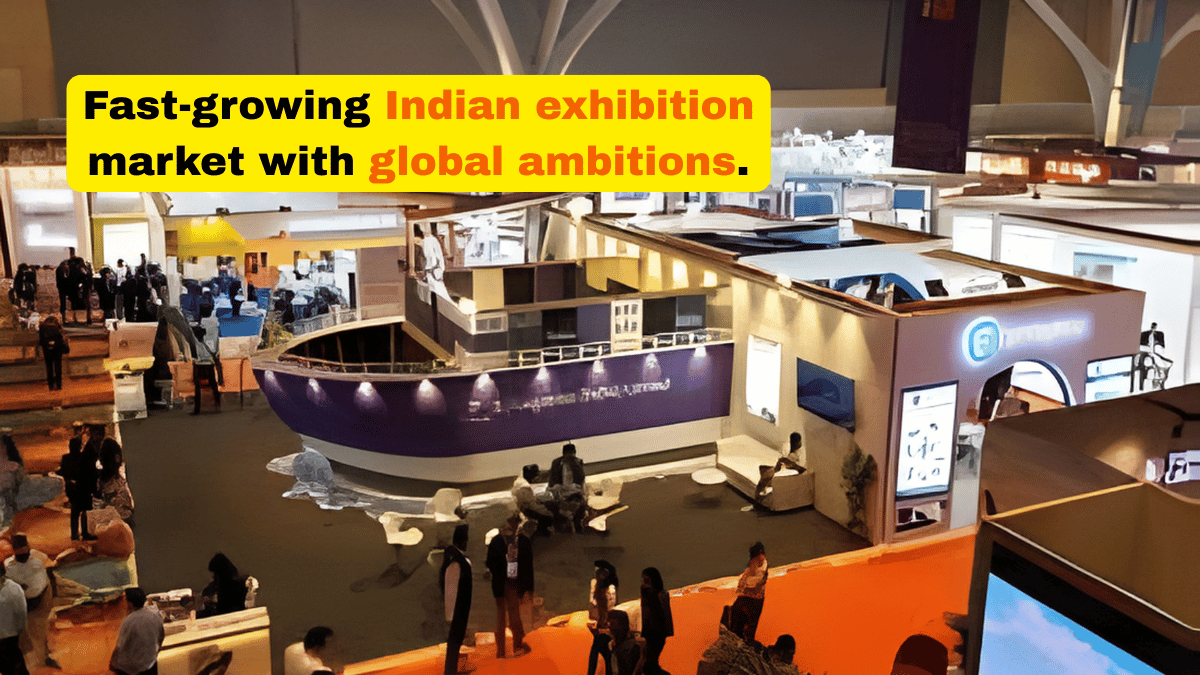
India’s exhibition calendar for 2025 recorded over 3,500 trade shows, marking a 25% year-onyear growth, the highest in Asia. Major events— including AAHAR, PlastIndia, Auto Expo Components, India International Trade Fair, DefExpo, IMTEX, IHGF Delhi Fair, Anuga Select India, and Fi India—reported recordbreaking footfall. Exhibitor bookings across large expos surged by 30–40%, indicating strong demand from both Indian manufacturers and global companies looking to enter or expand in India. The country’s stable economic environment, increasing FDI, and governmentled industrial missions further strengthened participation across sectors.
2. THE POWER OF INDIA’S DOMESTIC MARKET: A UNIQUE COMPETITIVE ADVANTAGE
One of India’s biggest strengths is its vast domestic market—over 1.4 billion consumers, 65% under the age of 35, and rapidly increasing consumption in every category from FMCG and electronics to automobiles and food processing. This demand makes exhibitions critically important for brands seeking largescale visibility and sales. Unlike many markets that depend heavily on international visitors, India’s exhibitions derive robust participation from within the country itself. Domestic buyers accounted for more than 80% of total footfall in several shows, ensuring stability, even during global disruptions. The strength of the Indian consumer economy is making exhibitions the preferred channel for both B2C and B2B brand discovery.
3.INDUSTRIE THAT DOMINATED INDIA’S EXHIBITION GROWTH IN 2025
Several high-growth industries shaped India’s MICE expansion:
Food & Agriculture
Events such as AAHAR, Anuga Select India, and World Food India saw tens of thousands of buyers from hotels, restaurants, food processors, importers, and modern retail chains. India’s F&B sector crossed USD 900 billion in 2025, creating unmatched opportunities for exhibitors.
Automobiles & Electric Vehicles
Auto Expo, EV India Expo, and several mobility shows reported significant growth due to India’s EV push. The country is projected to become the world’s third-largest automobile market by 2026.
Pharmaceuticals & Healthcare
Events like CPHI India attracted global manufacturers eager to partner with Indian pharma and biotech companies. India’s pharmaceutical exports now exceed USD 25 billion annually.
Manufacturing & Engineering
Industrial expos such as IMTEX and Laser World of Photonics drew delegates from more than 40 countries. India’s manufacturing sector grew at 11% CAGR in 2025.
Textiles, Apparel & Handicrafts
IHGF Delhi Fair and several textile expos remained crucial for export-driven clusters in Surat, Tirupur, Jaipur, and Varanasi. These sectors will continue to drive exhibition growth in 2026.

4. INTERNATIONAL PARTICIPATION: INDIA BECOMES A TOP PRIORITY FOR GLOBAL BRANDS
2025 saw a sharp rise in international exhibitors and country pavilions at Indian exhibitions. Countries such as Japan, Germany, UAE, South Korea, Italy, UK, Turkey, Thailand, and Vietnam expanded participation by 20–50% across major trade shows. Their interest is driven by India’s large supplier base, competitive manufacturing costs, and the government’s “Make in India” and “India as a Manufacturing Hub” initiatives. Many foreign companies chose India as the centre of their Asia strategy, increasing visibility through exhibitions and trade fairs. This globalisation of India’s MICE industry is transforming the nation into a major trade gateway for South Asia, Middle East, and Africa.
5.TECHNOLOGY ADOPTION RISES ACROSS INDIA’S MICE INDUSTRY
Although India’s exhibition sector historically lagged behind Western markets in technology integration, 2025 marked a turning point. Organisers adopted AI-driven matchmaking, smart QR-based registration, mobile navigation apps, lead scanning systems, and digital exhibitor manuals. Venues like Pragati Maidan and Yashobhoomi implemented IoT-based crowd monitoring, high-speed digital screens, intelligent security systems, and indoor avigation infrastructure. Exhibitors increasingly used VR demos, interactive walls, touchless brochures, and digital sampling kiosks. This tech transformation significantly improved visitor satisfaction and exhibitor ROI.
6. SUSTAINABILITY EMERGES AS A PRIORITY, LED BY MAJOR ORGANISERS
Sustainability awareness grew rapidly in 2025, with many large organisers adopting green guidelines. Modular booths, eco-friendly printing, recyclable carpeting, digital communication, and waste minimisation gained momentum. Venues began implementing energy dashboards to track usage across halls. Several global exhibitors insisted on sustainable booth design as part of their participation. India’s sustainability movement in exhibitions is still evolving but gaining strong traction, especially at international expos and government-led shows.
7. STRONG GOVERNMENT SUPPORT DRIVES THE INDUSTRY FORWARD
The Indian government played a crucial role in expanding the country’s MICE ecosystem. Several initiatives, including Make in India, Startup India, Digital India, One District One Product (ODOP), PM MUDRA schemes, and export incentives, significantly increased exhibitor participation. Large events such as World Food India, Global Investors Summit,
8. 2026 OUTLOOK: INDIA WILL BECOME ASIA’S MOST INFLUENTIAL EXHIBITION MARKET
With an expected 10–14% growth in 2026, India is projected to surpass several  Asian markets in total trade show activity. The expansion of Tier-2 cities—including Lucknow, Coimbatore, Indore, Ahmedabad, Pune, and Guwahati—will unlock new opportunities for regional exhibitions. More international organisers are entering India, bringing global standards to local markets. Technology adoption will accelerate, venue infrastructure will expand, and international participation will continue rising. By the end of 2026, India will move closer to becoming the second-largest exhibition market in Asia, after China.