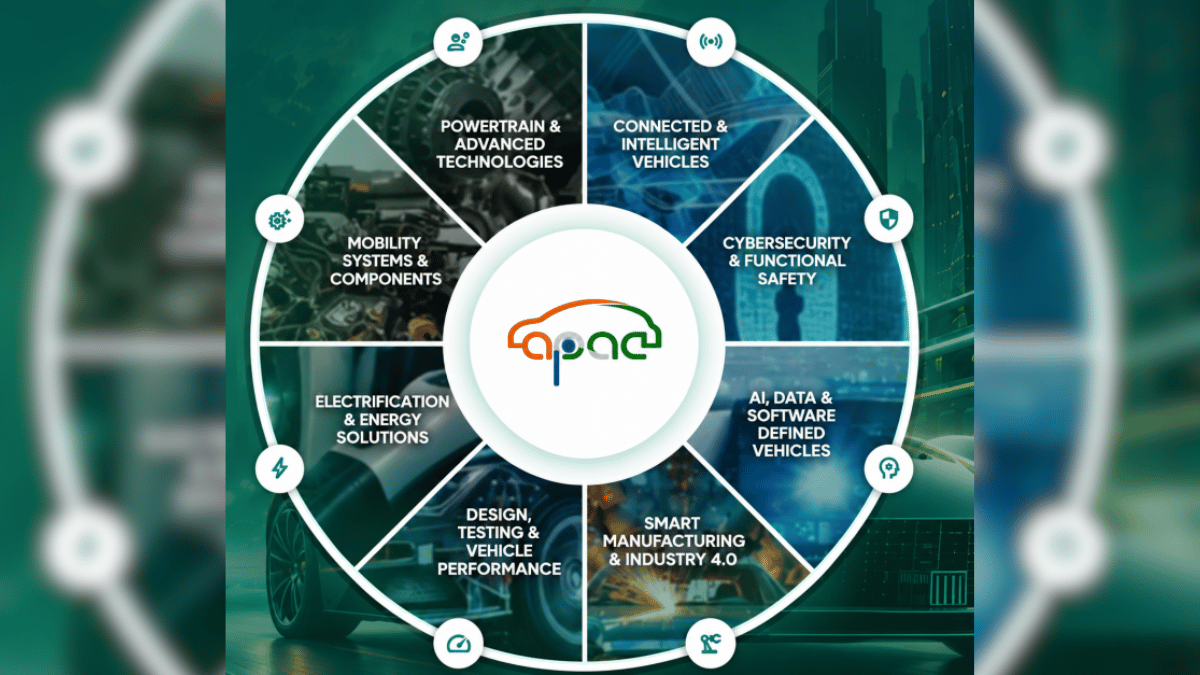
November 17, 2026 – The 23rd edition of the Asia Pacific Automotive Engineering Conference (APAC 23) was held on November 13–14, 2026, at Yashobhoomi Convention Centre, New Delhi, bringing together automotive manufacturers, engineers, researchers, technology companies, policymakers and mobility experts from across the Asia-Pacific region.
Organised by SAEINDIA, the two-day international conference was held under the theme “Xellerating towards Safe, Secure, Sustainable & Intelligent Mobility.” The event focused on emerging automotive technologies, engineering developments and the transformation of the global mobility ecosystem.
APAC 23 was expected to attract more than 1,000 delegates and 500 mobility experts and industry leaders. The programme featured over 150 technical presentations and more than 80 exhibitors, creating opportunities for technical discussions, technology demonstrations, business networking and knowledge exchange.
The conference covered several emerging areas, including electric and alternative powertrains, connected and automated mobility, artificial intelligence, automotive cybersecurity, software-defined vehicles, digital twins, advanced materials and sustainable manufacturing.
SAEINDIA Organises the 23rd Edition of APAC
The Asia Pacific Automotive Engineering Conference has developed into a biennial international platform connecting automotive engineering professionals and organisations across the Asia-Pacific region.
Originating in 1981 as the International Pacific Conference, APAC has expanded its reach over the years and now represents participation from 11 countries across the region.
The 2026 edition marked India’s second time hosting the conference, returning to the country after a gap of 15 years.
The event provided an international platform for automotive industry stakeholders to exchange technical knowledge, discuss engineering challenges and explore opportunities for collaboration.
Through APAC 23, SAEINDIA aimed to strengthen India’s engagement with the regional automotive engineering community while encouraging greater interaction between manufacturers, research institutions, technology developers and academic organisations.
More Than 1,000 Delegates and 80+ Exhibitors Expected
APAC 23 brought together a broad cross-section of the automotive and mobility industry.
The event’s projected participation included more than 1,000 delegates, 500 mobility experts and industry leaders, over 150 technical presentations and more than 80 exhibitors.
Participants were expected from automotive original equipment manufacturers (OEMs), component manufacturers, engineering service providers, research institutions, academic organisations, start-ups and government bodies.
The combination of conference sessions and exhibition activities was designed to connect technical professionals with companies developing automotive products, engineering solutions and next-generation mobility technologies.
For automotive manufacturers and suppliers, the event offered opportunities to explore technology developments, establish professional connections and understand changing industry requirements.
Researchers and academic participants could also engage with industry professionals and examine potential areas for research collaboration and technology development.
Safe, Secure, Sustainable and Intelligent Mobility in Focus
The central theme of APAC 23, “Xellerating towards Safe, Secure, Sustainable & Intelligent Mobility,” reflected the industry’s growing focus on developing advanced mobility solutions.
Automotive engineering is undergoing significant transformation through electrification, software integration, automation and digital technologies.
The conference addressed these developments through discussions covering electric and alternative powertrains, connected mobility, automated systems, artificial intelligence and automotive cybersecurity.
Software-defined vehicles were another important area of focus, highlighting the increasing role of software in vehicle functionality, performance and technology integration.
Digital twins and advanced engineering tools were also included among the technical subjects, reflecting the growing importance of digital technologies in automotive product development and manufacturing.
The conference aimed to provide an environment for industry experts to discuss these developments and examine their applications across the automotive value chain.
Electric Powertrains and Alternative Mobility Technologies
Electric and alternative powertrains formed an important part of the technical focus at APAC 23.
As automotive manufacturers explore different approaches to vehicle electrification and energy efficiency, powertrain engineering remains a significant area of research and industrial development.
The conference provided a platform to discuss emerging technologies and engineering solutions associated with alternative powertrain systems.
Industry discussions also covered energy efficiency, emissions and sustainable mobility, which are increasingly important considerations for vehicle manufacturers and technology developers.
By bringing together automotive OEMs, component suppliers and engineering professionals, APAC 23 aimed to encourage knowledge exchange around the technologies shaping future mobility systems.
AI, Automotive Cybersecurity and Software-Defined Vehicles
Artificial intelligence and software integration are changing how vehicles are developed, connected and operated.
APAC 23 included discussions around AI applications, automated mobility, connected vehicle technologies and automotive cybersecurity.
As vehicles incorporate more digital systems and connectivity features, cybersecurity has become an important consideration for automotive manufacturers and technology providers.
The conference also addressed software-defined vehicles, where software plays an increasingly important role in vehicle functions and technology capabilities.
These developments are creating new engineering requirements for automotive companies, particularly in areas involving system integration, data security, connectivity and digital vehicle architecture.
Through its technical presentations and industry interactions, APAC 23 provided opportunities for professionals to exchange insights on these evolving requirements.
Technology Theatre and TechHive to Highlight Mobility Innovations
Alongside its technical conference, APAC 23 featured exhibition activities showcasing automotive technologies, engineering solutions and next-generation mobility innovations.
Dedicated initiatives, including the Technology Theatre and TechHive, provided opportunities for companies and mobility start-ups to demonstrate their solutions and engage with industry stakeholders.
These platforms were designed to support interaction between technology developers, automotive manufacturers, engineering professionals and potential business partners.
For start-ups, such initiatives offer opportunities to present innovations to industry audiences and explore potential collaborations.
For established companies, the exhibition provides a setting to understand new technologies and engage with organisations working on emerging mobility solutions.
The exhibition component complemented the conference programme by connecting technical discussions with practical technology demonstrations.
Advanced Materials and Sustainable Automotive Manufacturing
APAC 23 also addressed advanced materials, lightweighting and sustainable manufacturing, which remain important areas for automotive engineering.
Vehicle manufacturers continuously examine materials and production processes that can support performance, energy efficiency and manufacturing requirements.
Lightweighting is particularly relevant to vehicle engineering, as material selection and component design influence overall vehicle characteristics.
Discussions on advanced materials and sustainable manufacturing provided an opportunity to examine technological developments across automotive production.
The conference also included topics such as life-cycle assessment, emissions and energy efficiency, reflecting the industry’s wider interest in environmental considerations throughout vehicle development and manufacturing.
Evolving automotive standards and regulations formed another part of the conference’s technical focus, highlighting the importance of industry preparedness for changing requirements.
APAC 23 Strengthens Industry-Academia and International Collaboration
A key objective of the Asia Pacific Automotive Engineering Conference is to encourage cooperation between automotive manufacturers, researchers, academic organisations and technology providers.
The 2026 edition continued this approach by bringing together participants from multiple areas of the automotive ecosystem.
International participation from the Asia-Pacific region provided opportunities for knowledge exchange and professional networking across national boundaries.
The conference also aimed to strengthen industry-academia partnerships, enabling technical professionals and researchers to interact around emerging engineering challenges and potential areas of collaboration.
With its combination of technical sessions, research presentations, exhibitions and dedicated technology platforms, APAC 23 provided a meeting point for organisations working towards safer, smarter and more sustainable mobility.
Yashobhoomi Hosts APAC 23 in New Delhi
Yashobhoomi Convention Centre in New Delhi hosted the 23rd Asia Pacific Automotive Engineering Conference on November 13–14, 2026.
Organised by SAEINDIA, the event brought together automotive manufacturers, engineers, researchers, policymakers, technology companies and mobility experts under the theme of safe, secure, sustainable and intelligent mobility.
The conference focused on electric powertrains, AI, cybersecurity, connected vehicles, software-defined vehicles, digital twins, advanced materials and sustainable manufacturing.
With more than 150 technical presentations, over 80 exhibitors and projected participation from more than 1,000 delegates, APAC 23 provided an international platform for discussing the technologies and engineering developments shaping the future of mobility.
The event also reinforced the importance of international collaboration, industry-academia partnerships and technology exchange in supporting the evolution of India’s automotive and mobility ecosystem.
Author: Exhibition Globe News Desk