The event industry is increasingly moving toward connected technology as organisers look for simpler, more efficient ways to manage the entire event lifecycle. While event professionals have access to more specialised technology than ever before, many organisations continue to operate with multiple platforms for registration, exhibitor management, speaker submissions, mobile apps, badge printing and on-site check-in.
For event teams, particularly those working with limited resources, managing these disconnected systems can create unnecessary operational challenges. Instead of simplifying event management, a fragmented technology stack can result in duplicated data, manual processes, integration problems and a less consistent attendee experience.
Fragmented Event Technology Creates Operational Challenges
Event technology has traditionally developed around individual solutions designed to address specific requirements. Registration platforms manage attendee sign-ups, exhibitor systems handle booth and sponsorship information, speaker platforms manage submissions, while separate applications support mobile engagement and on-site operations.
Although each solution can perform its individual function effectively, problems often emerge when these platforms need to work together.
An event team may need to transfer attendee information between several systems, update sponsor details across different databases or manually ensure that changes to the event programme appear across registration pages, mobile applications and on-site systems. For larger organisations with dedicated operations and technology teams, these challenges may be manageable. For smaller event teams, they can consume significant time and resources.
This has made technology integration an increasingly important consideration when organisations evaluate their event management infrastructure.
Small Event Teams Face the Biggest Technology Burden
Many association, corporate and government events are managed by relatively small teams. A conference with thousands of attendees may be coordinated by only a handful of professionals responsible for planning, marketing, exhibitors, speakers, registration and on-site operations.
These teams generally do not have the capacity to act as technology integrators.
When several event technology platforms are involved, staff can end up spending valuable time reconciling attendee information, checking data accuracy and troubleshooting integrations instead of focusing on the attendee experience and overall event strategy.
For example, a sponsor list may change shortly before an event, requiring updates across multiple systems. Similarly, a speaker’s session time may be changed at short notice, creating the need to update the event website, agenda, mobile app and other communication channels.
Without proper connectivity, even a relatively simple change can become a manual process.
Data Connectivity Is Becoming More Important
The growing focus on connected event technology is largely driven by the importance of data. Registration, exhibitor management, speaker workflows, mobile engagement and on-site check-in all depend on information about the same people and organisations.
Rather than treating these functions as isolated processes, event technology providers are increasingly looking at them as different stages of one connected attendee journey.
When systems share a common data environment, changes can potentially flow across the event ecosystem automatically. A new registration, an updated session schedule or a change in sponsor information can then be reflected across relevant touchpoints without requiring staff to make the same update several times.
This approach can reduce administrative work while also improving data consistency.
The Attendee Experience Is Directly Affected
Technology fragmentation is not only an internal operational problem. Attendees can also experience the consequences when different event platforms fail to communicate effectively.
Consider an attendee who completes registration online but is required to provide the same information again at check-in. Another attendee may open a mobile event app expecting to see an updated agenda, only to discover that a recent room or session change has not been reflected.
These situations may appear minor, but they can influence how attendees perceive the overall quality of an event.
Modern attendees increasingly expect digital experiences to be seamless. Once information has been provided during registration, they expect event systems to recognise them across other parts of their journey.
This makes connected event technology an important part of delivering a consistent event experience.
From Point Solutions to Connected Event Platforms
The discussion around event technology has traditionally focused heavily on individual features. Event organisers have been introduced to solutions covering AI-powered matchmaking, gamification, analytics, networking, lead generation and audience engagement.
These capabilities continue to have value. However, the growing challenge for event teams is making those capabilities work together.
A connected event platform takes a different approach by bringing multiple stages of event management into a more unified technology environment. Instead of requiring organisers to connect numerous independent systems, the objective is to reduce the number of handoffs between platforms.
Registration, exhibitor and sponsor management, speaker submissions, mobile engagement, badge printing and on-site check-in can then operate as connected components of the same event ecosystem.
PheedLoop Highlights the Connected Technology Approach
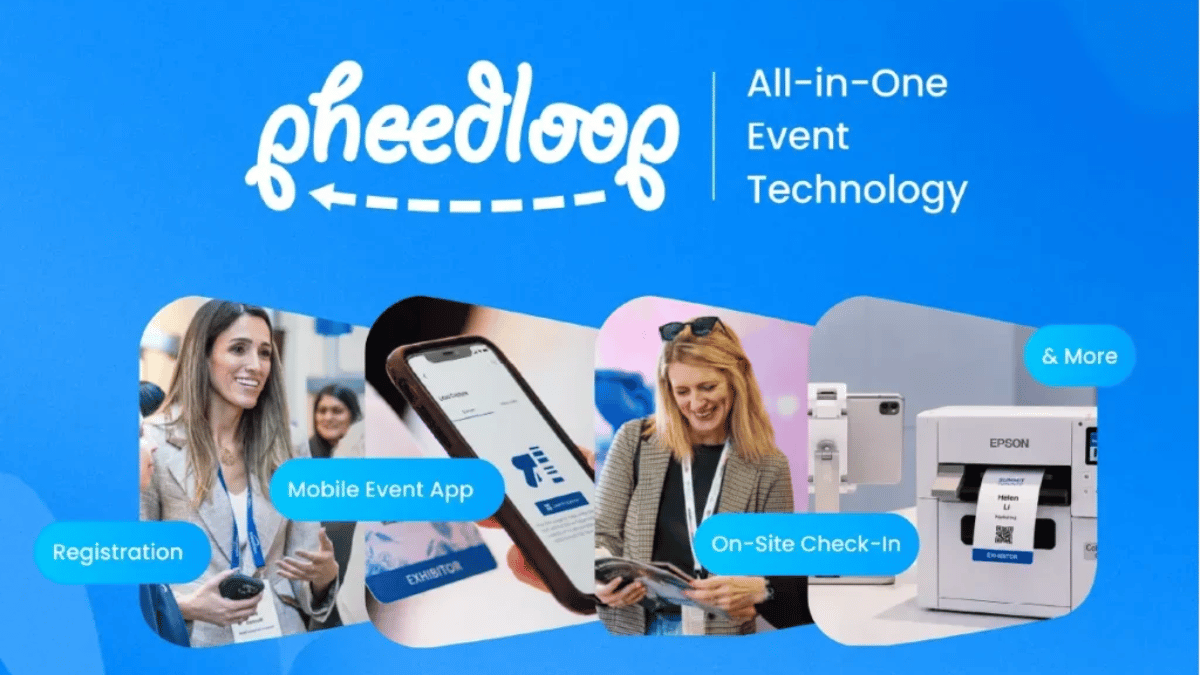
This connected-platform philosophy is a key part of the approach taken by PheedLoop, an event technology provider offering solutions across multiple stages of event management.
The company’s platform approach brings together areas such as event registration, abstract and speaker submissions, mobile event applications and on-site check-in. The broader idea is to reduce the operational gaps that can appear when organisers rely on several independent event technology providers.
For event professionals, the value of this approach goes beyond having multiple features under one technology provider. The bigger advantage is the potential to create a more consistent flow of information throughout the event lifecycle.
When event data is connected, organisers can spend less time moving information between systems and more time managing the event itself.
Why Fewer Technology Handoffs Matter
The event industry has often measured technology value by the number of capabilities a platform provides. However, for lean event teams, the number of handoffs between systems may be just as important.
Every additional platform can introduce another login, database, integration, workflow and potential point of failure.
Reducing those handoffs can simplify daily operations. Instead of asking an event coordinator to update five systems following one change, a connected platform can allow a single update to reach multiple event touchpoints.
This can be particularly valuable during the final days before an event, when schedules, speakers, exhibitors and attendee information can change rapidly.
Connected Data Can Improve Event Operations
A unified approach can also provide event teams with a clearer view of their data.
When registration, exhibitor information, speaker details and attendee engagement are managed through disconnected platforms, obtaining a complete picture can require data exports and manual reconciliation.
Connected systems can reduce this complexity by allowing information to move more consistently between different functions.
For organisers, this can support faster decision-making and reduce the risk of outdated information appearing in front of attendees, exhibitors or speakers.
Event Technology Is Moving Beyond Feature Competition
The event technology market has experienced rapid innovation in recent years. New tools have introduced sophisticated analytics, artificial intelligence, networking features, personalised recommendations and interactive experiences.
The next phase of development, however, may be less about adding another standalone feature and more about improving how existing capabilities work together.
For event organisers, a platform that offers fewer operational gaps can sometimes deliver more practical value than a collection of advanced tools that require constant manual coordination.
This is particularly relevant for small and mid-sized event teams, where every additional administrative task can place pressure on already limited resources.
The Future of Event Management Could Be More Connected
The evolution of event technology is increasingly pointing toward connected event ecosystems rather than isolated point solutions.
The goal is not necessarily to eliminate every specialised technology product. Instead, organisers and technology providers need to consider how information moves from one stage of the event journey to another.
From the moment an attendee registers to the moment they check in, enter a session, interact with an exhibitor and receive post-event communication, each interaction generates and relies on data.
When those interactions are connected, event teams can create a more efficient operational environment while giving attendees a smoother digital experience.
For event professionals evaluating their technology stacks, the key question may therefore be changing. Instead of simply asking which platform has the most features, organisers may increasingly ask how effectively those features communicate with each other.
As the event industry continues to adopt new technologies, connectivity could become one of the most important measures of a successful event technology strategy. The next major improvement may not come from another standalone feature, but from closing the gaps between the tools organisers already use.