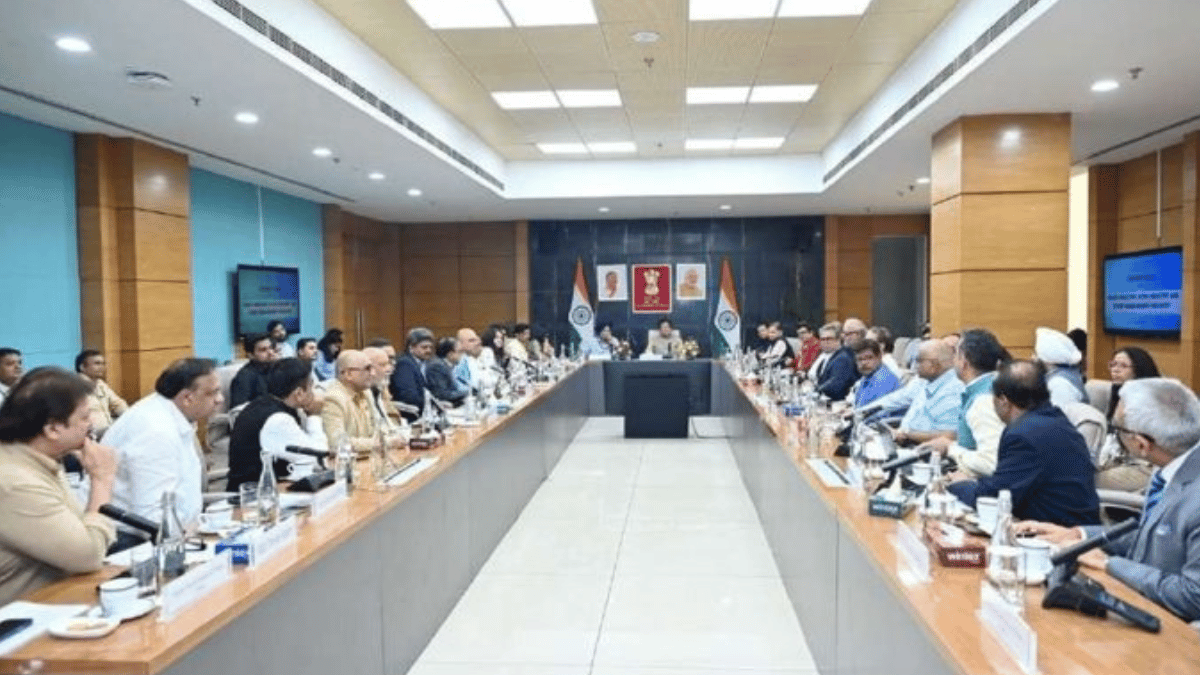
The Event and Entertainment Management Association (EEMA) has welcomed a series of significant policy-level developments aimed at rationalising and streamlining India’s music licensing ecosystem. The reforms were discussed during a high-level meeting convened by Hon’ble Minister of Commerce and Industry Shri Piyush Goyal at Vanijya Bhawan, New Delhi, marking a major step forward in resolving long-standing challenges faced by India’s events and entertainment industry.
The meeting brought together key representatives from the event management sector, exhibition industry, hospitality sector, venue owners, and major stakeholders from the music industry to address operational and regulatory concerns surrounding music licensing in India. The discussions focused on simplifying compliance structures, resolving legal ambiguities, and creating a more transparent and business-friendly framework for the use of copyrighted music across events and celebrations.
EEMA Raises Industry Concerns at High-Level Policy Discussion
Representing EEMA at the meeting were Mr. Sabbas Joseph and Mr. Ankur Kalra, General Secretary – EEMA, alongside senior film and television personality Mr. Shashi Ranjan, who represented the Indian Television Academy.
During the meeting, EEMA strongly highlighted the operational, financial, and legal challenges event organisers face under the current music licensing system. The association emphasised that unclear licensing structures often lead to confusion, disputes, and financial strain for event professionals, especially in social celebrations and private events where interpretations of the law remain inconsistent.
EEMA stressed the urgent need for a more practical licensing framework that supports compliance while reducing unnecessary operational friction for organisers and venue operators.
Major Clarification on Wedding Exemptions Under Copyright Law
One of the most significant outcomes of the meeting was the clarification provided by Shri Piyush Goyal regarding wedding exemptions under Section 52 of the Indian Copyright Act.
The Minister clarified that the term “marriage” should not be narrowly interpreted as only the official wedding ceremony. Instead, in both spirit and legal interpretation, it should include all associated wedding-related celebrations such as Roka, Mehndi, Sangeet, Reception, Engagement functions, and other customary ceremonies.
This clarification addresses a major area of confusion that has impacted event organisers, families, and venues across India for years. The lack of clarity often resulted in disputes over whether music licensing fees applied to pre-wedding and post-wedding events, creating legal uncertainty and operational complications.
The Minister’s interpretation offers immediate clarity while setting the stage for formal legal reform.
Formal Amendment Process to Strengthen Legal Clarity
Recognising the need for permanent legislative certainty, Shri Piyush Goyal directed the initiation of a formal amendment process within the Indian Copyright Act to explicitly clarify this interpretation.
He further instructed that the matter be placed before the Parliamentary Standing Committee at the earliest opportunity for review and progression.
This move is being viewed as a landmark development for India’s event and entertainment ecosystem, as it would establish clear legal protections and significantly reduce disputes arising from differing interpretations of the law.
Industry stakeholders have welcomed the decision as a practical step toward reducing unnecessary litigation and creating a smoother operating environment for event organisers and venue owners.
Review of Sangeet Dwar Portal and Single Window Licensing
Another key focus of the meeting was the review of the Sangeet Dwar Portal and the Single Window Licensing mechanism, which were introduced to simplify licensing access for event organisers and commercial users.
Stakeholders raised concerns around the commercial viability, operational efficiency, and implementation challenges associated with the current system. Several industry representatives pointed out issues related to licensing tariffs, accessibility, procedural delays, and overall usability.
In response, Shri Piyush Goyal directed the committee headed by Shri Anoop Jalota and Shri Sanjay Tandon to comprehensively address tariff-related and operational concerns within 30 days.
The committee has been tasked with working toward a licensing structure that is more balanced, competitive, transparent, and compliance-friendly, ensuring that all stakeholders can operate within a fair and practical regulatory framework.
Industry Applauds Government’s Proactive Approach
Commenting on the developments, Ankur Kalra, General Secretary of EEMA, described the move as the result of years of sustained advocacy and collaborative efforts by India’s events and entertainment fraternity.
He noted that the industry has consistently pushed for greater transparency, rationalisation, and fairness in India’s music licensing landscape, and welcomed the Minister’s proactive intervention in resolving these concerns.
Kalra also acknowledged the government’s willingness to engage directly with industry stakeholders and work toward solutions that could significantly reduce operational disputes and legal complexities.
A Defining Moment for India’s Events Ecosystem
The latest policy developments signal a defining moment for India’s rapidly growing events and entertainment sector. A simplified and transparent licensing framework has long been considered essential for encouraging business growth, reducing compliance challenges, and supporting innovation across live events, exhibitions, weddings, hospitality, and entertainment experiences.
With active government participation and formal reform measures now underway, industry stakeholders are optimistic that India is moving toward a more practical and progressive music licensing ecosystem—one that balances copyright protection with operational ease and industry growth.