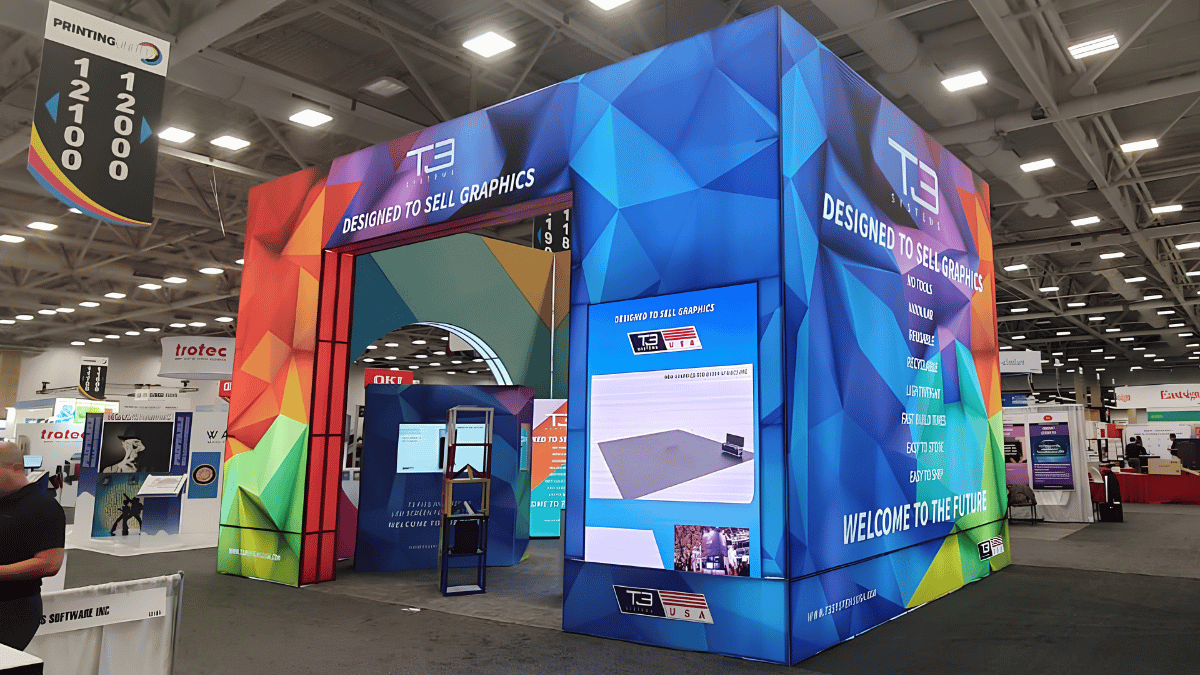
A European exhibitor arriving at an American trade show for the first time can quickly discover that the rules of the exhibition floor are very different from those in Europe.
Imagine a European exhibitor walking onto a U.S. show floor during move-in morning, picking up a case and carrying it toward his booth. A man he has never met politely asks him to put it down.
The request may seem strange at first, but it reflects one of the most important differences between European and American exhibitions: who is permitted to perform certain tasks on the show floor.
For European companies exhibiting in the United States, understanding drayage, union labor rules, booth construction, electrical work and material handling can prevent unexpected costs and potentially serious delays during move-in.
Drayage Is a Major Part of U.S. Trade Shows
One of the biggest surprises for European exhibitors in the United States is drayage.
Unlike many European exhibitions, where exhibitors and contractors may have greater flexibility in moving materials directly to a stand, U.S. trade shows commonly use an organised material-handling system.
Freight generally does not simply arrive at the exhibition stand. Instead, it may be delivered to the venue or a designated marshalling area before being moved to the booth by the official material-handling contractor.
The service typically involves receiving, moving, storing and returning exhibition freight. Charges are commonly calculated according to shipment weight and may include minimum charges.
For European exhibitors, this can initially appear unnecessary, particularly when the exhibition stand is only a short distance from the loading area. However, the system exists to manage large-scale move-in operations involving hundreds or thousands of exhibitors and limited loading dock capacity.
Without a coordinated system controlling the movement of freight, exhibition halls could quickly become congested.
For companies exhibiting in the United States for the first time, drayage should therefore be treated as a core exhibition cost rather than an unexpected additional fee.
Understanding the expected material-handling charges before signing a booth contract can make a significant difference to the overall exhibition budget.
Union Labor Rules Can Affect Booth Installation
Another important consideration for European exhibitors is union labor.
In several major U.S. exhibition markets, particularly unionised cities, specific types of work may fall under defined labor jurisdictions. Depending on the venue and local regulations, different workers or teams may be responsible for booth construction, electrical installation, rigging and other services.
The exact rules can vary between cities, exhibition venues and individual events.
That makes it difficult for European exhibitors to rely on experience from previous American trade shows.
A task that an exhibitor or European stand builder might normally perform independently could require authorised labor at another U.S. venue.
Electrical work is a particularly important example.
A European exhibitor might reasonably expect to connect its own booth lighting, particularly if the installation is simple. However, if that work falls within the jurisdiction of an electrical union at a particular exhibition, installing the lights independently could create serious problems.
In the worst-case scenario, booth power may have to be disconnected until the work is removed and reinstalled by the authorised contractor.
The result can be much more than an additional labor bill. A booth without electricity immediately before a show opens can affect product demonstrations, lighting, presentations and the overall visitor experience.
Always Check Labor Rules Before Move-In
The challenge for European exhibitors is that the rules are not always obvious.
The requirements may differ from one exhibition city to another, meaning a company cannot assume that the procedures followed at one U.S. show will automatically apply at the next.
Before arriving at the venue, exhibitors should confirm the labor jurisdictions that apply to their booth.
It is particularly important to establish who can perform electrical work, install hanging structures, assemble booth components, move freight and undertake other installation tasks.
Getting this information in writing before move-in can eliminate confusion when contractors and exhibitors arrive at the hall.
The basic principle is simple: ask before doing the work.
A few emails with the exhibition organiser or general service contractor can be considerably less expensive than discovering a labor restriction after the booth has already been installed.
Small U.S. Booths May Not Have Rigid Walls
Booth construction is another area where European expectations can cause problems.
In many European exhibitions, smaller exhibition stands commonly use modular shell schemes. Aluminium frames and panels create defined walls around the booth, providing exhibitors with a structure onto which graphics, lighting and other elements can be attached.
European exhibitors often design their displays around these existing structures.
The situation can be different in the United States.
Smaller U.S. trade show booths are often configured using pipe and drape, with fabric panels suspended between poles rather than rigid walls.
For an exhibitor accustomed to designing around an Octanorm-style or other modular shell scheme, this can create a major design issue.
A fabric drape is not a rigid wall. It may not support graphics, shelving, lighting or other heavy booth components.
As a result, an exhibition stand designed in Europe may arrive in the United States without the physical structure required to install key elements.
Ask One Important Question Before Designing the Booth
European exhibitors planning a small U.S. trade show booth should ask a basic question during the design stage:
Does the booth have a solid wall, or does it use pipe and drape?
The answer can influence the entire stand design.
If the booth uses pipe and drape, graphics and branding may need to be designed as freestanding elements. Display systems, product shelving and lighting may also need independent support.
This is why understanding the exhibition’s booth specifications before finalising the design is essential.
A relatively small design assumption made in Europe can become an expensive problem when the stand reaches the American exhibition floor.
U.S. Trade Shows Can Be Highly Organised
Despite the additional costs and regulations, there is another side to the American exhibition system.
U.S. trade shows can be highly organised, particularly because the general service contractor model creates clearly defined responsibilities.
For exhibitors, having a central contractor responsible for material handling, booth services and other operational requirements can provide a clear point of contact when something goes wrong.
At a busy exhibition, that can be extremely valuable.
Move-in can involve large numbers of exhibitors, contractors, freight shipments and service teams working simultaneously. A structured system helps keep these activities moving.
For European exhibitors who are used to having more flexibility over certain installation tasks, the American approach may initially feel restrictive. However, once the rules are understood, the structure can make the overall process more predictable.
American Exhibition Stands Can Also Be More Dramatic
European companies should also consider the visual difference between exhibition markets.
Many U.S. trade shows feature larger booths, prominent branding and strong lighting designed to attract attention from busy show-floor audiences.
A stand design that looks sophisticated and understated at a European exhibition may appear comparatively restrained at a large U.S. event.
Companies entering the American market should therefore consider how their brand will look within the wider exhibition environment.
Strong graphics, clear messaging, effective lighting and an open visitor experience can help an international exhibitor compete for attention.
The objective is not simply to make the booth bigger. It is to ensure that the company’s presence is visually appropriate for the scale and character of the American event.
European Exhibitors Need to Plan U.S. Shows Differently
The biggest mistake European exhibitors can make is assuming that exhibiting in the United States is simply a more expensive version of exhibiting in Europe.
The operational systems are different.
Drayage needs to be budgeted from the beginning. Union labor requirements need to be checked before installation. Electrical and rigging responsibilities need to be clarified. Small booths need to be examined carefully to determine whether they include rigid walls or pipe and drape.
These issues can have a direct impact on both the exhibition budget and the move-in schedule.
The earlier they are identified, the easier they are to manage.
Preparation Can Prevent Expensive Exhibition Problems
For European brands planning their first U.S. trade show, preparation should begin well before the shipment leaves Europe.
Exhibitors should review the event’s exhibitor manual, confirm material-handling procedures, understand drayage charges and identify the official contractors responsible for different services.
They should also confirm whether union labor applies and which activities exhibitors or their stand contractors are allowed to perform themselves.
Booth designs should be developed according to the actual U.S. show-floor specifications rather than assumptions based on European exhibitions.
These steps may appear overly cautious, but they can prevent some of the most expensive mistakes during move-in.
What European Exhibitors Should Remember
The contrast between European and American exhibitions ultimately comes down to understanding how each market operates.
European exhibitors heading to the United States should remember three key points: drayage is a real and significant cost, labor jurisdictions can determine who is allowed to perform specific tasks, and small booths may use pipe and drape rather than rigid walls.