The Farnborough International Airshow 2026 has highlighted a major shift in how exhibitors and aerospace businesses measure success at large-scale trade shows. While the event attracted packed exhibition halls, busy national pavilions and fully booked hospitality chalets, the focus for many exhibitors increasingly moved beyond visitor numbers towards meaningful business conversations and measurable engagement.
The scale and activity witnessed at Farnborough International Airshow 2026 reinforced the event’s position as one of the world’s most influential aerospace exhibitions. However, the intensity of the show also highlighted a growing challenge for exhibitors: how to ensure that valuable conversations take place when thousands of delegates are competing for limited time and attention.
Farnborough International Airshow 2026 Shows New Exhibition Challenge
High attendance has traditionally been considered a major indicator of exhibition success. For exhibitors, a busy stand and large numbers of badge scans have often been viewed as evidence of a successful event.
The experience at Farnborough International Airshow 2026, however, demonstrated that footfall alone may no longer provide a complete picture of event performance.
Exhibitors were competing for the attention of government delegations, military representatives, aerospace manufacturers, suppliers, commercial partners, investors and international media. With visitors managing packed schedules of meetings, demonstrations and networking opportunities, simply attracting people to a stand was not enough.
The companies generating stronger value from the event were increasingly those that approached engagement as a structured process before, during and after the show.
Exhibitors Move Towards Planned Business Conversations
One of the most significant developments highlighted during Farnborough International Airshow 2026 was the increasing importance of pre-planned meetings.
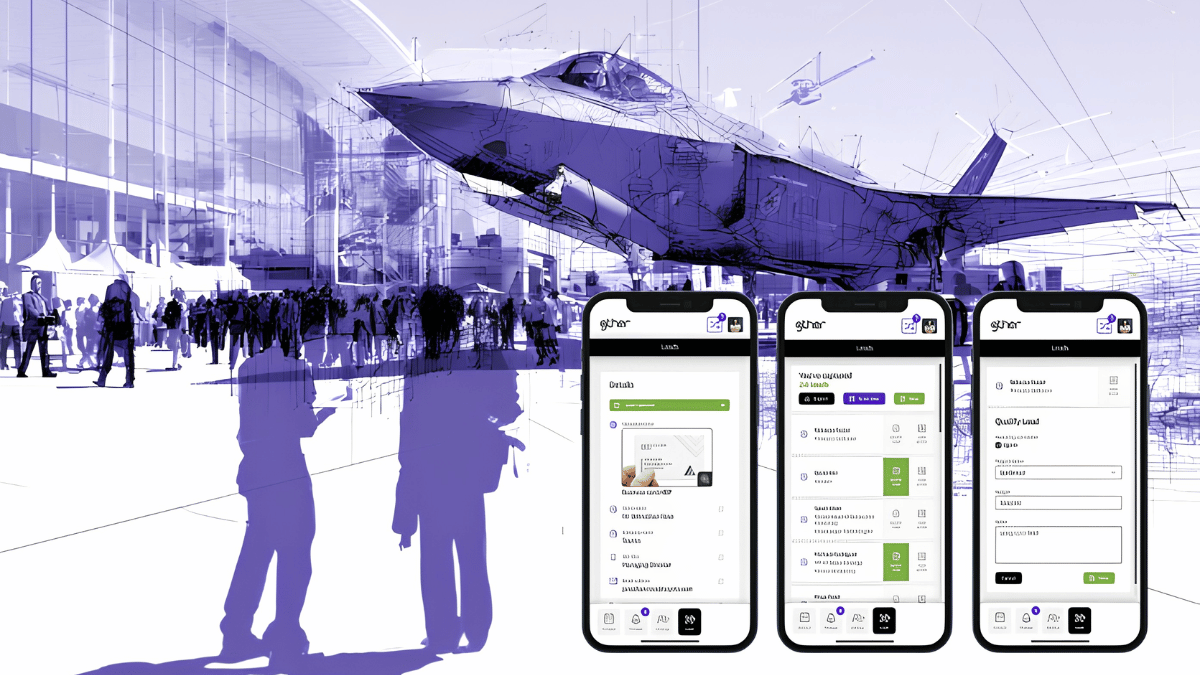
Rather than relying entirely on visitors arriving at exhibition stands, organisations are increasingly using personalised invitations and digital RSVP systems to identify priority audiences before an event begins.
These systems allow exhibitors to segment audiences and develop more relevant experiences for different categories of visitors. Government representatives, prospective customers, existing partners, suppliers and media contacts can all be managed according to their individual requirements.
Meeting scheduling has also become a central element of modern exhibition planning. Key stakeholders can be invited to meetings in hospitality chalets, executive suites and exhibition areas, helping organisations make better use of the limited time available during major international shows.
At Farnborough International Airshow 2026, structured invitation management and cross-pavilion meeting scheduling were particularly relevant for organisations managing complex hospitality programmes.
Such technology provides teams with greater visibility of who is attending, where meetings are taking place and how schedules can be adjusted as circumstances change.
Technology Supports Relationships Rather Than Replacing Them
The growing use of event technology does not necessarily mean that personal relationships are becoming less important.
Instead, the experience at Farnborough International Airshow 2026 highlighted how technology can create a framework that makes relationship-building more efficient.
For aerospace businesses, major exhibitions are ultimately about conversations. A meeting with the right government representative, procurement executive, technology partner or potential customer can be significantly more valuable than hundreds of casual interactions.
Technology can help remove logistical friction by managing invitations, meetings and visitor information. The human interaction remains at the centre of the process.
This distinction is becoming increasingly important as international exhibitions become larger and more complex.
Lead Capture Evolves Beyond Badge Scanning
Lead capture is another area undergoing significant change across the exhibition industry.
For many years, scanning visitor badges was the standard method of collecting leads at trade shows. While badge scanning remains useful, businesses are increasingly looking for more detailed information about every interaction.
Following Farnborough International Airshow 2026, the questions facing exhibitors are becoming more commercially focused.
Who was the person who visited the stand? What were they interested in? What products or services did they discuss? Was there a specific business opportunity? What follow-up action was agreed? And how valuable is the conversation for the organisation?
These questions demonstrate why simple contact collection is no longer sufficient for many exhibitors.
AI Brings Real-Time Lead Qualification to Exhibitions
Artificial intelligence is increasingly being incorporated into exhibition lead management to provide greater context around visitor interactions.
AI-powered lead capture can help exhibitors qualify conversations in real time, summarise discussions, identify areas of interest and highlight potential follow-up actions.
At a major event such as Farnborough International Airshow 2026, where sales and marketing teams may interact with hundreds of delegates, the ability to organise this information can have significant commercial value.
Instead of returning to the office with a long list of names and contact details, teams can potentially return with a more structured understanding of their most important conversations.
This can help sales teams prioritise follow-up activity and distinguish high-intent prospects from general visitors.
Measuring Exhibition ROI Beyond Visitor Numbers
The changing approach to exhibitions is also influencing how return on investment is measured.
Attendance and footfall remain important metrics, but exhibitors are increasingly interested in what happens after a visitor interaction.
For businesses participating in Farnborough International Airshow 2026, meaningful performance indicators can include the number of scheduled meetings completed, the quality of commercial discussions, lead qualification, visitor intent and engagement across hospitality and exhibition areas.
Follow-up activity and the creation of potential sales pipelines can provide an even clearer indication of whether an exhibition delivered commercial value.
This represents a broader shift in the global events industry from measuring activity to measuring outcomes.
Hospitality Chalets Become Important Business Environments
The hospitality environment also plays a significant role in modern aerospace exhibitions.
At Farnborough International Airshow 2026, hospitality chalets and executive meeting spaces provided important environments for organisations to conduct private discussions with customers, partners, government representatives and other senior stakeholders.
Unlike traditional exhibition stands, these environments can provide greater privacy and flexibility for high-value conversations.
Managing these spaces effectively, however, can become complicated when organisations have large numbers of guests and multiple meetings taking place throughout the event.
Digital invitation systems and meeting management tools can help organisations coordinate these programmes and provide teams with a clearer view of their schedules.
The Visitor Journey Starts Before the Exhibition
Another important change highlighted by Farnborough International Airshow 2026 is that the visitor journey increasingly begins before attendees arrive at the venue.
Personalised invitations, registration processes, meeting scheduling and pre-event communications can help organisations establish relationships before the exhibition floor opens.
This means exhibitors can enter the event with a clear understanding of which stakeholders they want to meet and what conversations they want to have.
During the event, digital tools can then support meeting management and lead qualification. After the event, the same data can contribute to follow-up and pipeline development.
The result is a more connected approach to exhibition engagement rather than treating the event as a standalone three- or four-day activity.
Farnborough International Airshow 2026 Reinforces Importance of Follow-Up
The real value of an exhibition is often determined after the event closes.
A promising conversation can easily lose momentum if follow-up is delayed or if important details are forgotten. With large teams handling hundreds of interactions, ensuring that every meaningful conversation receives the appropriate next step can be challenging.
AI-assisted summaries, lead qualification and structured engagement data can help sales and marketing teams move more quickly after the event.
For exhibitors at Farnborough International Airshow 2026, the ability to turn conversations into clearly defined actions is increasingly becoming part of the overall event strategy.
Relationships Remain at the Centre of Aerospace Events
Despite the rapid development of event technology, the fundamental purpose of aerospace exhibitions has not changed.
Relationships remain the foundation of successful events.
The experience of Farnborough International Airshow 2026 demonstrated that technology works best when it supports human interaction rather than attempting to replace it.
For exhibitors, the objective is not simply to automate every part of the event experience. Instead, technology can be used to simplify logistics, reduce administrative work and provide teams with better information so they can spend more time focusing on important relationships.
The Future of Exhibition Engagement
As international trade shows continue to expand, exhibitors are likely to place greater emphasis on intentional engagement rather than raw visitor numbers.
The lessons from Farnborough International Airshow 2026 point towards an exhibition model where success is defined by the quality of conversations, the relevance of visitors, the effectiveness of meetings and the commercial outcomes generated after the event.
For organisers and exhibitors alike, this means designing the visitor journey around meaningful interactions at every stage.
From personalised invitations before the event to structured meetings during the show and intelligent follow-up afterwards, every stage can contribute to a stronger return on investment.
Ultimately, the busiest exhibition may not necessarily be the most successful one. What matters is whether the right people are having the right conversations and whether those conversations continue to generate value after the exhibition closes.
Farnborough International Airshow 2026 has provided another clear example of this changing exhibition landscape. As the aerospace industry continues to bring together global businesses, governments and technology leaders, the competitive advantage may increasingly belong to organisations that understand how to transform event activity into meaningful, measurable engagement.