In today’s highly competitive marketplace, where brand loyalty is constantly under pressure, standing out requires more than just scale or spectacle. By 2026, exhibitions and trade shows are increasingly being evaluated on something far more meaningful: purpose-driven experiences that resonate deeply with audiences. The most impactful brand activations are no longer those that simply impress, but those that create lasting emotional connections and meaningful change.
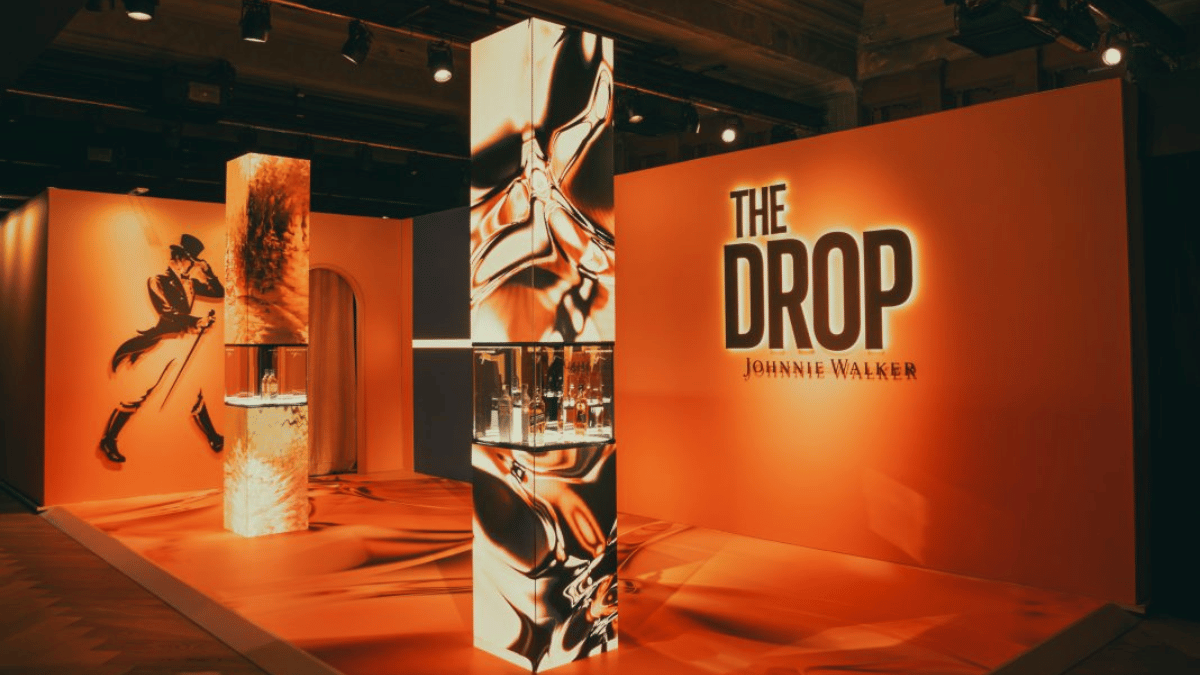
This transformation is particularly evident in the evolution of experiential spaces. Traditional static booths and one-time installations are being replaced by modular, reusable, and narrative-led environments. These flexible ecosystems are designed to travel seamlessly across global markets while maintaining a consistent brand identity. A strong example of this trend is The Johnnie Walker Drop, an innovative activation developed by London-based creative agency Chorus. Rather than being a one-off event, the concept was designed as a long-term advocacy platform-intimate in scale but powerful in impact.
A key differentiator in 2026 is the strength of brand-agency partnerships. When agencies are trusted to align closely with brand vision, strategy and creativity work in unison. In this case, the objective was clear: to reposition Johnnie Walker as the preferred choice among bartenders. Instead of relying on conventional trade show tactics, the experience was crafted to celebrate bartending as both a profession and an art form. Bartenders were not treated as passive consumers but as collaborators, fostering authentic engagement and building lasting relationships. This approach reflects a broader industry shift towards emotionally intelligent brand storytelling that prioritizes advocacy over attention.
Technology also plays a critical role, but its application has evolved significantly. In 2026, the most effective use of technology is not transactional but sensorial. The Johnnie Walker Drop featured a multi-sensory tasting journey where visitors explored flavour innovation through digital art by Zach Lieberman, complemented by a bespoke sound and lighting experience created by electronic music producer Halina Rice. Instead of explaining flavour profiles through traditional methods, the experience allowed participants to feel and interpret them. This refined use of immersive technology enhances audience engagement, increases dwell time, and strengthens brand recall.
Sustainability has also become a fundamental expectation rather than a competitive advantage. However, the most forward-thinking brands now treat sustainability as a creative opportunity rather than a limitation. The Johnnie Walker Drop was built using an off-the-shelf modular system, enabling adaptability and reuse across multiple global activations. This approach significantly reduces waste and carbon impact while maintaining premium design standards. It demonstrates how sustainability and creativity can coexist, reinforcing a growing industry mindset that values thoughtful design over excess.
As exhibitions and trade shows continue to evolve, the focus is shifting towards experiences that are intentional, immersive, and sustainable. Brands that embrace this approach are not only capturing attention but also building deeper, more meaningful connections with their audiences—setting a new benchmark for experiential marketing in 2026.