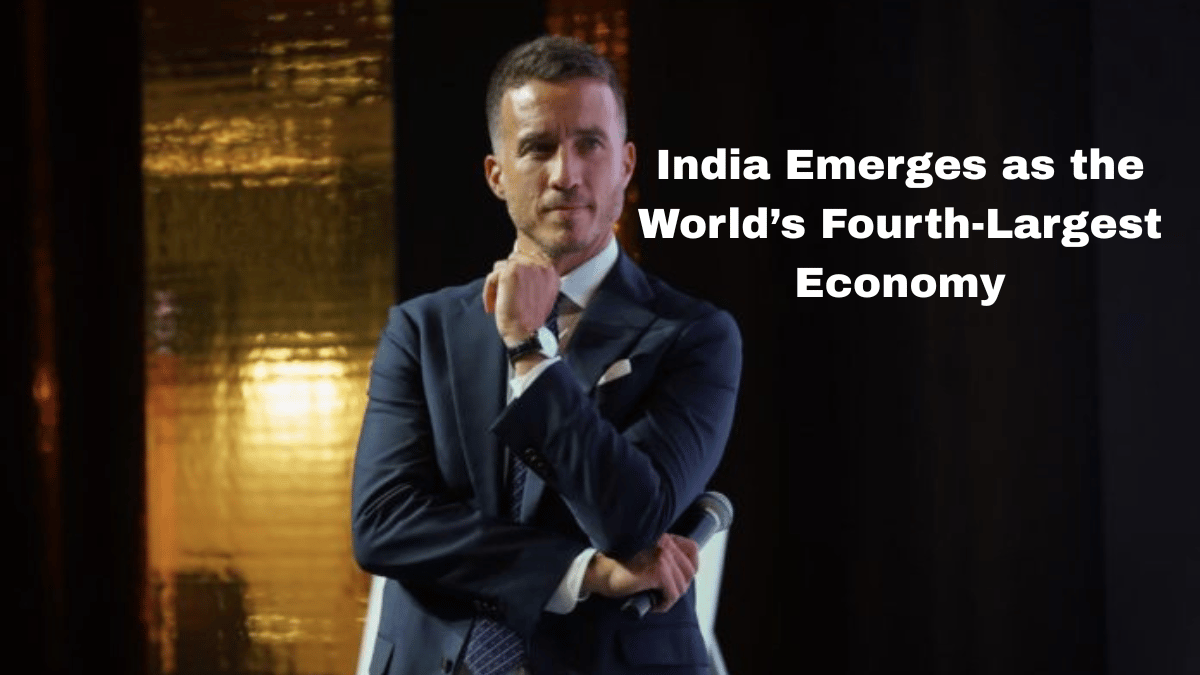
India’s emergence as the world’s fourth-largest economy represents far more than a numerical milestone—it marks a structural shift in the global economic balance, according to Marco Carniello. He believes India’s long-discussed growth story has now moved decisively from future promise to present reality, unfolding at scale and with strategic clarity.
Citing insights from a recent Harvard Business Review analysis on India’s economic trajectory, Carniello notes that India is no longer characterized by untapped potential. Instead, it has entered a phase where scale, speed, and strategic direction are converging to create sustained global influence and long-term economic leadership.
Carniello highlights four key forces driving India’s transformation. The first is demographics. With the world’s largest and youngest workforce, India holds a competitive advantage over aging developed economies. The second is its vast domestic market, which provides resilience, demand-led growth, and insulation against global economic volatility.
The third factor is India’s rapid technological leapfrogging. From digital payments and fintech ecosystems to enterprise software and IT infrastructure, India has adopted digital systems at scale, enabling businesses and consumers to integrate seamlessly into the modern global economy. The fourth driver is structural reform—backed by infrastructure investment and industrial policy—positioning India as a serious contender in global manufacturing and value chains.
What distinguishes India’s ascent, Carniello emphasizes, is its deep-rooted entrepreneurial culture and human capital strength. Adaptability, innovation, and a long-term mindset allow India not only to grow, but to shape its own development path within an increasingly multipolar global economy.
From a business and exhibitions industry standpoint, India has shifted from being a peripheral opportunity to a strategic anchor market. Carniello confirms that Italian Exhibition Group SpA has publicly committed to entering India, viewing the country not just as a source of exhibitors, but as a critical geography for future expansion, innovation, and global collaboration.
This strategic repositioning is already evident on the global exhibition stage. India’s selection as Guest Country at SIGEP and its growing presence at Vicenzaoro underscore a broader transformation—Indian companies are no longer merely participating in global trade, but increasingly helping shape international markets and industry standards.
Carniello concludes that India’s transition from the “next great power” to a present great power is well underway. For global organizations willing to engage early with a long-term, partnership-driven approach, India offers more than growth—it offers the opportunity to co-create enduring global value.