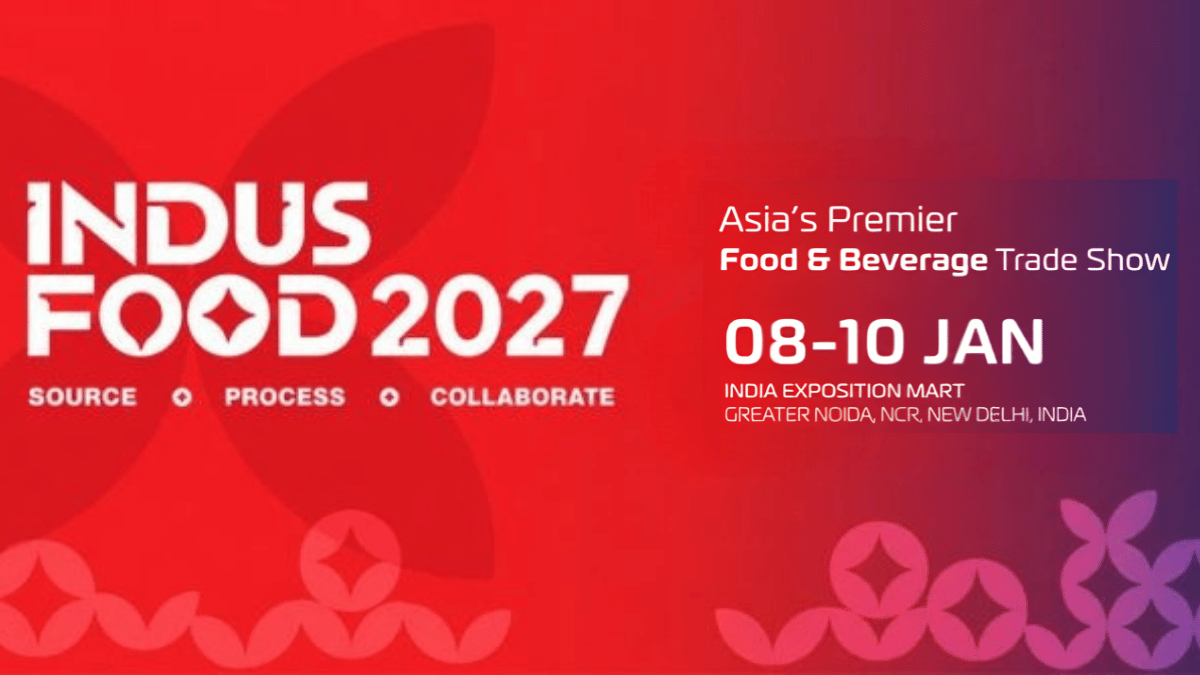
October 29, 2026, India’s food and beverage export industry will receive another international business platform when Indusfood 2027 takes place from January 8–10, 2027, at India Expo Centre & Mart in Greater Noida, Uttar Pradesh. Organised by the Trade Promotion Council of India (TPCI), the business-to-business exhibition is designed to connect Indian food producers, processors and suppliers with international buyers, distributors and other industry stakeholders.
The upcoming edition is expected to provide opportunities for companies across food processing, agricultural commodities, ingredients, packaging, retail and distribution to explore commercial partnerships and international sourcing opportunities. The exhibition forms part of broader efforts to strengthen India’s participation in global food supply chains and expand access to overseas markets.
Indusfood 2027 will follow the ninth edition, held from January 8–10, 2026, which reported participation from thousands of exhibitors and international buyers. According to TPCI’s post-event announcement, Indusfood 2026 attracted more than 2,200 exhibitors and over 15,000 international buyers from more than 120 countries.
The organiser also reported more than US$1.5 billion in on-the-spot business opportunities across over 125,000 square metres of exhibition space. These figures represent organiser-reported outcomes and should not be interpreted as independently audited transactions or completed export orders.
Indusfood 2027: Dates, Venue and Organiser
Indusfood 2027 is scheduled for January 8–10, 2027, at India Expo Centre & Mart in Greater Noida, Uttar Pradesh. The venue provides an exhibition platform for businesses seeking to showcase food products, meet prospective buyers and explore commercial opportunities across domestic and international markets.
TPCI is responsible for organising the exhibition. The council works to promote Indian trade and facilitate business connections between Indian companies and international markets. Through Indusfood, participating businesses can present their products to buyers seeking suppliers across different food categories.
The exhibition’s business-to-business format is intended to support direct interaction between manufacturers, exporters, importers, distributors, retailers and other participants in the food value chain.
Further details about the 2027 exhibitor directory, visitor registration, conference sessions and the daily programme should be confirmed through official announcements from the organiser.
Indusfood 2026 Reported More Than 2,200 Exhibitors
The scale reported for Indusfood 2026 highlights the exhibition’s role in international food trade. TPCI stated that the ninth edition brought together more than 2,200 exhibitors and over 15,000 international buyers representing more than 120 countries.
The organiser also reported business opportunities exceeding US$1.5 billion and exhibition space covering more than 125,000 square metres. The figures indicate the scale of participation reported by the event, although the stated business opportunities do not necessarily represent finalised contracts or realised export revenue.
For exhibitors, international trade exhibitions can provide a venue to introduce products, discuss supply requirements, assess buyer demand and establish relationships with prospective business partners. For overseas buyers, the format offers an opportunity to explore Indian suppliers and compare products across multiple food categories.
Whether these interactions translate into sustained commercial growth depends on factors beyond the exhibition itself, including pricing, product quality, logistics, regulatory compliance and the ability to fulfil orders consistently.
Food Categories Across the Exhibition
Indusfood covers a broad range of products and services across the food and beverage industry. The categories associated with the exhibition include dairy products, seafood, fresh produce, processed foods, plant-based alternatives, confectionery, beverages and food ingredients.
The breadth of these segments reflects the diversity of India’s food production and processing ecosystem. Agricultural commodities provide raw materials for manufacturers, while processing and value addition enable businesses to develop products for domestic consumption and export markets.
Food ingredients and packaging also play an important role in connecting producers with manufacturers and distributors. Companies supplying these segments can use industry events to discuss sourcing requirements, product specifications and opportunities for collaboration.
For Indian businesses, participation in an international food exhibition can also help them understand changing buyer preferences and the requirements of different markets. However, product acceptance and export eligibility depend on the relevant destination country’s regulations and individual buyer requirements.
Export Opportunities and International Sourcing
A central objective of Indusfood 2027 is to facilitate business connections between Indian suppliers and international buyers. The event’s focus on sourcing and export development reflects the importance of market access for India’s food-processing and agricultural businesses.
International buyers often evaluate potential suppliers on several factors, including product consistency, pricing, production capacity, delivery schedules, packaging and documentation. Establishing a commercial relationship therefore involves more than an initial meeting at an exhibition.
For exporters, buyer discussions can help identify demand for specific products, understand market preferences and explore potential distribution arrangements. Manufacturers may also use the exhibition to introduce new products or assess whether their existing product ranges meet the requirements of overseas customers.
Smaller businesses can benefit from exposure to international buyers, although their ability to convert leads into orders may depend on production capacity, certification requirements, financing and access to reliable logistics services.
Food Safety and Supply Chain Compliance Remain Critical
As Indian companies pursue opportunities in international food markets, compliance with importing countries’ food-safety requirements will remain an important consideration. Buyers may require documentation relating to product specifications, ingredients, traceability, manufacturing practices and applicable certifications.
Traceability is particularly relevant for businesses dealing with agricultural commodities, seafood, fresh produce and processed foods. The ability to identify the origin and movement of products through the supply chain can help businesses meet buyer requirements and respond to quality concerns.
Logistics also influence export competitiveness. Temperature-controlled transportation, appropriate packaging, efficient handling and reliable delivery schedules can be essential for products with specific storage requirements or limited shelf lives.
For companies attending Indusfood 2027, these considerations are likely to remain central to commercial discussions. Building long-term export relationships requires businesses to demonstrate that they can meet agreed quality standards and supply commitments consistently.
Indusfood 2027 and India’s Food Processing Industry
India’s food industry encompasses agricultural production, processing, packaging, distribution and international trade. Connecting these activities can create opportunities for businesses seeking to move beyond the sale of raw commodities towards higher-value products.
Indusfood provides a business platform through which companies across these segments can explore partnerships. Food processors can meet ingredient suppliers, exporters can connect with prospective buyers, and packaging businesses can engage with manufacturers looking for suitable solutions.
The exhibition’s international orientation also provides an opportunity for businesses to assess market requirements and identify areas where their products may be commercially competitive.
However, the longer-term impact of such events depends on the conversion of business contacts into repeat orders, sustained supplier relationships and measurable trade outcomes. Participation figures and announced business opportunities provide useful indicators of scale, but they do not by themselves establish the value of completed transactions.
What Businesses Can Expect From Indusfood 2027
Companies planning to participate in Indusfood 2027 should review their objectives before the exhibition. Exporters may prioritise meetings with overseas importers and distributors, while manufacturers can focus on sourcing ingredients, packaging materials or processing-related services.
Preparing product information, pricing details, production capacity and relevant compliance documentation can help businesses respond to buyer enquiries. Companies should also confirm the requirements of their target markets before making commitments concerning product approvals, delivery schedules or export eligibility.
International buyers can use the event to identify potential suppliers and discuss commercial terms, product specifications and supply arrangements. Any prospective partnership will still require appropriate due diligence and confirmation of contractual and regulatory requirements.
The final exhibitor list, registration details and programme for Indusfood 2027 should be checked through TPCI’s official communications as the event approaches.
Indusfood 2027: Key Details
Indusfood 2027 is scheduled for January 8–10, 2027, at India Expo Centre & Mart in Greater Noida, Uttar Pradesh. The Trade Promotion Council of India is organising the exhibition to connect businesses across food production, processing, ingredients, packaging and distribution with international buyers.
The previous edition’s reported participation—more than 2,200 exhibitors and over 15,000 international buyers from more than 120 countries—provides context for the exhibition’s international reach. TPCI also reported more than US$1.5 billion in on-the-spot business opportunities at Indusfood 2026.
As preparations continue for the next edition, the exhibition will provide another opportunity for Indian food businesses to explore international sourcing and export partnerships. Its commercial significance will ultimately depend on the quality of buyer-supplier connections and the extent to which those relationships generate sustained trade.
Author: Exhibition Globe News Desk