Event Attendance Challenges Go Beyond Cost Concerns
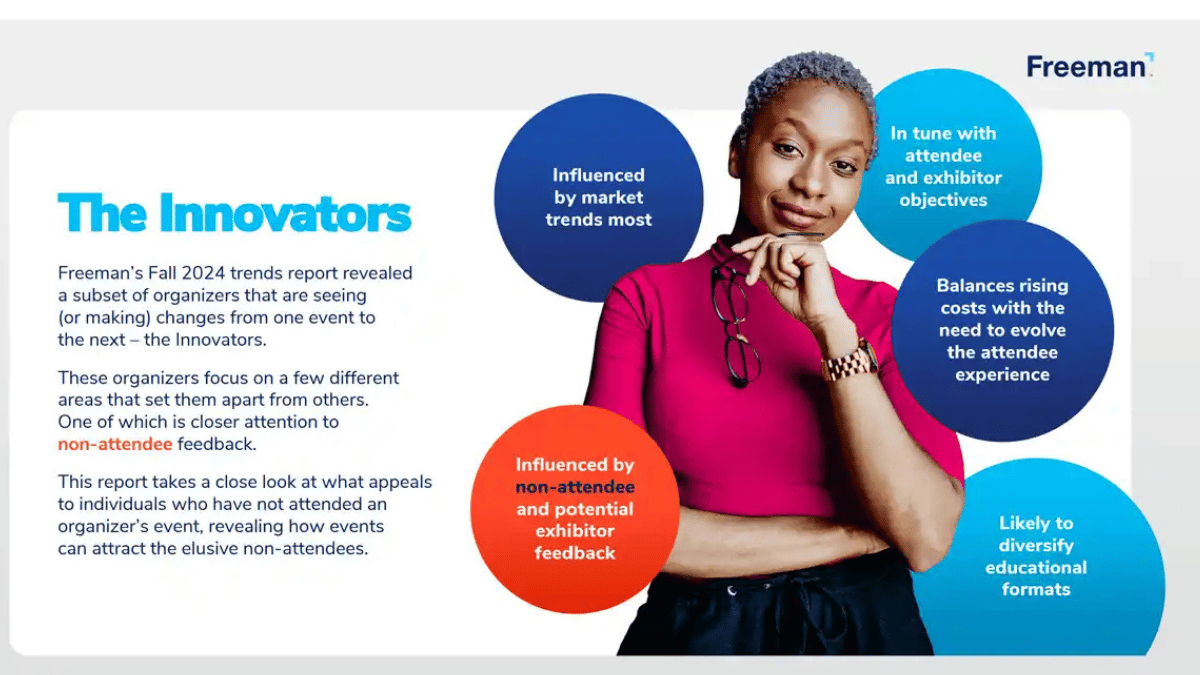
A new report released by Freeman has revealed that while rising costs remain a challenge for event attendance, they are far from the only reason professionals are choosing to skip conferences and tradeshows. The report, “What’s Keeping People From Attending Your Event?”, highlights shifting attendee expectations and points to a growing demand for events that deliver measurable career value and hands-on learning experiences.
The findings are based on Freeman Strategy & Insights’ Community Needs Survey, conducted throughout 2024 and 2025. The extensive research analyzed nearly 20,000 survey responses, including feedback from 6,000 recent event attendees and 6,800 professionals who chose not to attend events during the survey period.
The study provides event organizers with important insights into why professionals are opting out of industry gatherings and what strategies could encourage greater participation moving forward.
Conferences Continue to Dominate Industry Events
According to the survey, conferences represented 72 percent of total responses, while tradeshows accounted for 28 percent, reflecting the continuing dominance of conference-style professional events in the global business events sector.
However, despite the popularity of conferences, attendance challenges are becoming increasingly evident. Freeman’s research suggests that many professionals are not convinced that attending in-person events offers sufficient return on investment when compared to the financial and professional sacrifices involved.
For many non-attendees, concerns extend well beyond registration fees. Travel expenses, hotel costs, time away from daily responsibilities, and uncertainty about professional outcomes all contribute to hesitation around event participation.
The report suggests that event organizers must rethink how they communicate event value if they hope to attract larger and more diverse audiences.
Career Development Is the Top Priority for Non-Attendees
One of the strongest findings from Freeman’s research is that career growth and professional development are significantly more important to non-attendees than to those who regularly attend events.
The data shows that 65 percent of non-attendees identified training and technical competency as a top career priority, compared with 46 percent of recent attendees.
Similarly, 58 percent of non-attendees ranked professional advancement as a key focus, compared to 46 percent of current event participants.
These numbers indicate that professionals who are skipping events are not disengaged from industry learning. Instead, they are highly focused on opportunities that directly support skill-building and long-term career advancement.
Freeman suggests that many traditional events may not be clearly demonstrating how attendance contributes to tangible professional growth, causing potential attendees to seek other educational alternatives.
Hands-On Learning Drives Stronger Interest
Another major insight from the report is the increasing importance of interactive and participatory learning experiences.
According to the findings, 54 percent of non-attendees said hands-on interaction and practical participation are essential learning elements, compared with only 35 percent of recent attendees.
This gap signals a growing expectation for immersive experiences that allow professionals to actively engage with new tools, technologies, and industry concepts rather than simply listening to presentations.
Workshops, live demonstrations, certification opportunities, technical training labs, and real-world case studies are becoming increasingly attractive to professionals seeking actionable knowledge.
Freeman’s report emphasizes that event organizers who build more interactive programming into their agendas are likely to resonate more strongly with potential attendees.
Traditional Event Attractions Are Losing Impact
Interestingly, several elements that have historically been used to market conferences and tradeshows appear to be losing their influence.
Freeman found that location appeal, after-hours entertainment, networking parties, and social gatherings ranked lower among non-attendees than among professionals who already attend events regularly.
While these features may still enhance attendee satisfaction, they are no longer enough to convince hesitant professionals to register.
Instead, non-attendees expressed stronger interest in purpose-driven networking opportunities centered around solving professional challenges, exchanging technical expertise, and discussing industry-specific problems.
This suggests that networking itself remains valuable—but professionals increasingly prefer structured, outcome-focused networking over casual social interaction.
Generational Shifts Are Reshaping Event Expectations
The report also highlights a clear generational divide in event attendance behavior.
Freeman noted that Generation Z and Millennial professionals made up 47 percent of non-attendees, compared with 39 percent of recent attendees.
This younger demographic tends to place greater emphasis on skill acquisition, measurable learning outcomes, and practical value when evaluating professional development opportunities.
Unlike previous generations, younger professionals are often more selective with time and budgets. They expect clear evidence that an event will provide career benefits that justify attendance costs.
This generational shift is forcing event organizers to adapt event programming, communication strategies, and value propositions to better align with evolving workforce expectations.
Clear Value Messaging Is Essential for Future Event Growth
Freeman’s final recommendation is straightforward: event organizers must communicate event value more clearly and directly.
Rather than focusing primarily on destinations, entertainment, or broad networking promises, event marketers should emphasize specific learning outcomes, practical skills development, career advancement opportunities, and hands-on participation experiences.
Providing transparent information about what attendees will gain—and how those benefits apply to their professional goals—can significantly improve event appeal.
As the business events industry continues evolving, Freeman’s research makes one thing clear: future conference and tradeshow success will depend on delivering real professional impact, not just attendance numbers.
For organizers willing to adapt, these changing expectations represent an opportunity to build stronger, more relevant, and future-ready event experiences.