As exhibition organisers reassess their strategies in an increasingly competitive events market, long-term venue partnerships are becoming an important factor in sustainable growth. Rather than viewing venues simply as spaces to host an event, organisers are increasingly looking for partners that understand their commercial objectives, audience expectations and plans for expansion.
This approach is reflected in Olympia’s latest multi-year agreements with London Tech Week, Big Data LDN and Decorex. While the three events serve different industries and audiences, they share a common ambition: to grow while maintaining a strong and recognisable event experience.
Together, the three exhibitions attract more than 60,000 visitors and attendees annually, making their continued commitment to Olympia significant. Their decisions demonstrate how venue investment, infrastructure, accessibility and destination development can influence an organiser’s long-term strategy.
Venue Partnerships Are Becoming Strategic
The traditional relationship between an exhibition organiser and venue has often centred on dates, floor space, pricing and operational delivery. However, the expectations of organisers are changing.
Today, a successful exhibition venue needs to offer more than physical exhibition space. Organisers increasingly consider transport connectivity, hotel availability, hospitality, networking opportunities, technology, sustainability and the overall visitor experience when selecting a long-term venue.
Davinia, Head of Sales – Exhibitions at Olympia Events, brings extensive experience from the organiser side of the industry. Having spent almost two decades working with exhibition organisers, she understands the challenges faced by event teams when planning and delivering large-scale shows.
Her view is that the strongest venue partnerships are built around shared commercial objectives. Organisers need venues that understand where an event is heading and can support its development rather than simply providing space for the next edition.
Big Data LDN Shows the Value of Long-Term Continuity
Big Data LDN provides a strong example of how a long-term venue relationship can support exhibition growth.
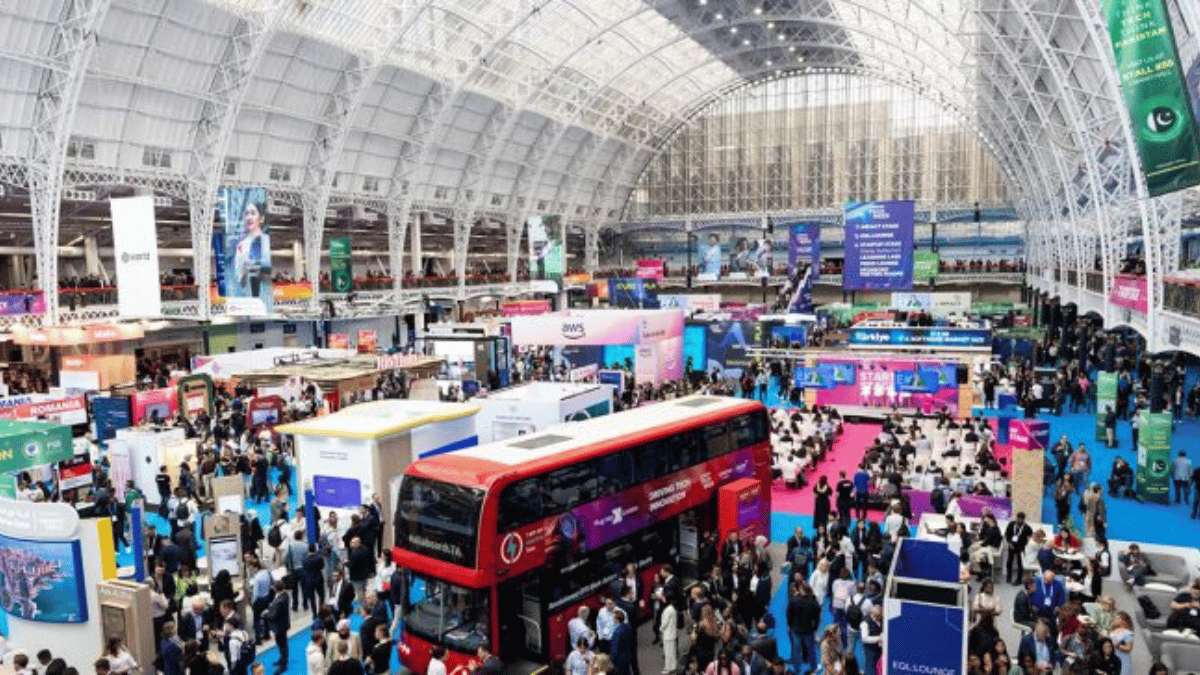
The event launched at Olympia in 2016 as a relatively small specialist show located within the venue’s former conference centre. As attendance and exhibitor demand increased, the event expanded into West Hall before moving into The Grand Hall in 2021.
Today, Big Data LDN occupies Olympia’s two largest exhibition halls, demonstrating the scale of growth achieved over the course of its relationship with the venue.
For the event organiser, continuity has also helped preserve the exhibition’s identity. Rather than repeatedly adapting to completely different venues, Big Data LDN has been able to expand within a familiar environment while retaining the characteristics that its audience associates with the show.
Event Director Andy Steed highlights the importance of this connection, describing Olympia as the event’s home since its launch. The venue’s ability to provide additional space as the event expanded allowed Big Data LDN to grow without losing its established community identity.
This illustrates an important advantage of long-term venue partnerships: scalable exhibition space can allow an event to grow organically without forcing organisers to rebuild their operational model from scratch.
London Tech Week Plans Further Expansion at Olympia
London Tech Week is another major event strengthening its relationship with Olympia through a new three-year agreement.
The technology event moved to Olympia in 2024 and has experienced substantial growth since then. In 2026, London Tech Week welcomed approximately 35,000 delegates, reinforcing its position as a major technology event in the London business events calendar.
The next phase of its development will see London Tech Week expand into Olympia’s new International Convention Centre in 2027 and 2028.
The decision reflects the alignment between the event’s ambitions and Olympia’s redevelopment programme. For organisers, the availability of modern conference and exhibition facilities creates opportunities to develop new event formats, increase capacity and deliver more diverse experiences.
Randel Bryan, Vice President of London Tech Week, said the transformation of Olympia mirrors the ambitions of the event itself. The redevelopment provides a platform for continued growth, diversification and the creation of experiences designed for an international delegate audience.
The partnership demonstrates how major venue redevelopment can directly influence an exhibition or conference’s future strategy.
Decorex: When the Venue Becomes Part of the Brand
For Decorex, the relationship with Olympia goes beyond capacity and operational requirements.
The luxury interiors event has been based at Olympia since 2019 and expanded into both The Grand and National Hall in 2023. For a design-focused event, the character and architecture of the venue play an important role in shaping the visitor experience.
Decorex Event Director Sam Fisher has highlighted Olympia’s architecture, natural light and distinctive character as elements that complement the event’s design-led positioning.
This demonstrates another important aspect of venue selection: the venue itself can become part of an exhibition’s identity.
For events operating in sectors such as interiors, architecture, fashion, art and luxury design, the atmosphere and architectural character of a venue can influence how exhibitors and visitors perceive the show.
Destination Development Creates New Opportunities
Olympia’s wider redevelopment is also changing what organisers can offer beyond the exhibition floor.
The development of hotels, restaurants, bars, entertainment venues and social spaces around the venue provides organisers with additional opportunities for networking, hospitality and informal meetings.
This is particularly relevant as business events increasingly extend beyond traditional exhibition hours. Visitors may attend a show during the day but continue networking at restaurants, hotels or entertainment venues in the surrounding destination.
For exhibitors, this can create additional touchpoints with customers and prospects. For organisers, it can support VIP programmes, speaker events, evening receptions and networking activities.
As a result, venue selection is increasingly becoming a question of destination value rather than simply floor-space availability.
Infrastructure and Connectivity Matter to Event Growth
Transport accessibility and surrounding infrastructure can have a direct impact on an exhibition’s performance.
For international and national events, attendees need convenient access to the venue, while exhibitors require reliable logistics and accommodation options. Increased hotel capacity and improved destination infrastructure can therefore strengthen an event’s ability to attract larger audiences.
Olympia’s redevelopment is designed to create a more comprehensive destination around the exhibition venue. This gives organisers additional options when designing multi-day programmes and experiences for delegates.
For large exhibitions, these considerations can become particularly important because the quality of the experience starts well before a visitor enters the exhibition hall.
Long-Term Agreements Give Organisers Greater Planning Confidence
One of the biggest advantages of multi-year venue agreements is certainty.
Exhibition organisers typically spend months or even years planning major events. Marketing campaigns, exhibitor sales, sponsorship programmes, logistics and visitor acquisition all require long-term planning.
Knowing where an event will be hosted for several editions enables organisers to make more confident commercial decisions.
It can also help establish consistency for exhibitors and visitors. When an audience knows the venue and understands how to navigate it, the event can develop stronger familiarity and brand recognition over time.
For growing exhibitions, this continuity can be particularly valuable because organisers can focus more resources on improving the event rather than repeatedly adapting to a new venue.
Partnership Must Remain Two-Way
A multi-year agreement does not automatically guarantee event success.
Long-term venue partnerships work best when both sides continue to invest in the relationship. Organisers need to communicate their future requirements, while venues need to remain responsive to changing audience expectations and market conditions.
Technology, sustainability, accessibility, visitor experience and event formats continue to evolve. A successful venue partnership therefore needs flexibility rather than simply a fixed agreement covering multiple years.
The strongest relationships are built around continuous development, where the venue and organiser share information, identify opportunities and work together to improve the event.
The Future of Exhibition Venue Partnerships
The agreements between Olympia and London Tech Week, Big Data LDN and Decorex highlight a broader shift across the exhibition industry.
Organisers are increasingly looking for venues that can support the entire lifecycle of an event — from launch and audience development to expansion and long-term brand positioning.
At the same time, venues are becoming more than landlords. Investment in infrastructure, hospitality, technology, connectivity and destination development allows them to play a more active role in helping events grow.
For organisers, the ideal venue is therefore not necessarily the one offering the most space or the lowest cost. It is the venue capable of understanding the event’s long-term objectives and providing the infrastructure and flexibility required to achieve them.
Conclusion
The continued growth of London Tech Week, Big Data LDN and Decorex at Olympia demonstrates the potential of long-term venue partnerships in the modern exhibition industry.
Each event has different objectives, audiences and identities, yet all three have found value in maintaining continuity while using Olympia’s evolving facilities to support their next stage of development.
As competition between exhibitions and business events continues to increase, the relationship between organiser and venue is likely to become even more strategic. The most successful partnerships will be those that combine operational reliability with shared ambition, investment and flexibility.
Ultimately, the strongest exhibitions are not simply built around a venue. They are built with a venue that understands where the event is going and is prepared to grow alongside it.