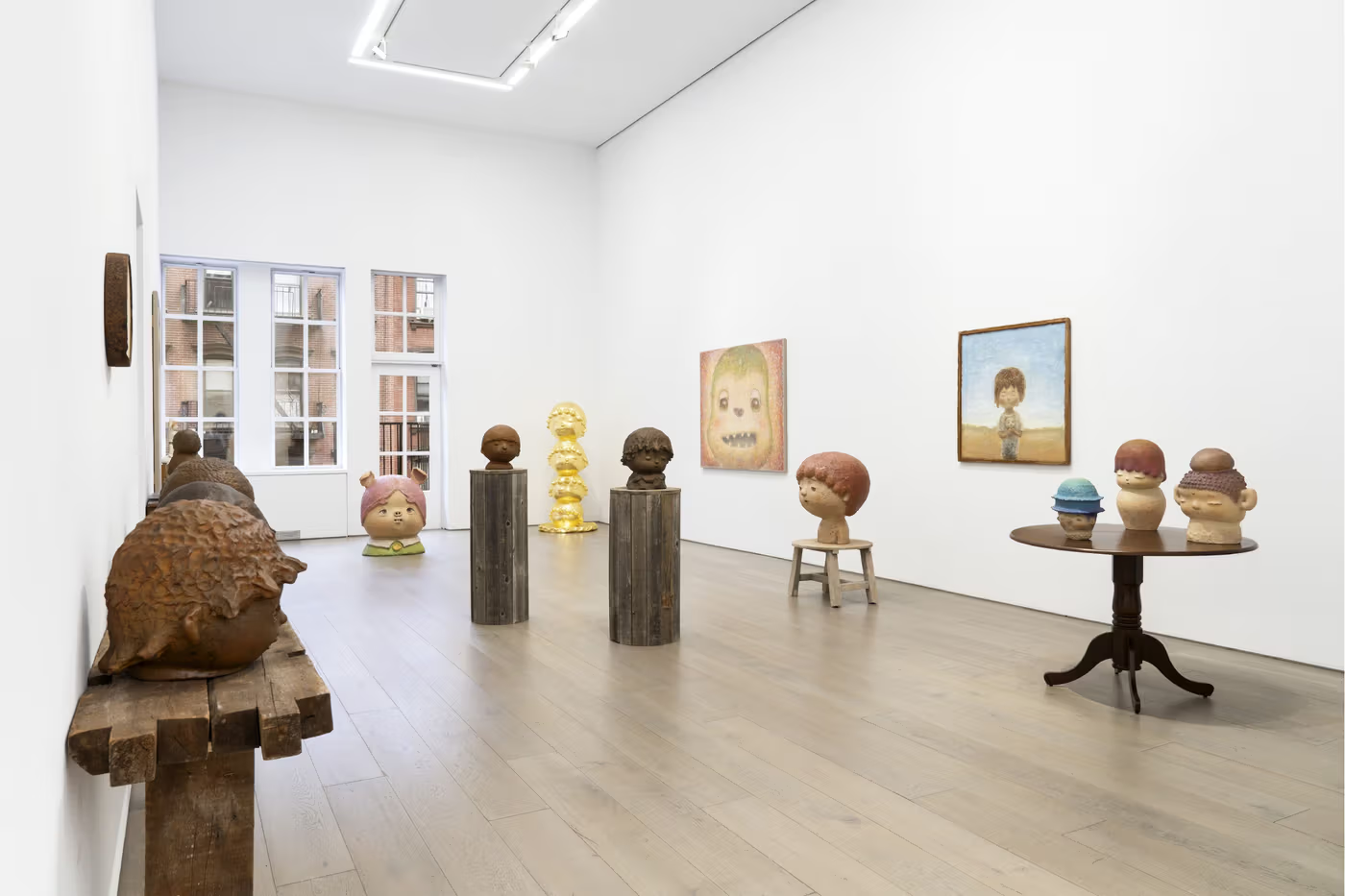
The Otani Workshop Anima exhibition New York (Focus Keyword) opens a fresh chapter in contemporary art with the Japanese artist Otani Workshop’s major solo show at Perrotin New York. From October 30 to December 20, 2025, the gallery at 130 Orchard Street presents “anima”, a suite of works that encompasses paintings, bronze and FRP sculptures, and ceramics — all underscored by a deep sense of animism, myth and playful pop aesthetics.
Otani Workshop — born Shigeru Otani in 1980 — hails from Shiga Prefecture, Japan, and his artistic practice is grounded in the ceramic-tradition city of Shigaraki and his later relocation to Awaji Island, where he transformed an old tile factory into a studio. His work fuses traditional clay, glaze techniques and the spontaneity of the hand with whimsical, anthropomorphic figures. In “anima”, this fusion is brought to life in a New York setting.
Otani’s method emphasises the idea that raw material can be transformed into something that appears alive. He writes
“My practice is about transforming a bare material into something that has an appearance of life.”
The notion draws on Japanese animism — the belief that all things possess spirit — and this belief underpins the playful, yet thoughtful, figures that populate his work.
At the heart of the Otani Workshop Anima exhibition New York lies this distinctive universe of objects. The show includes:
- Paintings such as Goldendoodle in the Sea (2025) oil on canvas.
- Ceramics and figurative objects: e.g., Mouse (2025) ceramic 21 × 21.9 × 16.8 cm.
- Sculptures in bronze and FRP (fibreglass reinforced plastic) that visualise characters both human and animal, solitary yet expressive.
- A deliberate aesthetic of unfinished surfaces, hand-marks, and spontaneous glaze or form choices. This rawness is part of the charm and concept: it retains the imprint of creation and conveys vitality.
The installation at Perrotin is custom-made, creating a spatial environment for these works to breathe and interact. The combination of media, technique and symbolic depth signals a maturity in Otani’s practice that extends beyond mere characters to ideas of freedom, expression and inner life.
Why “Anima” Matters – For Art and Exhibitions
The Otani Workshop Anima exhibition New York carries importance on several dimensions:
- Cultural cross-pollination: The show presents a Japanese artist steeped in tradition thriving in one of the world’s major contemporary art hubs — New York. This dynamic underscores the global nature of art exhibitions today.
- Media & material innovation: Ceramics, bronze, FRP and painting combine — blending craftsmanship and industrial techniques. For exhibition organisers and curators, such a mix invites diverse logistics (e.g., heavy sculpture installation, safe ceramic handling) and creative presentation.
- Narrative depth: By drawing on animism and childhood memory, Otani’s work provides more than surface appeal. For an audience of curators, collectors or event professionals, this represents a move toward immersive storytelling in show design.
- Commercial and market relevance: With ceramics and sculpture gaining attention in the collectible-art market (as evidenced by Otani’s auction history) exhibitions of this scale also signal investment interest, gallery strategy and brand partnerships (e.g., his earlier collaboration with Dior in 2024).
What Exhibitors, Galleries and Event Professionals Can Learn
For professionals in exhibitions & events (EG) — including gallery teams, art-event promoters, installation crews and logistics suppliers — the “anima” show offers several take-aways:
- Hybrid presentation formats: Managing different media (paintings, ceramics, bronzes, FRP) means coordinating display hardware, lighting, visitor flow and finishing touches.
- Space design: Custom installation is key. For “anima”, the layout is crafted specifically for the venue, which enhances viewer experience and aligns with the concept.
- Curator-driven narrative: The show isn’t just about objects; it’s about concept — animism, childhood, freedom. Exhibitors and event organisers should consider how to weave narrative into spatial and physical design.
- Global sourcing & logistics: Given Otani’s studio on Awaji Island and the gallery in NYC, shipping, customs, insurance and installation challenges are real. These operational steps are integral for complex exhibitions.
- Audience engagement: With themes of empathy and nostalgia, the show appeals both to dedicated collectors and the broader public. For exhibition organisers, including content elements (artist talk, live demo) could enhance the experience.
Implications for the Asia-India Region
While the exhibition is based in New York, there are indirect implications for Asia-India service providers and event professionals:
- Asian artists and studios (such as those in Japan) increasingly present globally. Indian event-tech, logistics or stand-design firms can study this international mobility.
- Boutique workshops (particularly ceramics/textile/installation) might find partnerships or cross-regional assignments by observing how Otani’s work moves across continents.
- For Indian galleries and art-event planners, the success and presentation of “anima” could serve as a model for elevating local exhibitions to international standards.
- Event service-providers (lighting, installation, production) in Mumbai or elsewhere can benchmark their workflows and anticipate global-standard requirements (materials, display, narrative integration).
Conclusion
In summary, the Otani Workshop Anima exhibition New York stands out not just as a solo show by a Japanese artist, but as a carefully crafted exhibition experience that merges craft, story, emotion and global presentation. For the exhibitions & events sector, it offers a case study in cross-media curation, logistical excellence and narrative-driven design. Whether you’re a gallery director, event organiser, stand-builder or art-logistics specialist, there is much to glean from “anima”.