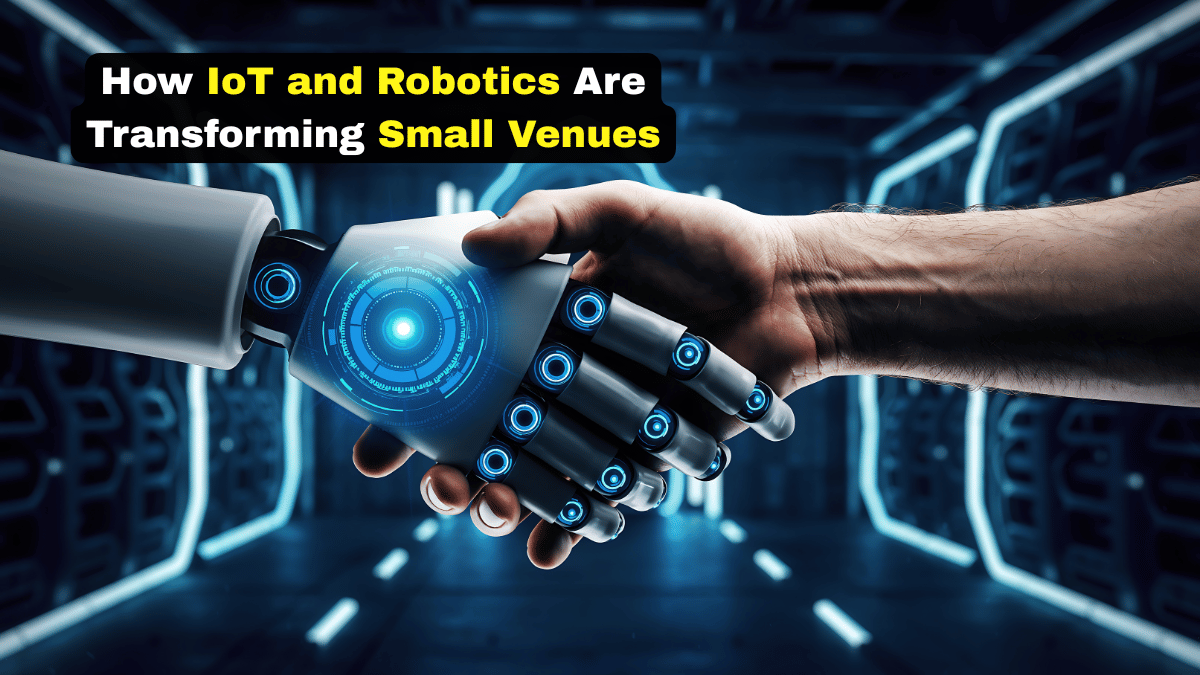
Rise of Smart Venues: How IoT,Robotics & Contactless Experiences Are Reshaping Visitor Expectations
INTRODUCTION: VENUES ARE EVOLVING INTO INTELLIGENT ECOSYSTEMS
The events and exhibitions landscape is undergoing a profound transformation, and at the center of this revolution is the rise of the smart venue. No longer judged merely by their floor space, parking capacity, or accessibility, modern venues in 2025–26 are being evaluated by the intelligence of their infrastructure. From Dubai World Trade Centre and Singapore EXPO to Messe Frankfurt and Las Vegas Convention Center, the world’s leading venues are quietly becoming technological powerhouses. They are integrating IoT sensors, robotics, AI navigation, contactless operations, and energy-efficient systems that provide a seamless and intuitive experience for exhibitors and visitors alike. This shift marks the beginning of a new era in the MICE industry—one where the venue itself becomes an active participant in enhancing the event experience.

1. THE SMART VENUE MOVEMENT: FROM SPACE TO TECHNOLOGY
In the past, venues were essentially large, functional spaces with basic facilities, manual crowd control, printed signage, and physically intensive management systems. But today’s leading venues have evolved into high-tech environments where every element is digitally connected and responsive. Smart entry gates authenticate visitors in seconds; AI monitors help predict congestion in real time; digital signage adjusts dynamically based on hall activities; and virtual dashboards help organisers oversee the pulse of the entire event. This evolution has redefined the standards of visitor comfort and operational efficiency. Instead of being passive structures, venues now function as intelligent ecosystems that sense, analyse, and respond to human behavior.
2. THE ROLE OF IoT: THE NERVOUS SYSTEM OF SMART VENUES
IoT has emerged as the invisible force powering the modern exhibition experience. Sensors installed across entry points, hallways, lounges, and booth clusters help organisers monitor realtime crowd flow, detect long queues, understand visitor density patterns, and ensure smoother movement. This technology enables organisers to make rapid, data-backed decisions —such as opening alternate gates or redistributing visitors to reduce crowding. Additionally, IoT-driven air filtration and temperature control systems optimize energy usage while maintaining comfort levels by adjusting temperature and ventilation based on footfall and carbon dioxide levels. This results in cleaner air, balanced humidity, and significant energy savings. For exhibitors, IoTpowered heatmaps reveal visitor engagement patterns across show floors, allowing them to understand which locations attract the most attention and how booth design influences visitor movement. IoT has therefore shifted exhibitions from manual management to scientific orchestration.
3. THE ROBOTICS REVOLUTION: AUTOMATION ENTERS THE SHOW FLOOR
Robots have become an essential part of modern venue operations. In many global venues, autonomous cleaning robots silently glide across the corridors during non-peak hours, ensuring spotless floors and maintaining hygiene standards without human supervision. Logistics robots are increasingly used during booth build-up and dismantling, effortlessly transporting boxes, display units, and heavy materials across large halls—significantly reducing labour fatigue and booth setup time. Service robots positioned at entrances and key intersections greet visitors, answer frequently asked questions, provide directions, and offer multi-language support. Their presence adds both functionality and novelty to the visitor journey. This integration of robotics is not just about futuristic appeal; it is about bringing precision, consistency, and speed to the operations of large-scale exhibitions where thousands of people interact within a few hours.
4. CONTACTLESS EXPERIENCES: THE DEFAULT EXPECTATION OF
2026
The push toward frictionless experiences accelerated during the pandemic years, but in 2025–26, it has transformed into a permanent standard. Visitors now expect to enter events without waiting in line for badges or physical verification. With biometric scanning, RFIDenabled smart passes, and QR-based registration, entry takes only a few seconds. Inside the venue, attendees seamlessly transact at food courts, purchase merchandise, or pay for services using tap-to-pay systems or digital wallets. Exhibitors, too, benefit from contactless lead capture, where a simple scan digitally exchanges business information and instantly feeds leads into their CRM software. This eliminates dependency on physical formsor business cards. The entire process enhances efficiency, reduces physical contact, and ensures that every interaction—from entry to exit—is fast, clean, and digitally recorded.
5. DIGITAL NAVIGATION: THE END OF GETTING LOST IN LARGE EXHIBITIONS
For visitors, one of the greatest frustrations in large exhibitions used to be navigating massive halls and locating specific booths or sessions. Smart venues have solved this with indoor GPS navigation, a technology similar to Google Maps but designed for indoor environments. Attendees can now open an app, search for an exhibitor, and receive step-by-step walking directions to reach the exact booth. These apps also recommend sessions, pavilions, and products based on visitor interest, browsing history, and professional profile. As a result, every visitor’s journey becomes personalized and efficient. For organisers, navigation heatmaps help identify areas with low attention and redesign floor plans for future editions. This digital mapping infrastructure transforms the visitor experience from wandering and guessing to clarity and precision.
6.ENHANCED SAFETY THROUGH SMART SURVEILLANCE AND AUTOMATED RESPONSE
Modern exhibition venues are investing significantly in safety intelligence. AI-powered surveillance systems constantly analyse crowd movements to detect irregular patterns, unattended objects, or restricted-area intrusions. In case of a medical emergency, fire risk, or sudden congestion, the system immediately notifies the control team and recommends evacuation routes. Emergency alerts are pushed instantly to visitor apps, guiding them to safety with visual maps and real-time instructions. This level of readiness significantly reduces response times, prevents small issues from escalating, and instills confidence among attendees. Safety has shifted from a reactive function to a proactive, technology-led strategy that quietly protects thousands of people during large exhibitions.
7. SUSTAINABILITY IN SMART VENUES: TECHNOLOGY MEETS RESPONSIBILITY
Sustainability is no longer just a trend—it is a mandate. Smart venues are using digital technologies to reduce waste, optimize energy consumption, and promote eco-friendly practices. Intelligent energy dashboards track electricity usage in real time, enabling organisers to cut down on unnecessary consumption. Digital brochures, QR-led information boards, and virtual catalogues drastically reduce printing waste. Many venues have introduced recycling stations and encourage exhibitors to use modular, reusable booth structures. By combining technology
with sustainability, venues are creating greener exhibitions that align with the global push for net-zero events.
8. THE NEW BASELINE: WHAT VISITORS EXPECT IN 2026
Visitor expectations have evolved dramatically. People attending exhibitions now expect uninterrupted connectivity, fast entry, real-time navigation, clean hygienic spaces, cashless services, and smart amenities that enhance convenience. They want exhibitions to be not only visually impressive but also digitally integrated and environmentally responsible. Smart venues have raised the bar so high that any venue lacking these features risks appearing outdated. In 2026, the benchmark is clear: an exhibition venue must be intelligent, connected, efficient, and sustainable to stay relevant.
CONCLUSION: SMART VENUES ARE REDEFINING THE FUTURE OF GLOBAL EXHIBITIONS
The rise of IoT, robotics, automation, and contactless systems has fundamentally transformed how exhibitions are managed and experienced. Venues have evolved from structural enclosures to interconnected digital ecosystems that provide comfort, insight, and innovation at every step. As we move into 2026, smart venues will become the driving force behind the global exhibition industry—elevating visitor experience, improving organiser efficiency, and creating a more sustainable, intelligent future for the entire MICE ecosystem.