How to transform a booth into a living, breathing brand story that engages, inspires, and connects with every visitor.
Introduction — The Booth as a Stage, Not a Stall
In today’s Experience Economy, a booth isn’t just a structure — it’s a story.
Gone are the days when exhibitions were rows of static panels, product displays, and polite brochures. Visitors today expect to feel something.
A booth that tells a story doesn’t shout for attention — it creates an atmosphere. It invites people to enter, explore, and emotionally connect with the brand.
Think of your booth as a mini theatre:
- The space is your stage.
- Your team is the cast.
- Your product is the plot.
- And your visitors? They’re the audience — expecting an experience worth remembering.
“A booth should speak even when no one is inside it.”
Visual Suggestion:
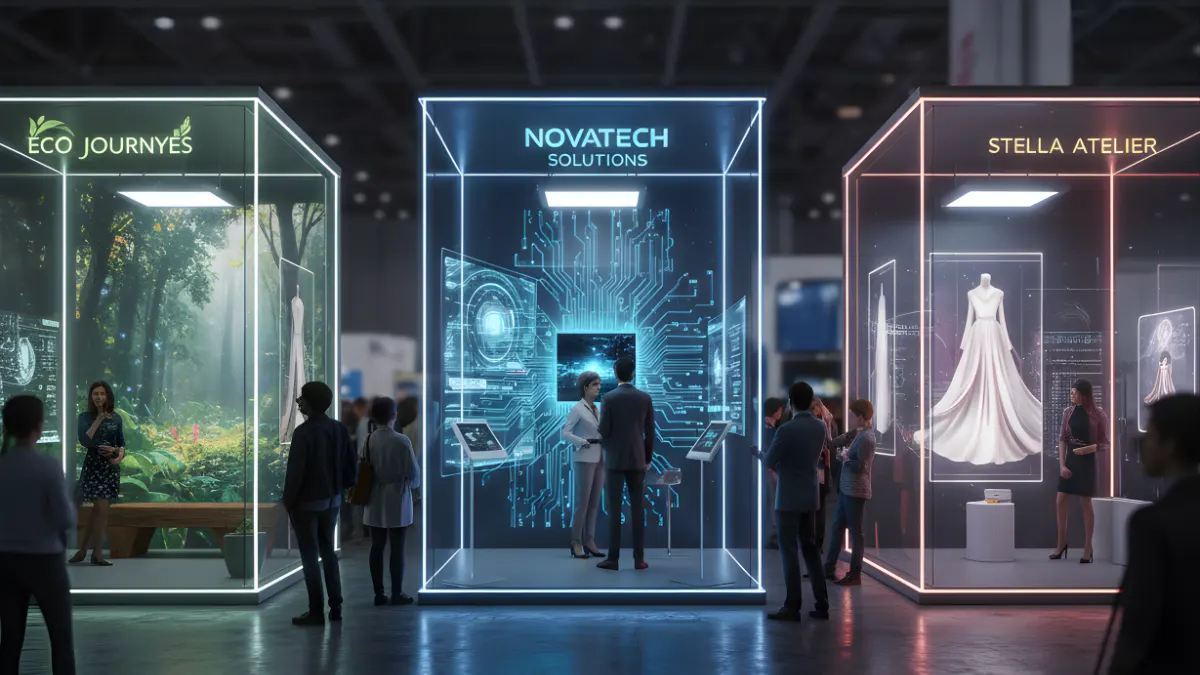
A curved, open-concept booth where a visitor walks through an immersive brand story — digital screens, textures, and lighting guiding the experience.
Crafting the Narrative — From Brand to Storyline
Every brand has a story — the key is to translate it visually.
Instead of asking “What should we display?”, ask “What do we want visitors to feel when they leave our booth?”
Define Your Core Message
Start with your why: innovation, heritage, sustainability, or community. This message becomes your emotional hook.
Structure the Story
Divide your booth into three narrative zones:
- The Introduction: Grab attention — bold visuals, lighting, or motion.
- The Experience: Let visitors touch, test, or immerse.
- The Resolution: Leave them inspired with a takeaway — a digital moment, a quote wall, or a brand story reel.
Use Multi-Sensory Design
- Sight: Use color psychology (e.g., blue = trust, yellow = creativity).
- Sound: Ambient music or live demos build memory links.
- Touch: Add textures that reflect authenticity — wood, fabric, metal.
- Smell: Subtle fragrances enhance emotional recall.
“Design tells. Story sells.”
Case Example:
At Dubai Design Week 2024, a furniture brand used “forest sounds” and sustainable wood textures to communicate eco-consciousness — visitors left remembering the feeling of calm.
Visual Suggestion:
A visitor touching a handcrafted wall panel while soft light and ambient sound create an immersive setting.
Engaging Through Interaction — Turning Visitors into Participants
The modern exhibition visitor doesn’t want to be told — they want to take part.
Interactive Ideas That Tell Stories:
- Live Creation Zones: Let visitors watch artisans, chefs, or engineers at work.
- Digital Mirrors: Use AR to let them “try” your product virtually.
- Personalized Touchpoints: Allow visitors to input data or preferences and receive customized demos.
- Experience Corners: Build mini environments — a mock living room, a tasting bar, or a VR cockpit — to make the brand tangible.
“Visitors remember what they do, not what they’re told.”
Team Tip:
Train your booth staff as storytellers, not salespeople.
Encourage them to start conversations with curiosity:
“Do you know the story behind this design?”
“Would you like to see how we make it?”
Mini Example:
At India Craft Week, artisans encouraged visitors to weave a small part of a fabric. That tiny participation created massive emotional recall — and hundreds of social shares.
Visual Suggestion:
A smiling visitor weaving a thread with an artisan under the tagline: “Be Part of Our Story.”
Designing for Memory — Leave a Lasting Impression
The end of the story is what visitors remember most.
Your booth’s exit should echo your essence — something they carry in their minds long after they leave.
1. Create a Takeaway Moment
Instead of brochures, offer a digital memory — a selfie wall, an AR postcard, or a personalized thank-you video sent via QR.
2. Showcase Purpose, Not Just Product
Tell visitors why your brand exists — your values, your journey, and your people.
Use storytelling walls with short, powerful lines like:
“We don’t just build machines — we build possibilities.”
“Our hands craft what our hearts imagine.”
3. Measure the Emotional Impact
Track social mentions, visitor dwell time, and post-show recall to see if your story resonated.
People forget prices. They remember stories.”