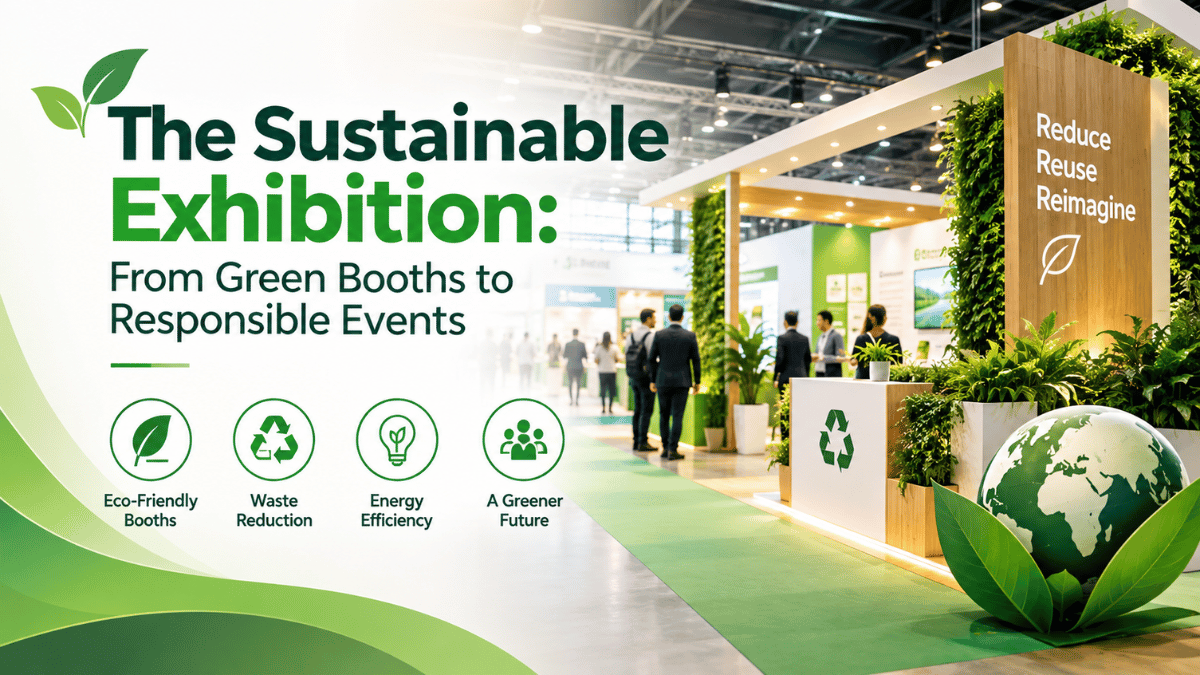

The exhibition industry is entering a new phase in which sustainability is becoming an important part of event planning, booth design, operations and visitor experience. From the materials used to construct exhibition stands to energy consumption, transportation, food services and post-event waste management, every stage of an exhibition can influence its environmental footprint.
A sustainable exhibition is not simply an event with a few eco-friendly features.
What Is a Sustainable Exhibition?
A sustainable exhibition is an event planned and delivered with the aim of reducing environmental impact while maintaining a strong experience for exhibitors, visitors and other stakeholders. It can include responsible sourcing, reusable booth materials, energy-efficient lighting, waste reduction, sustainable transportation, digital communication and better measurement of environmental performance.
Sustainability also involves making smarter decisions about resources. Instead of treating exhibition materials as temporary products that are discarded after a few days, organisers and exhibitors can consider whether structures, graphics, furniture and displays can be reused, refurbished or recycled.
The approach can extend beyond environmental concerns. Responsible exhibitions can also support local suppliers, encourage inclusive participation and create healthier working and visitor environments.
The Exhibition Lifecycle: Before, During and After
The sustainability journey begins well before visitors enter the exhibition hall. Decisions made during the planning stage can determine how much energy, material and transportation an event ultimately requires.
Before the Exhibition: Plan Sustainability From the Beginning
The planning phase provides the greatest opportunity to introduce sustainable practices. Organisers can establish clear environmental objectives and communicate them to exhibitors, contractors, suppliers and venues before the event begins.
Venue selection is one important consideration. Organisers can examine factors such as public transport connectivity, energy management, waste systems, water efficiency and existing sustainability initiatives. Selecting a venue that already has appropriate infrastructure can reduce the need for additional resources.
Exhibition stand design should also be considered at this stage. Modular and reusable booth systems can be designed for multiple events rather than being manufactured for a single show. Materials should be selected according to durability, recyclability and the possibility of reuse.
Digital invitations, registration systems, event programmes and exhibitor information can also reduce dependence on printed materials. Where physical communication is necessary, responsible paper and printing practices can be considered.
During the Exhibition: Reduce Resource Consumption
Once an exhibition opens, operational decisions become central to sustainability. Energy consumption is one of the major areas where organisers and exhibitors can make practical changes.
LED lighting, efficient equipment and responsible power management can help reduce electricity consumption. Exhibitors can avoid unnecessary lighting and equipment running when booths are unattended.
Waste management is another important part of a green exhibition. Clearly identified collection points can make it easier for visitors and exhibitors to separate recyclable, compostable and general waste. Organisers can work with suppliers to reduce unnecessary packaging and single-use materials.
Food and beverage operations can also contribute to the sustainability strategy. Caterers can focus on reducing food waste, using reusable serviceware where practical and sourcing products responsibly. Better planning of quantities can help prevent large volumes of unused food at the end of the event.
From Green Booth to Green Show
The concept of a green booth is an important starting point, but sustainability becomes more meaningful when it extends across the entire exhibition.
A green booth can incorporate reusable structures, recyclable materials, low-energy lighting, digital displays and responsible furniture choices. Exhibitors can reduce unnecessary printed brochures by using QR codes, digital catalogues and online product information.
However, if hundreds of exhibitors individually adopt sustainable booth practices while the wider event continues to generate significant waste and unnecessary resource consumption, the overall impact remains limited.
A green show therefore brings together sustainable booth design, venue operations, transportation, catering, waste management, procurement and post-event reporting.
This broader approach encourages all participants to work toward common sustainability objectives.
The Green Exhibition Playbook
A practical green exhibition playbook can be built around several connected areas: sustainable booth construction, responsible materials, energy efficiency, waste management, food services, transportation, digital solutions and measurement.
1. Build Sustainable Exhibition Stands
Exhibition stands are highly visible components of trade shows and business events. Their design can have a significant effect on material consumption.
Instead of single-use structures, exhibitors can use modular systems that can be dismantled and reconstructed at future events. Furniture and decorative elements can similarly be selected for repeated use.
Designers can also minimise unnecessary construction and focus on adaptable components. Sustainable stand design does not necessarily mean sacrificing creativity. Innovative layouts, digital screens, plants and reusable architectural elements can create attractive experiences while reducing disposable materials.
2. Choose Responsible Materials
Material selection should be considered from the beginning of booth production. Reusable, recycled and recyclable materials can help reduce the environmental impact associated with temporary installations.
Graphics are another area where exhibitors can rethink traditional practices. Instead of producing large quantities of single-use printed material, exhibitors can explore reusable graphic systems or digital alternatives.
The objective is to move away from the traditional cycle of produce, use and discard toward a model based on reuse, recover and recycle.
3. Improve Energy Efficiency
Energy management should be incorporated into both venue and booth operations. LED lighting can provide efficient illumination, while exhibitors can switch off equipment when it is not required.
Digital displays, demonstration equipment and other electrical systems should be selected and operated with efficiency in mind.
Organisers can also communicate energy-saving guidelines to exhibitors before installation begins. Small operational decisions across hundreds of stands can collectively influence an exhibition’s energy consumption.
4. Reduce and Manage Waste
Waste reduction should begin before waste reaches the bin. Organisers can work with exhibitors and suppliers to minimise unnecessary packaging and disposable materials.
At the venue, clearly marked waste stations can encourage appropriate separation. Contractors can also be given requirements regarding the collection and disposal of construction and exhibition materials.
Post-event material recovery is particularly important. Booth components, furniture, signage and other usable items should be considered for reuse or recycling instead of automatically becoming waste.
Sustainable Food and Catering
Food is another important part of responsible exhibition management. Large trade shows can serve thousands of visitors, exhibitors and staff, making catering a significant operational activity.
Better forecasting can reduce food waste. Menus can incorporate locally sourced or seasonal products where appropriate, while reusable serviceware can reduce reliance on disposable items.
Water stations can also help reduce the number of single-use plastic bottles distributed during an event. Providing accessible drinking-water facilities encourages visitors and exhibitors to use refillable bottles.
Sustainable Transportation and Logistics
The environmental footprint of an exhibition does not stop at the venue entrance. Visitors, exhibitors, freight, stand materials and staff all need to travel to and from the event.
Venue selection near public transport can make lower-impact travel easier for attendees. Organisers can provide clear information about trains, buses, metro services and shared transportation options.
For exhibition logistics, better shipment planning can reduce unnecessary transportation. Consolidating deliveries, planning installation schedules efficiently and avoiding repeated transport movements can improve logistics efficiency.
Digital Tools Can Support Sustainable Events
Technology can reduce the need for physical resources while improving the visitor experience. Digital registration, mobile event guides, QR codes, online catalogues and digital lead-generation tools can replace some traditional printed materials.
Digital communication can also continue after the event. Exhibitors can share product catalogues, presentations and follow-up information electronically rather than producing large quantities of printed material.
Technology therefore becomes more than a convenience. It can support a transition toward a more resource-efficient exhibition model.
The Road to the Responsible Exhibition
Creating a responsible exhibition is a continuous process rather than a single event-day activity. The journey starts with setting objectives, continues through planning and implementation, and should conclude with measurement and improvement.
Organisers can establish sustainability targets before the event and communicate them to stakeholders. During the exhibition, operational teams can monitor areas such as energy, waste, water, transportation and material use.
After the show, the results can be reviewed to identify what worked and where improvements are needed for the next edition.
This creates a cycle of plan, implement, measure and improve.
Measure What Matters
One of the most important steps in sustainable exhibition management is measurement. Without measurement, it becomes difficult to understand whether sustainability initiatives are actually producing improvements.
Organisers can track indicators such as energy consumption, waste generation, recycling rates, water consumption, transportation patterns and the quantity of materials reused after the event.
Exhibitor participation can also be monitored. For example, organisers can assess how many exhibitors adopted reusable booth structures, reduced printed materials or followed waste-management guidelines.
Measurement provides a basis for setting stronger targets at future exhibitions.
The 2030 Opportunity for the Exhibition Industry
The sustainability transition is becoming increasingly important as businesses and event stakeholders consider their environmental responsibilities. The exhibition industry has an opportunity to contribute by transforming temporary events into more resource-efficient business platforms.
The goal is not simply to create a sustainable booth. It is to build a sustainable exhibition ecosystem.
By 2030, exhibition organisers can work toward increasingly integrated approaches covering venue operations, stand construction, materials, energy, transportation, catering, waste and reporting.
This transition will require collaboration. No single exhibitor or organiser can transform the entire exhibition lifecycle independently.
Collaboration Is the Key to Sustainable Exhibitions
A successful sustainability strategy requires cooperation between organisers, venues, exhibitors, stand contractors, suppliers, logistics companies, caterers and visitors.
Organisers can establish sustainability guidelines and expectations. Venues can provide efficient infrastructure and waste-management systems. Exhibitors can adopt reusable booth designs and responsible materials. Contractors can focus on recovery and reuse. Visitors can make more sustainable transportation and consumption choices.
When these actions are connected, sustainability becomes part of the event’s operating model rather than simply a marketing message.
From Green Booth to Green Show
The future of sustainable exhibitions lies in moving beyond isolated green initiatives. A recyclable booth or energy-efficient light is valuable, but the greater opportunity comes from connecting individual actions across the entire exhibition lifecycle.
A truly responsible exhibition begins before the first stand is constructed, continues throughout the show and remains relevant after the final visitor leaves.
From sustainable booth design and responsible materials to energy efficiency, waste reduction, food management, transportation, digital tools and post-event measurement, every stage offers an opportunity to make better decisions.
The transition from green booth to green show represents a broader change in the exhibition industry: sustainability becoming an integrated part of how exhibitions are designed, delivered and improved.