Introduction: A New Era of Exhibitions
The exhibition industry in 2026 stands at the intersection of innovation, intelligence, and global ambition. No longer confined to traditional formats, exhibitions today are evolving into powerful business ecosystems that combine physical presence with digital intelligence.
What defines success in this new era is not just participation, but the ability to adapt to emerging trends that are reshaping how exhibitions are designed, marketed, and experienced. From AIdriven personalization to sustainability mandates, the rules of the game have changed.
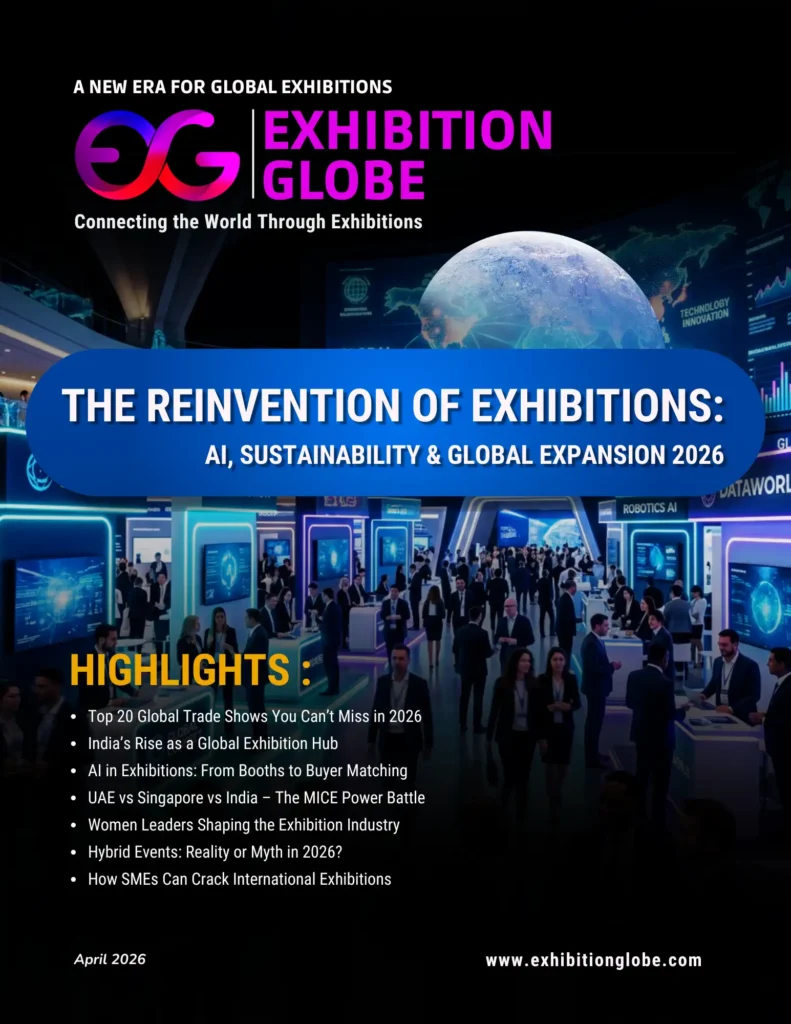
Understanding these trends is no longer optional— it is a strategic necessity for exhibitors, organizers, and stakeholders aiming to stay competitive in an increasingly dynamic global market.
behavior, and professional background. From suggesting relevant booths to scheduling meetings with potential partners, AI is transforming how visitors navigate events.
For exhibitors, this means higher-quality interactions rather than random footfall. Instead of attracting large crowds, the focus has shifted to engaging the right audience— decision-makers who are genuinely interested in their offerings.
This level of personalization is enhancing ROI and redefining the value proposition of exhibitions.
Hybrid Events: The Standard, Not the Exception
Hybrid exhibitions, once considered a temporary solution during the pandemic, have now become the industry standard. The combination of physical and virtual elements allows events to transcend geographical limitations
Attendees can participate in person or join remotely, while exhibitors can extend their reach beyond the exhibition floor. Virtual booths, live-streamed sessions, and on-demand content ensure continuous engagement even after the event concludes.
AI-Powered Personalization: From Mass to Micro Experiences
One of the most defining trends of 2026 is the integration of Artificial Intelligence across every stage of exhibitions. AI is no longer a futuristic concept; it is now a core operational tool.
Exhibitions are becoming highly personalized environments where attendees receive curated recommendations based on their interests,
This trend has also democratized access to exhibitions. Smaller businesses and international participants who previously faced logistical or financial barriers can now engage more easily.
Hybrid is no longer an alternative—it is the default format for modern exhibitions.
Sustainability Takes Center Stage
Sustainability is no longer a buzzword; it is a responsibility. In 2026, environmentally conscious exhibitions are not just preferred— they are expected.
Organizers are adopting green practices such as digital brochures, recyclable booth materials, energy-efficient lighting, and waste reduction systems. Carbon footprint tracking is becoming a standard metric for large-scale events.
Exhibitors are also aligning with this shift by designing eco-friendly booths and reducing reliance on printed materials. Sustainability is increasingly influencing brand perception, with businesses being evaluated not just on their products but on their environmental impact.
This trend reflects a broader global movement towards responsible business practices.
Data-Driven Decision Making: The New Competitive Edge
Data has become one of the most valuable assets in the exhibition industry. Every interaction— registrations, booth visits, session attendance— is now tracked and analyzed.
Organizers use this data to optimize event layouts, improve attendee experiences, and enhance engagement strategies. Exhibitors, on the other hand, gain insights into visitor behavior, allowing them to refine their marketing and sales approaches.
Real-time analytics enable quick decisionmaking during events, while post-event reports provide actionable insights for future participation.
In 2026, success is no longer measured by assumptions—it is driven by data.
Experience-Centric Exhibitions: Beyond Products to Stories
Modern exhibitions are shifting from productcentric displays to experience-driven environments. Visitors are no longer satisfied with static booths; they seek interactive and memorable experiences.
This has led to the rise of immersive technologies such as Augmented Reality (AR) and Virtual Reality (VR), allowing attendees to explore products in innovative ways. Live demonstrations, gamification, and storytelling the exhibition experience. Mobile apps are now essential tools for navigation, networking, scheduling, and engagement
Attendees can access event agendas, book meetings, receive real-time updates, and interact with exhibitors—all from their devices. For organizers, mobile platforms provide a direct communication channel with participants.
This trend reflects the broader shift towards convenience and instant access, making exhibitions more efficient and user-friendly.
Security & Privacy: A Growing Priority
With increasing reliance on digital platforms and data collection, cybersecurity has become a critical concern. Exhibitions in 2026 are implementing robust security measures to protect sensitive information.
From secure registration systems to encrypted communication channels, organizers are prioritizing data privacy. Compliance with international regulations is also becoming essential, especially for global events.
Trust is a key factor in business interactions, and ensuring data security is now a fundamental requirement. are becoming essential components of booth design.
Exhibitions are now about creating emotional connections, not just showcasing offerings. Brands that can engage, inspire, and educate their audience are the ones that stand out.
Globalization with Localization: The Glocal Strategy
While exhibitions are becoming increasingly global, there is a growing emphasis on localization. Businesses are adapting their messaging, products, and strategies to suit regional markets.
This “glocal” approach allows companies to maintain a global presence while addressing local needs and preferences. Exhibitions serve as the perfect platform to implement this strategy, enabling businesses to connect with diverse audiences in a meaningful way.
In 2026, success lies in balancing global ambition with local relevance.
Diversity & Inclusion: A More Representative Industry
The exhibition industry is becoming more inclusive, with greater representation of women, startups, and diverse communities. This shift is not just ethical—it is strategic.
Diverse participation leads to richer discussions, innovative ideas, and broader market reach. Initiatives promoting women leadership and startup inclusion are gaining momentum, shaping a more balanced and dynamic industry.
Exhibitions are evolving into platforms that reflect the diversity of the global business landscape.
India’s Trend Leadership in 2026
India is not just following global trends—it is actively shaping them. The country is witnessing rapid adoption of technology, hybrid models, and sustainable practices in exhibitions.
Government support, infrastructure development, and a growing entrepreneurial ecosystem are driving this transformation. Indian exhibitions are attracting international participants, positioning the country as a key player in the global MICE industry.
For businesses, India represents both a market and a gateway to global opportunities.
Conclusion: Adapting to Stay Ahead
Conclusion: Adapting to Stay Ahead
The trends defining 2026 highlight one clear reality—exhibitions are no longer static events; they are evolving ecosystems that demand adaptability, innovation, and strategic thinking.
Businesses that embrace these trends will not only enhance their exhibition performance but also gain a competitive edge in the global market. Those that resist change risk being left behind.
In this rapidly evolving landscape, staying informed is the first step—but taking action is what truly defines success.