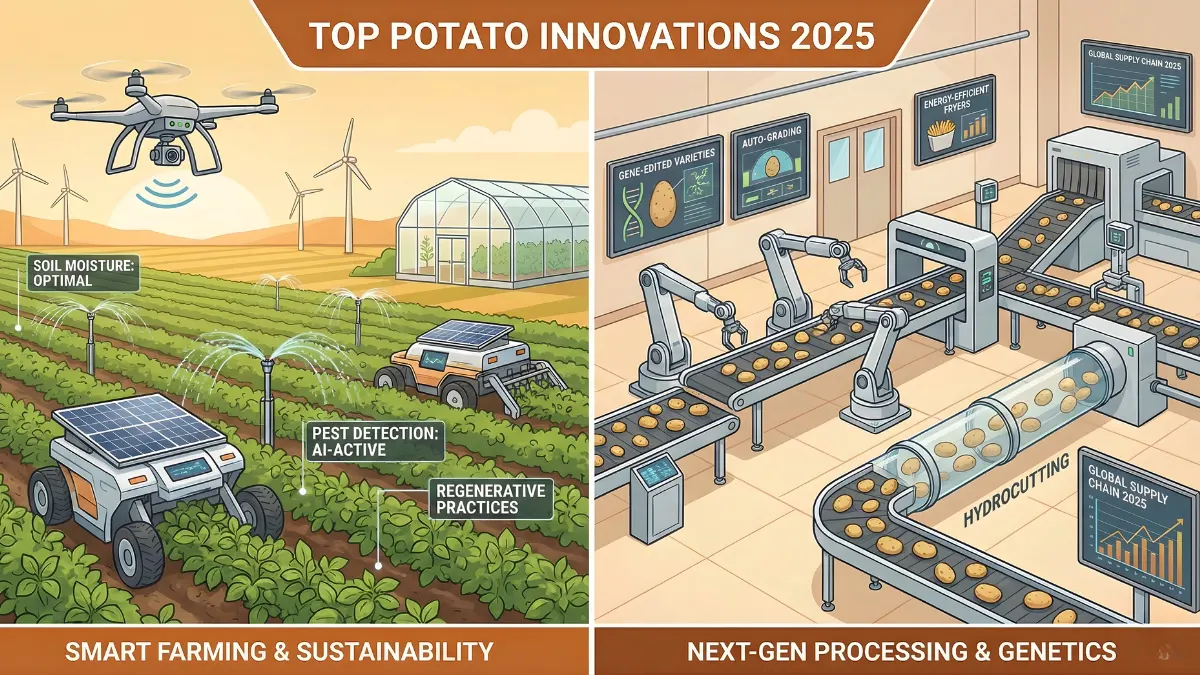
The global potato industry is entering a new era of transformation, driven by rapid advancements in agri-tech, automation, smart farming, and food processing innovations. As demand for high-quality potatoes and value-added potato products continues to rise, farmers and processors are adopting new technologies that enhance productivity, improve quality, reduce waste, and increase profitability. The year 2025 is expected to witness groundbreaking developments that will reshape the potato value chain—from soil preparation and seed technology to storage, packaging, and market distribution. This article explores the top potato farming and processing innovations to watch in 2025, highlighting the breakthroughs shaping the future of the potato ecosystem.
AI-Powered Smart Potato Farming
One of the most significant agricultural shifts happening in 2025 is the adoption of AI-based potato farming technologies. Artificial intelligence is transforming the way growers monitor crops, predict yields, and detect issues at early stages. AI-powered systems analyze real-time data from drones, sensors, and satellite imaging to provide deep insights into soil moisture, nutrient levels, pest outbreaks, and crop health. These innovations help farmers make data-driven decisions, ensuring improved productivity and reduced input costs.
In 2025, the integration of machine learning for potato crop management is expected to become mainstream. Growers can use AI tools to automate irrigation scheduling, forecast disease risks, and optimize harvest timing. This shift supports not only higher yields but also sustainable resource usage. As climate unpredictability increases, AI-driven precision farming becomes essential for maintaining consistent potato quality and meeting global food supply demands.
Precision Agriculture Tools and IoT Sensors
The rise of precision agriculture in potato farming is another major trend shaping 2025. Internet of Things (IoT) devices and advanced sensors help farmers track micro-level variations in soil conditions and crop growth. These smart systems enable precise fertilizer application, targeted pest control, and optimized irrigation—enhancing both efficiency and environmental sustainability.
High-tech sensors such as soil nutrient scanners, moisture probes, and remote weather monitoring stations are becoming key components of modern potato farms. These tools allow for real-time adjustments, preventing over-irrigation, reducing chemical misuse, and improving crop consistency. In 2025, variable-rate technology (VRT) will see wider adoption, helping farmers apply inputs exactly where needed, ultimately lowering costs and boosting profitability.
Advanced Potato Seed Technologies
Quality seeds are at the heart of profitable potato production, and 2025 is witnessing major breakthroughs in potato seed innovation. Researchers are developing improved seed varieties that offer resistance to pests, diseases, and climate stress. These high-yield potato varieties ensure better performance even under challenging weather conditions.
Tissue culture seed production and aeroponic seed potatoes are gaining popularity due to their disease-free nature and consistent quality. Aeroponics allows farmers to grow seed potatoes in a controlled environment without soil, significantly reducing contamination risks. This technology ensures a reliable supply of certified, uniform seed potatoes, supporting higher yields and improved produce quality.
With consumers demanding healthier and more sustainable foods, breeders are also creating nutrient-rich potato varieties, including high-antioxidant and low-glycemic index options. These innovations will play a crucial role in strengthening global food security and expanding value-added product categories.
Drones and Robotics in Potato Farming
Automation is revolutionizing potato cultivation, with drones and agricultural robots becoming essential tools for modern farmers. Drones equipped with high-resolution cameras provide quick field scans, identifying early signs of diseases, nutrient deficiencies, and crop stress. This enables faster corrective action, reducing losses and improving efficiency.
In 2025, potato farms are increasingly adopting robotic weeders, automated harvesters, and planting robots. These machines minimize labor dependency and deliver precise operations at scale. Robotic harvesters reduce post-harvest damage, ensuring higher-quality produce and lower waste. With global labor shortages impacting agriculture, smart farm automation is expected to be a major game changer in potato production.
Climate-Smart Potato Farming Techniques
Climate change continues to challenge agricultural sustainability, forcing growers to adopt climate-smart farming practices. In 2025, technologies focused on reducing carbon footprint, conserving water, and improving soil health are taking center stage. Innovations like drip irrigation for potatoes, mulching techniques, and regenerative farming are becoming widely popular.
Climate-resilient potato varieties, developed through advanced breeding and biotechnology, are helping farmers adapt to harsh conditions such as drought, floods, and temperature fluctuations. Additionally, sustainable practices like soil carbon monitoring and biofertilizers improve long-term field productivity without harming the environment. These climate-smart approaches align global potato farming with modern sustainability standards.
Innovations in Potato Storage & Post-Harvest Management
Post-harvest losses have historically been a major issue in potato supply chains. But 2025 is bringing advanced solutions in smart potato storage, temperature control, and shelf-life enhancement. Controlled atmosphere systems with improved ventilation and humidity control help maintain optimal storage conditions, reducing spoilage and sprouting.
The use of AI-based storage management systems is expected to grow rapidly in 2025. These systems provide predictive analytics for temperature fluctuations, energy consumption, and crop deterioration risks. Additionally, biodegradable anti-sprouting solutions and natural preservatives are replacing chemical-based alternatives, offering healthier and more eco-friendly storage methods.
Next-Gen Potato Processing Technologies
The potato processing industry is experiencing a major technological boost with innovations that enhance product quality, efficiency, and automation. In 2025, leading processing units are adopting high-speed automated sorting machines, AI-powered grading systems, and advanced peeling and cutting technologies. These systems ensure uniformity, minimize waste, and speed up production.
New processing technologies like vacuum frying, air frying, and infrared drying are creating healthier potato snacks with reduced oil content. The demand for low-fat potato chips, ready-to-cook potato flakes, and frozen French fries is driving innovation in processing methods.
Automation in packaging—especially smart, eco-friendly potato packaging—is another growing trend. Biodegradable and compostable packaging materials are replacing plastics, helping the industry reduce environmental impact.
Rise of Value-Added Potato Products
Consumer preferences are shifting, creating huge opportunities for value-added potato products. In 2025, the market for products like dehydrated potato flakes, frozen potato snacks, potato starch, functional potato ingredients, and plant-based potato proteins is expanding rapidly.
Food companies are focusing on sustainable, nutritious, and innovative potato-based alternatives. For example, gluten-free potato flour, high-protein potato snacks, and organic potato products are gaining global popularity. These trends encourage processors to invest in advanced manufacturing solutions and diversify their product lines to meet rising demand.
Blockchain for Potato Traceability
Food safety and transparency are becoming critical concerns in global supply chains. Blockchain technology enables end-to-end potato traceability, helping processors track products from farm to consumer. This innovation improves quality control, reduces fraud, and builds trust among buyers.
In 2025, more potato exporters and processing companies are adopting blockchain systems to meet international certification standards. It ensures accurate tracking of seed origins, farming practices, storage conditions, processing stages, and export documentation.