
1. 2025 MARKET PERFORMANCE: STRONGER THAN PREPANDEMIC YEARS
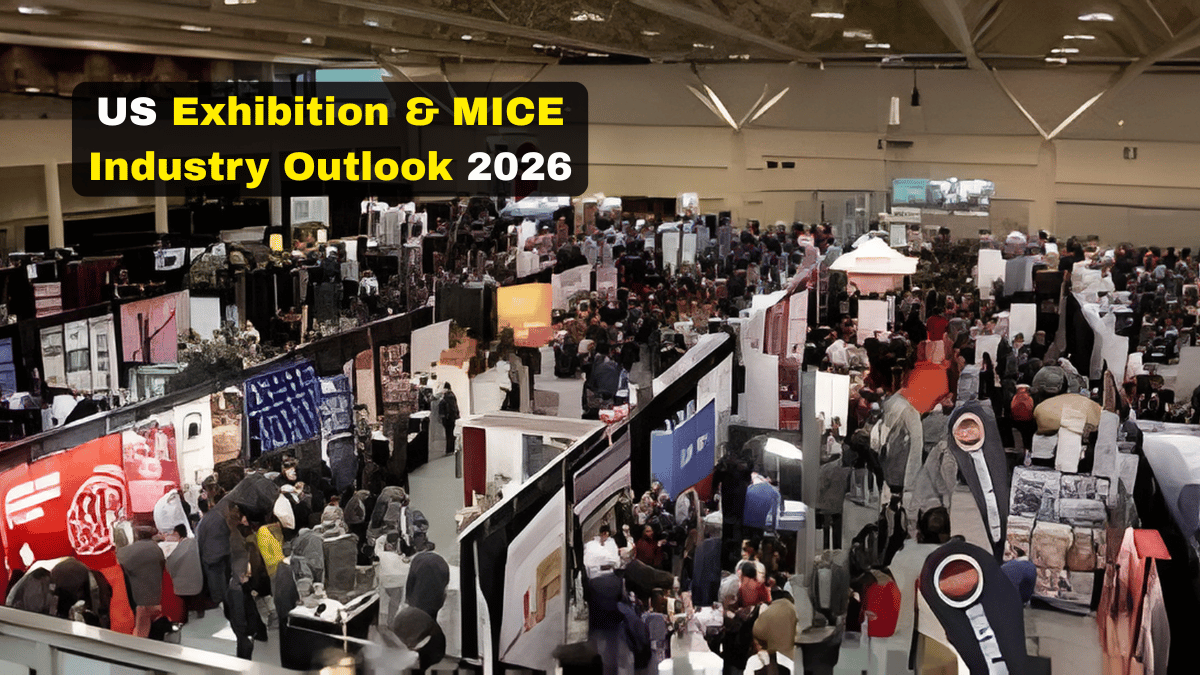
The U.S. achieved nearly 110% of prepandemic exhibition activity, with major venues in Las Vegas, Orlando, Chicago, New York, Houston, and Atlanta reporting recordbreaking attendance. Corporations across manufacturing, food & beverage, digital technology, healthcare, aerospace, EV, real estate, and packaging sectors sharply increased their exhibition budgets.
The rebound was driven by three key factors:-
- economic stability,
- corporate procurement expansion,
- the irreplaceable value of face-to-face networking
Many companies that had shifted to online sourcing returned aggressively to on-ground exhibitions, acknowledging that the American MICE environment offers unmatched quality, scale, and business outcomes.
2. INDUSTRY SECTORS THAT LED U.S. EXHIBITION GROWTH
Several high-performing industries shaped U.S. exhibition dynamics in 2025:
Technology & AI
Events like CES in Las Vegas reaffirmed America’s dominance in global tech showcases. AI startups, robotics innovators, and digital ecosystem builders emerged as the biggest crowd-pullers.
Healthcare, Medical Equipment & Biotechnology
The U.S. attracted global delegations seeking cutting-edge medical devices, biotech solutions, diagnostics, and life-science partnerships.
Food, Beverage & Hospitality 
Shows like NRA Chicago and Fancy Food Show NYC saw significant participation from international F&B brands seeking entry into the American retail and restaurant markets.
Real Estate, Construction & Design
With major U.S. cities undergoing infrastructure upgrades, construction and
materials expos recorded high exhibitor demand.
- Manufacturing, Automation & Aerospace
- Industrial automation and aerospace expos saw a surge in exhibitors due to strong demand from both commercial and defense sectors.
- These sectors will continue to shape U.S. exhibitions in 2026.
3. TECHNOLOGY-LED TRANSFORMATION OF U.S. EXHIBITIONS
No market adopted technology in exhibitions as aggressively as the U.S. did in 2025. Event organisers invested heavily in:
AI Matchmaking & Visitor Profiling
AI-powered platforms helped exhibitors identify high-quality leads before the event and schedule business meetings intelligently. Visitors received personalised exhibitor recommendations based on interest, industry role, and engagement history.
Immersive Booth Experiences
Mixed Reality (MR), digital walls, holographic product displays, drone-led monitoring, and autonomous demo units became common even in mid-sized trade shows.
IoT & Smart Venue Integration
Leading venues incorporated:
- IoT sensors for crowd management
- Digital heatmaps
- Automated climate control
- AI-enabled security
This strengthened the U.S.’s edge as a technologically advanced exhibition market.
4. SUSTAINABILITY INITIATIVES ACCELERATE ACROSS MAJOR VENUES
Sustainability became a mainstream requirement rather than an optional feature. Green Exhibitions & Zero-Waste Booths
Several major organisers introduced rules requiring:
- Reusable booth panels

- Sustainable flooring
- Eco-friendly printing
- Carbon-neutral build-up
- Digital brochures
Energy & Waste Monitoring Systems
Venues used energy-dashboards to reduce consumption during events. Recycling zones and waste segregation were made compulsory in many convention centers.
The U.S. is expected to become the world’s leader in sustainable MICE models by 2027, surpassing Europe in some sectors.
5. A NEW ERA OF BUYER–SELLER MEETINGS
Business matchmaking became more structured, targeted, and data-driven.
VIP Buyer Programs Grow in Scale
Shows created curated buyer groups with:
- Free travel
- Pre-arranged meetings
- Closed-door networking
- Category-based engagement
Rise of Private B2B Suites
Exhibitions dedicated special zones for private business negotiations—similar to corporate boardrooms inside trade shows.
Startup–Enterprise Matchmaking
Large corporations actively sought partnerships with:
- Deep-tech startups
- Clean-tech innovators
- Food-tech disruptors
- Retail & e-commerce solution companies
This made U.S. expos key drivers of business innovation.
6.INTERNATIONAL PARTICIPATION SURGES IN 2025
The U.S. saw an extraordinary rise in foreign exhibitors and pavilions, especially from:
- India

- Japan
- South Korea
- UAE
- UK
- Italy
- Germany
- Taiwan
- Canada
- Singapore
Many countries expanded pavilion areas by 30–50% compared to 2023–24, demonstrating the U.S.’s continued importance as the world’s most lucrative B2B market. The combination of buyer quality, market size, and investment potential makes America the top choice for global exporters.
7. CHALLENGES THE U.S. MARKET FACES
Despite strong growth, the industry must address:
- increasing venue rental costs
- high booth construction expenses
- shortage of skilled booth staff
- rising marketing budgets
- inflation in logistics and freight
However, most exhibitors find the ROI worth the premium costs due to superior buyers and large-scale deals.
8. 2026 OUTLOOK: WHAT TO EXPECT
The U.S. exhibitions industry is expected to grow by 8–12% in 2026, powered by:
Greater AI and automation integration
AI will move from optional to mandatory for matchmaking, navigation, and data analytics.
More sustainable event formats
Zero-paper, zero-waste, modular booth systems will dominate.
Enhanced international partnerships
More trade missions and global country pavilions will participate in U.S. shows.
Stronger B2B deal-making
Exhibitions will increasingly function as procurement platforms rather than branding events.
Rise of immersive brand storytelling
Holography, VR, MR, and simulation-based demos will become mainstream.
By 2026, the U.S. will not only remain the world’s leading exhibition market but will also define how the global MICE industry functions over the next decade.