2. INTERNATIONAL BUYERS SEE PAVILIONS AS ONE-STOP SOURCING DESTINATIONS
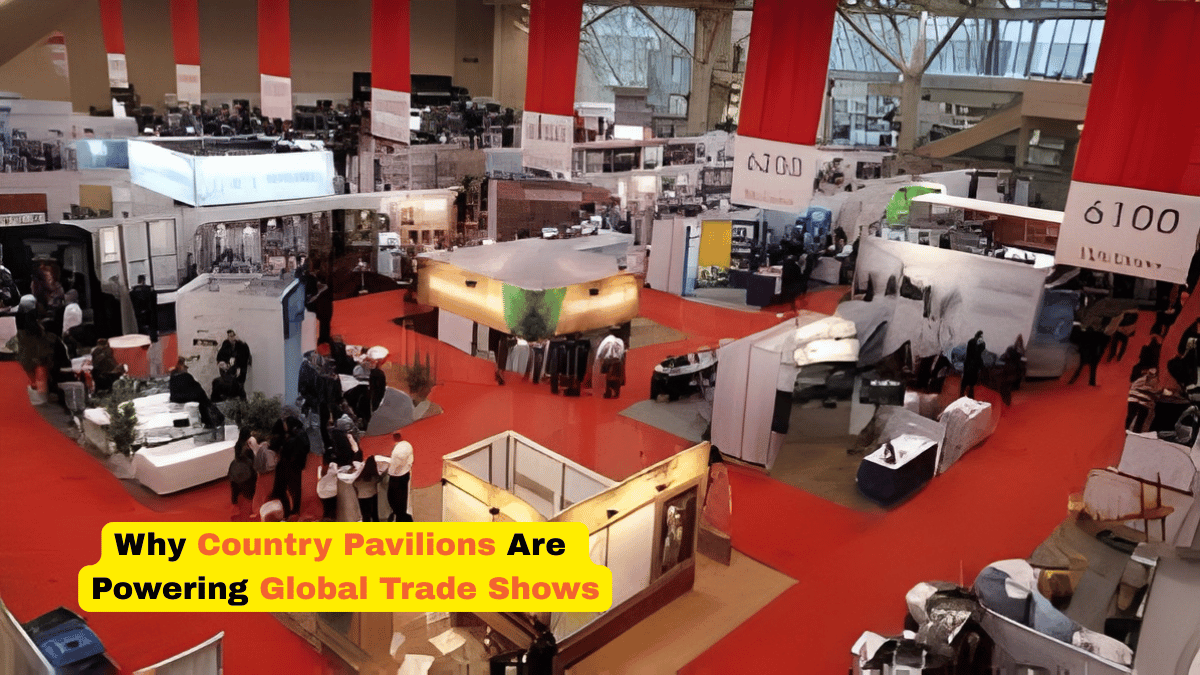
Buyers attending global exhibitions increasingly prefer visiting country pavilions to discover suppliers and compare offerings systematically. Pavilions allow buyers to explore multiple manufacturers from the same nation within a single zone, simplifying their product evaluation process. This saves time and increases the likelihood of discovering innovative solutions. Exhibitions across Dubai, Singapore, Europe, and China report that pavilions receive 30–50% more targeted buyer engagement compared to standalone booths scattered across large halls. Buyers also appreciate the quality assurance and government-backed credibility that come with national participation.
3. GOVERNMENTS ARE INVESTING HEAVILY IN EXPORT PROMOTION THROUGH PAVILIONS
Across Asia, Europe, and the Middle East, governments have significantly increased funding for pavilions, recognising exhibitions as high-impact tools for export acceleration. Many countries subsidise up to 40–70% of pavilion participation costs for small and mid-sized exporters. This support allows MSMEs to present themselves on global platforms they would otherwise not afford. Governments also deploy trade officers, export councils, and sector-specific delegates within pavilion zones to guide buyers, negotiate partnerships, and facilitate B2B meetings. In 2026, pavilion investments are expected to rise further as nations compete for global market share and international influence.
4. PAVILIONS SYMBOLISE NATIONAL UNITY & COLLECTIVE ECONOMIC STRENGTH
Pavilions bring together diverse companies that share a national identity, enabling them to present a unified message of economic capability. This collective presence boosts confidence among exhibitors, who feel supported by a larger national narrative. It also enhances the buyer’s perception that the country has a strong and cohesive industrial ecosystem. For instance, Germany’s engineering pavilion at Hannover Messe reflects the precision and strength of German manufacturing as a whole. Similarly, South Korea’s technology pavilions project innovation, reliability, and futuristic thinking. These unified zones enhance trust and facilitate large-volume business.
5. PAVILIONS SERVE AS DIPLOMATIC STAGES FOR GOVERNMENTS & TRADE
AGENCIES
Exhibitions today are as much about diplomacy as they are about commerce. Country pavilions often host official delegations, ministerial visits, embassy representatives, export councils, and government negotiators. These interactions accelerate trade agreements, investment deals, and cross-border partnerships. International exhibitions in Dubai, Singapore, and Shanghai increasingly feature high-level delegation meetings inside pavilions, making them central hubs for diplomacy-led business. In 2025, more than 150+ official delegations visited major pavilions at leading events—an indication of their rising importance in global negotiations.
6. PAVILIONS ARE BECOMING DESIGN MASTERPIECES— ENHANCING EXHIBITION EXPERIENCE
Modern pavilions are designed with architectural sophistication, thematic storytelling, interactive technology, and immersive digital elements. Countries invest in high-end design agencies to build visually striking structures featuring AR walls, multisensory zones, cultural showcases, and hightech demo areas. These immersive designs attract crowds, media attention, and social media traction—boosting visibility for all exhibitors inside the pavilion. Countries like japan, South Korea, UAE, Germany, and India have mastered the art of combining national branding with futuristic experience design. This design excellence enhances visitor engagement, making pavilions a highlight of major exhibitions.
7. PAVILIONS HELP MSMEs & SMALL EXPORTERS COMPETE WITH GLOBAL GIANTS
Without pavilion support, small exporters struggle to stand out in massive international events dominated by large multinational companies. National pavilions level the playing field by offering MSMEs premium booth locations, unified branding, and shared marketing resources. Many small exporters reported that being part of a pavilion helped them secure 2–5X more international inquiries compared to standalone participation. Pavilion-led positioning gives small suppliers a global platform that accelerates growth, builds export confidence, and inspires future participation.
8.PAVILIONS ARE DRIVING CROSS-BORDER COLLABORATIONS IN NEW SECTORS
Country pavilions are no longer limited to traditional industries like food, textiles, or consumer goods. They are expanding into highvalue sectors such as:
- AI & robotics
- Green energy
- Space technology
- EV components
- Biotech & healthcare
- Fintech solutions
- Smart agriculture
- Defence technology
This diversification attracts high-value buyers, investors, and global corporations. Exhibitions featuring advanced sector pavilions have reported a surge in cross-border collaboration MoUs, technology-transfer deals, and innovation partnerships.
CONCLUSION: COUNTRY PAVILIONS WILL BECOME THE POWER CENTRES OF EXHIBITIONS IN 2026
Country pavilions are no longer backdrops— they are the main stages of global exhibitions. They represent economic ambition, industrial strength, cultural identity, and global credibility. As competition between nations intensifies and export strategies become more aggressive, pavilions will continue to expand in size, investment, and sophistication. For exhibitors, they provide unmatched credibility and visibility. For buyers, they offer structured sourcing opportunities. For governments, they are strategic tools for diplomacy, branding, and international influence. In 2026, country pavilions will not just participate in exhibitions —they will define them.