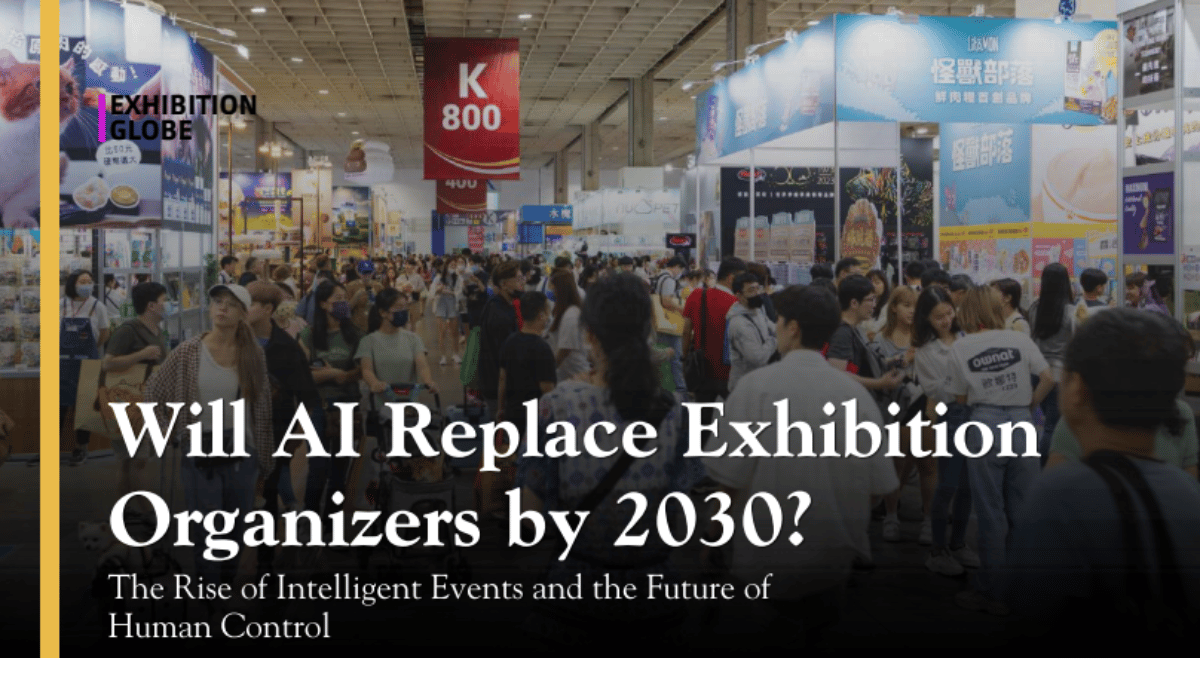
At present, the role of an exhibition organizer is complex and multifaceted. It involves curating industries, managing logistics, building exhibitor and visitor networks, designing experiences, and ensuring commercial success. Historically, these functions have relied heavily on human judgment, intuition, and relationships. Organizers have acted as connectors—bringing together the right people, at the right time, in the right environment. This human-centric model has been the backbone of the industry for decades.
However, the rapid advancement of AI is beginning to challenge this model in ways that were unimaginable just a few years ago. Today, AI systems can analyze massive datasets to identify trends, predict attendee behavior, and recommend optimal event strategies. They can match exhibitors with potential buyers based on precise criteria, automate marketing campaigns, and even personalize visitor journeys in real time. Tasks that once required teams of professionals can now be executed faster, more accurately, and at scale.
The implications are significant. If AI can handle data analysis, matchmaking, scheduling, and even parts of event planning, the traditional role of organizers begins to shrink. Efficiency increases, costs decrease, and decision-making becomes more data-driven. For large-scale exhibitions, this could mean streamlined operations and enhanced
performance. For smaller events, it could lower entry barriers and enable new players to enter the market.
Yet, despite these capabilities, the idea of AI fully replacing exhibition organizers oversimplifies the nature of the industry. Exhibitions are not purely operational systems —they are human experiences. They involve trust, negotiation, cultural understanding, and spontaneous interaction. The energy of a live event, the nuance of a business conversation, and the instinct required to manage complex, real-time situations are not easily replicated by algorithms.
What AI is more likely to do is not replace organizers, but transform them. The organizer of the future will be less of an operator and more of a strategist. Routine tasks will be automated, allowing professionals to focus on higher-value activities such as experience design, relationship building, and innovation. In this sense, AI becomes an enabler rather than a replacement—a tool that enhances human capability rather than eliminating it.
This transformation is already underway. Leading exhibition organizers are integrating AI into their operations to improve efficiency and deliver better outcomes. From predictive analytics to smart matchmaking, technology is becoming embedded in every stage of the event lifecycle. The most successful players are not resisting this change; they are embracing it, using AI to gain a competitive edge.
At the same time, the rise of AI is also creating new challenges. As automation increases, differentiation becomes more difficult. If every event uses similar technology, what sets one apart from another? The answer lies in creativity, brand positioning, and the ability to deliver unique experiences—areas where human insight remains critical. The future of exhibitions will depend not just on technology, but on how effectively it is combined with human expertise.
There is also a broader question of control. As AI systems become more sophisticated, who owns the intelligence that drives exhibitions? Will it be the organizers, the technology providers, or entirely new players entering the ecosystem? This shift could redefine power structures within the industry, making technology as important as infrastructure and relationships.
Looking ahead to 2030, it is unlikely that exhibition organizers will disappear. But it is equally unlikely that they will remain unchanged. The role will evolve, the skill sets will shift, and the industry will become more technology-driven than ever before. Those who adapt will thrive; those who resist may find themselves left behind.
In many ways, the debate is not about replacement, but about relevance. AI will undoubtedly take over repetitive, data-heavy tasks. It will make exhibitions smarter, faster, and more efficient. But the essence of exhibitions—human connection, trust, and experience—will continue to require human leadership.
The future, therefore, is not AI versus organizers. It is AI with organizers.
And in that future, the real question is not whether AI will replace you— but whether you are ready to work alongside it.