If you are searching for event organisers companies near you, match the type of company to your event first, then compare quotes from three or four well-reviewed local firms. A wedding planner suits a couple who wants help from the first venue tour to the last dance. A corporate agency suits a team running a conference or product launch. A social event planner suits birthdays, showers and family parties. A trade show specialist suits exhibitors, and an all-inclusive package company suits anyone who wants one price for everything.
The hard part is that nearly every company calls itself "full-service," and prices are rarely published. You can end up comparing a day-of coordinator with a production firm that has a five-figure minimum, as if they sold the same thing. They do not, and a mismatch is how people overpay or end up under-supported.
This guide sorts the five main types of company, shows what each typically charges, and explains what a top-rated one looks like in each category. Exhibition Globe has covered the events and exhibitions industry as a B2B publication and directory since 2017, so the guide follows the way the industry actually divides its work. Use it to build a shortlist in your own city.
1. Wedding planners and coordinators
What they handle
A wedding planner turns dozens of vendor decisions into one managed project. Most companies sell three service tiers, so the first question to ask is which tier you need:
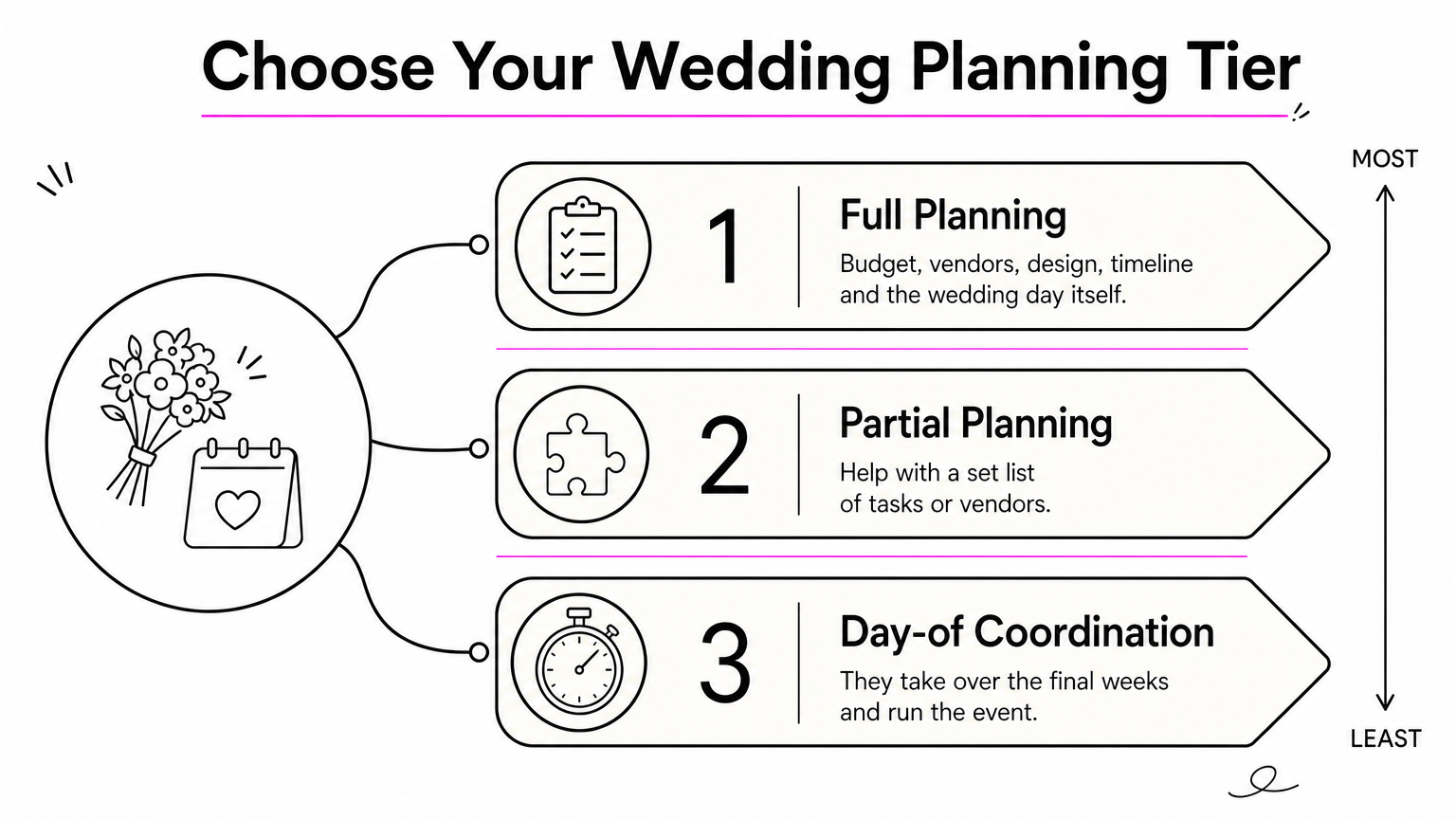
- Full planning: budget, vendor selection, design, timeline and the wedding day itself
- Partial planning: help with a set list of tasks or vendors
- Day-of or month-of coordination: they take over the final weeks and run the event for you
What they typically charge
Wedding planners price by flat fee per tier or by a percentage of your total budget. Day-of coordination commonly starts near $1,000. Full planning often runs several thousand dollars, or 10 to 20 percent of the budget, and rates climb in large metro areas.
Check what the fee includes. Ask about the number of planning meetings, assistants on the wedding day and travel charges. A lower headline fee with extras can cost more than a higher all-in one.
Compare wedding planners by tier and inclusions, not by the headline fee.
Best for and signs of quality
This type suits couples who want to stay present on the day, and families planning across distances. Top-rated planners show a portfolio of weddings at your guest count and venue style, and their reviews mention calm handling of problems on the day.
Ask for two recent references and a sample timeline. A good planner can show you one, and the detail in it tells you how they work.
2. Corporate event agencies
What they handle
Corporate agencies run conferences, galas, product launches, award nights and team events. Their value is logistics at scale: venue contracts, registration, speakers, staging, audiovisual and onsite management for hundreds of attendees.

Some agencies also run production in-house, including lighting, video walls and sound. Others subcontract it, which affects both price and accountability.
What they typically charge
Agencies usually charge a management fee of roughly 10 to 20 percent of the event budget, or a fixed project fee. Production-heavy firms often set minimums in the tens of thousands of dollars.
- Management fee: a percentage of total spend
- Project fee: one price for a defined scope
- Hourly: used for small meetings and consulting
For corporate events, ask whether production is in-house or subcontracted, because that drives both price and accountability.
Best for and signs of quality
Choose an agency when your event has a fixed date, a large guest list or a brand at stake. It suits HR teams, marketing departments and associations that cannot afford a failed launch.
Strong agencies describe events by outcome, such as attendance, sponsor satisfaction and on-time delivery. They also provide itemized budgets. Be wary of firms that cannot tell you who will be onsite on the day.
3. Social event and party planners
What they handle
Social planners handle birthdays, anniversaries, retirement parties, baby showers, reunions and holiday celebrations. The work is smaller than a wedding but still involves theme, venue, food, entertainment and timing.
Many also offer design-only services, where they create the look and you or the venue deliver it.
What they typically charge
Pricing is usually hourly or a flat fee per event. A coordination-only package can cost a few hundred dollars, while full design and management for a large celebration runs into the thousands. Many planners offer a free or low-cost first consultation.
Rental items such as furniture, lighting and décor are often billed separately from the planner’s fee. Ask for them as separate lines so you can compare.
Best for and signs of quality
This type suits busy hosts and milestone events where the guest of honor should not be working. Top-rated planners are praised for listening and for staying within the budget they agreed.
A good party planner works to your budget, and the reviews should say so.
Look for reviews that name specific events like yours. A planner who mostly does weddings may price a backyard birthday too high.
4. Trade show and exhibition specialists
What they handle
This category splits in two. Show organizers run the exhibition itself: they sell booth space, attract visitors and manage the venue. Exhibitor-side specialists such as stand builders, booth designers, logistics firms and marketing agencies help you show up and perform at someone else’s event.

If you are exhibiting, you need the second kind. If you are launching a show, you need an organizer or consultant.
What they typically charge
Organizers sell space by the square foot or square meter, so request the show’s rate card before comparing. Stand design, build, shipping, labor and electricity are usually quoted separately by contractors.
Budget for the stand, shipping and labor on top of the space, because the space price is only part of the cost.
Exhibition Globe’s EG Business Listing is a directory where visitors can find service providers, venues, jobs and other businesses in the exhibition sector. Companies can also add their own listing. It is a practical place to start a shortlist of stand and service providers.
Best for and signs of quality
This type suits exhibitors, manufacturers and brands that rely on trade fairs for leads. Quality signals include a track record in your industry and exhibitors who return year after year. For organizers, look for published visitor figures and past exhibitor references.
Ask a contractor to show finished stands at a show you know. Photos of work in the real venue beat renderings.
5. Venue-based and all-inclusive package companies
What they handle
Package companies bundle the pieces most hosts book separately, such as venue, catering, music, photography and décor, under one contract. Some are attached to a venue, and others coordinate preferred vendors for you.
You trade some choice for convenience. You get one point of contact instead of six.
What they typically charge
Packages are priced per event or per guest, with tiers that add services. Compare the package price against what the same items would cost if booked separately. Bundles often win on price for small and mid-sized events, but you lose flexibility on vendors.
Read the contract for minimum guest counts, overtime fees and service charges, which are common places for extra costs to appear.
Best for and signs of quality
Packages suit first-time hosts, tight budgets and short timelines. Top-rated providers list what each tier includes, let you tour the space and have reviews that describe how they handled a last-minute problem.
Avoid packages that will not name their vendors. You should know who is cooking, playing and photographing before you sign.
How to compare costs and verify top-rated companies
Cost comparison at a glance
Use this table to sanity-check quotes. The figures are planning ranges, not quotes, and they vary by city and season.
| Company type | Common pricing model | Typical starting point |
|---|---|---|
| Wedding planner | Flat fee per tier, or 10 to 20% of budget | Day-of near $1,000, full planning several thousand |
| Corporate agency | 10 to 20% management fee, or project fee | Tens of thousands for production-heavy firms |
| Social event planner | Hourly or flat fee | A few hundred dollars to a few thousand |
| Trade show specialist | Rate card per sq ft or sq m, contractor quotes | Set by the show and the project |
| Package company | Per event or per guest | Depends on tier and guest count |
A worked example
Say you are planning a wedding with a $30,000 budget. A planner charging 15 percent would cost $4,500. A flat-fee full-planning package at $3,500 would save $1,000, and day-of coordination at $1,200 would cost $3,300 less than the percentage model. The cheaper option only wins if you can handle the rest.
The same logic applies to business events. A $50,000 conference with an agency fee of 10 to 20 percent adds $5,000 to $10,000, so a quote at the high end deserves a clear explanation.
How to verify ratings and credentials
Famous firms serve celebrity and global brand clients, and a well-reviewed local company usually serves you better. Verify before you trust a rating:
- Search the company name with your city and read recent reviews on more than one platform
- Look for reviews that describe events like yours, not just general praise
- Ask for proof of liability insurance and any required local business licensing
- Request two references from the last year and call them
- Get at least three itemized quotes in writing
You do not need an LLC to host a private event. Public or ticketed events can trigger permit and insurance rules that vary by locality, so ask your venue or city office, and ask your planner what they handle.
A rating only helps when the reviews describe an event like yours.
Choosing the right company for your event
The best company is the one whose type, price model and track record match your event. Weddings need planners, business events need agencies, parties need social planners, trade shows need specialists, and tight budgets suit packages. Compare at least three itemized quotes and verify reviews and insurance before you sign.
If your event is connected to the exhibition and trade show world, start with event industry providers on Exhibition Globe. You can browse the directory for service providers and venues, or add your own business listing.