Exhibiting at European trade shows offers tremendous opportunities to reach international buyers, partners, and distributors. However, companies familiar with the U.S. exhibition industry often discover that European trade fairs operate under very different rules. From booth construction and shell schemes to power connections and accessibility requirements, overlooking these differences can lead to unexpected costs and last-minute challenges.
Drawing on more than 15 years of experience designing and building exhibition stands across Europe and North America, industry experts emphasize that the biggest surprises rarely come from quoted prices—they come from incorrect assumptions.
European Exhibition Booths Are Built Differently
One of the most significant differences between American and European trade shows is booth construction.
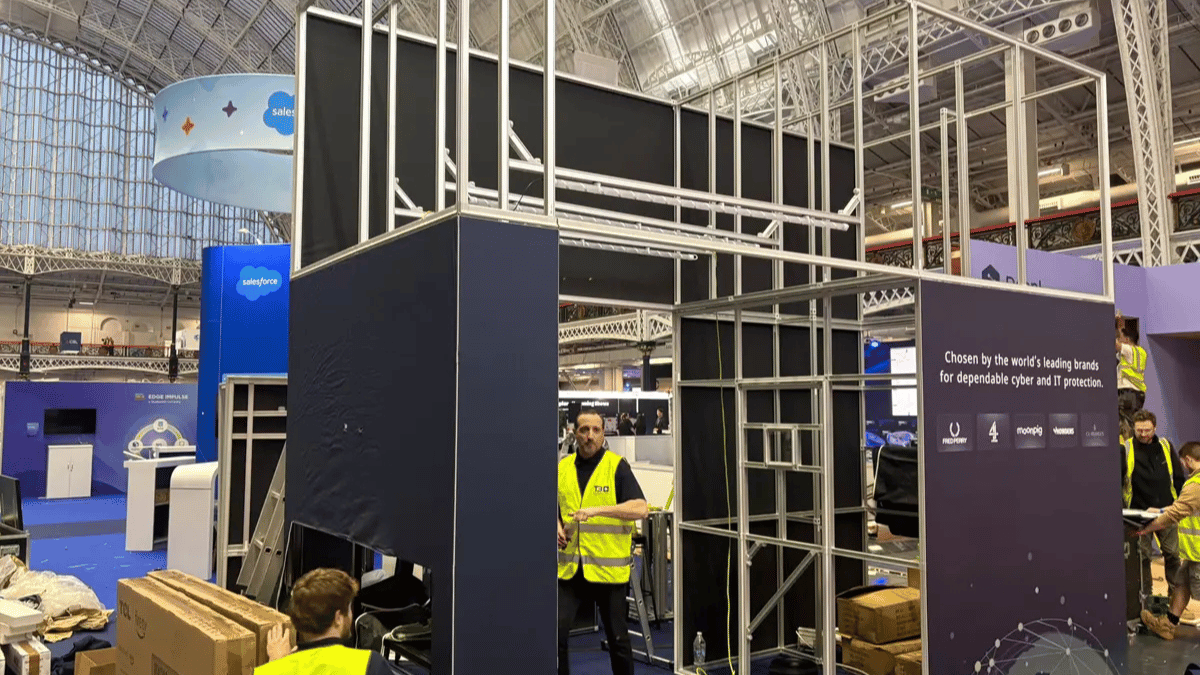
In the United States, many smaller exhibition spaces are delivered as pipe-and-drape booths, allowing exhibitors to build freely within the designated area. In contrast, European exhibitions commonly provide shell scheme booths featuring pre-built aluminum walls, fascia boards displaying the exhibitor’s name, and standardized structures.
Exhibitors selecting “space only” packages should also understand that they receive only an empty marked floor area, requiring a complete stand build from scratch.
Understanding this distinction is essential when planning booth design and budgeting for a European exhibition.
Shell Scheme Structures May Vary on Site
Even experienced exhibitors can be caught off guard by the way European shell schemes are assembled.
Although organizers provide maximum height limits, structural elements such as diagonal support braces or fascia boards are often installed during on-site construction, depending on the stability requirements of individual booth layouts.
Experts recommend designing exhibition graphics and headers with sufficient flexibility instead of using every available centimeter of height. This approach helps avoid costly modifications during installation.
Back Walls Must Be Professionally Finished
Another important European exhibition rule concerns the rear of exhibition stands.
If a stand extends above neighboring booths, its back side becomes visible from surrounding aisles. European organizers generally require these rear surfaces to remain clean, professionally finished, and free of exposed framework, wiring, or unfinished materials.
Branding or advertising on the rear of the stand is also typically prohibited, as it faces neighboring exhibitors rather than the company’s allocated exhibition space.
Planning for rear cladding should therefore be included in both booth design and project budgeting.
Modular Systems Maximize Booth Space
European shell schemes offer opportunities that many first-time exhibitors overlook.
Instead of constructing additional freestanding walls inside the booth, exhibitors can often attach modular display systems directly to the shell scheme using specialized mounting kits.
This approach preserves valuable floor space while reducing unnecessary construction materials, making smaller exhibition stands more functional and visually open.
Raised Floors Require Accessibility Planning
Raised flooring is common across European exhibitions because it conceals electrical wiring and creates a premium appearance.
However, introducing even a modest platform often triggers accessibility requirements, including wheelchair ramps built to approved gradients. Exhibition organizers generally enforce these standards, making early planning essential for compliance.
Including accessibility features during the design phase helps avoid expensive adjustments once installation begins.
Order Electrical Services Before Arriving
Electrical services are another area where careful planning can significantly reduce costs.
Experts advise calculating the total power requirements for every piece of equipment—including lighting, display screens, computers, product demonstrations, coffee machines, and charging stations—and ordering the required electrical supply well before the exhibition.
Increasing electrical capacity during stand construction often requires venue electricians and can result in substantially higher costs than advance bookings.
Small Preparation Can Save Valuable Time
Simple operational decisions can also improve efficiency during exhibition breakdown.
Leaving a ladder and a basic equipment case inside the booth allows exhibitors to begin dismantling immediately after the show closes, rather than waiting for stored equipment to be returned by venue logistics teams.
This small preparation can save considerable time when multiple exhibitors are competing for access to freight and storage services.
European Trade Shows Offer Advantages Too
While European exhibitions present different operational requirements, they also offer several advantages.
Unlike many North American exhibitions, drayage costs are generally lower or less complex, and exhibitors can often install their own stands using their own staff and equipment, depending on venue regulations.
These benefits can help offset some exhibition costs when planning international participation.
Careful Planning Leads to Successful European Exhibitions
For American exhibitors entering the European market, success depends on understanding local exhibition standards rather than assuming U.S. practices apply everywhere.
By learning the differences in booth construction, accessibility regulations, electrical planning, and venue requirements, exhibitors can avoid unnecessary expenses while delivering a professional brand presence.
Proper preparation, realistic budgeting, and early communication with exhibition organizers remain the most effective ways to ensure a smooth and successful European trade show experience.