EMS 2026 Day Two Delivers Innovation-Focused Insights
Day two of the Experiential Marketing Summit delivered a packed schedule of hands-on experiences, curated off-site activations, and thought-provoking discussions that explored how fresh thinking, hyper-personalization, sustainability, and measurement continue to shape meaningful brand engagement in today’s digitally dominated world.
The event once again brought together some of the biggest names in experiential marketing to discuss how brands can remain relevant, build stronger communities, and deliver measurable business outcomes through live experiences.
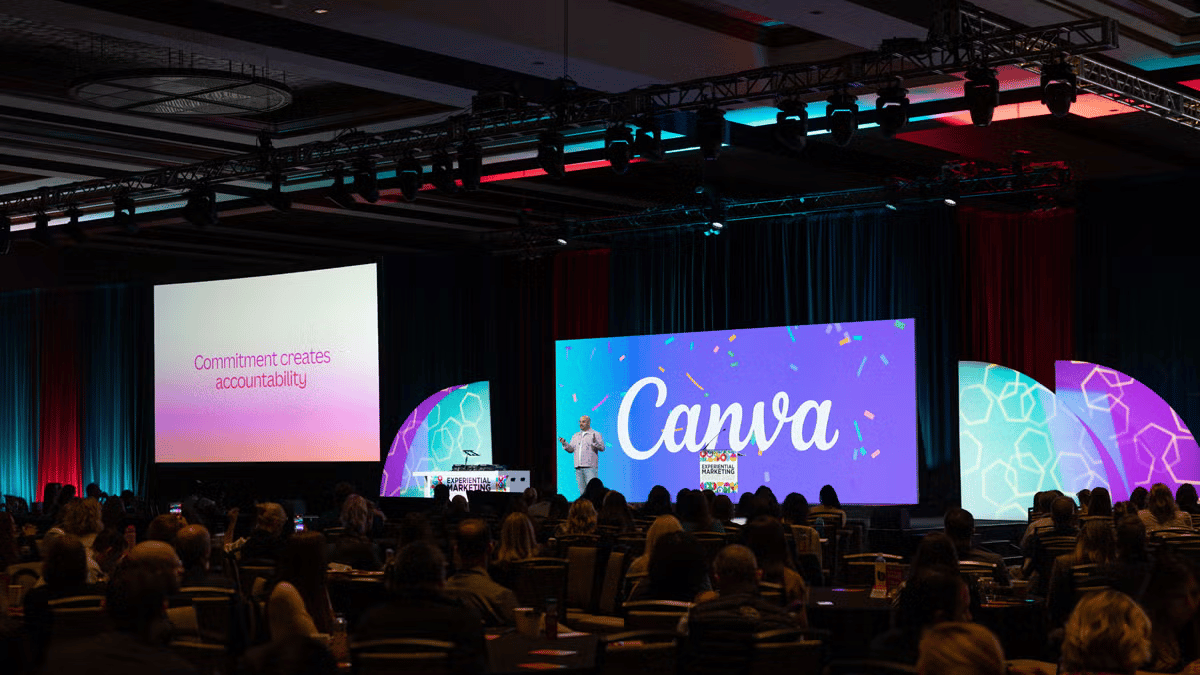
Jimmy Knowles Opens with Powerful Keynote on Creativity and Business Impact
The day began with a high-energy trivia contest that set the tone for an engaging morning, followed by a standout opening keynote titled “Confetti Meets KPIs—Balancing Bold Ideas with Business Impact.”
The keynote was delivered by Jimmy Knowles, who offered attendees a compelling look at how creativity and measurable outcomes can coexist in successful event strategies.
Knowles emphasized that the industry has entered what he described as the “imagination era,” where bold thinking often matters more than large-scale spending.
He explained that while larger budgets may create louder experiences, they do not automatically create more meaningful ones. According to Knowles, imagination—not resources—is what makes events truly memorable and impactful.
He also gave attendees a rare behind-the-scenes view into how Canva designs culture-shaping events that foster authentic brand communities while delivering measurable business value alongside emotional audience connections.
Creativity and ROI Must Work Together
One of the strongest themes to emerge from the keynote and subsequent discussions was the need to merge creativity with measurable return on investment.
Knowles made it clear that event professionals should stop viewing creativity and ROI as competing priorities.
Instead, successful experiential strategies are built through systems and frameworks that allow creative excellence to directly support business objectives.
This perspective resonated throughout the day’s programming as speakers reinforced that the future of event marketing lies in balancing emotional audience engagement with performance metrics that prove business impact.
AI Sparks Debate as a Creative Collaboration Tool
One of the most talked-about sessions of the day was the “Human Creativity vs. AI Creative Brief Challenge,” which placed human marketers and artificial intelligence side-by-side in a real-time ideation challenge.
Rather than declaring a winner, the session sparked meaningful conversation around where AI can effectively accelerate brainstorming and concept development.
Speakers highlighted how AI can act as a valuable sounding board for early-stage creative exploration, helping teams generate faster ideas and test concepts quickly.
At the same time, the discussion reinforced that AI lacks the emotional context, cultural understanding, and human nuance required to build truly memorable brand experiences.
The takeaway was clear: AI is a powerful assistant, but human creativity remains irreplaceable in experiential marketing.
Quality Matters More Than Quantity
Another key message repeated across multiple sessions was the importance of focusing on quality over quantity.
As brands compete for shrinking consumer attention spans, speakers stressed that delivering fewer but more meaningful experiences often produces stronger engagement than overwhelming audiences with excessive content.
Monique Ruff-Bell reinforced this idea during her remarks, explaining that audiences value thoughtful, high-quality content far more than large volumes of mediocre programming.
Her perspective underscored a growing industry shift toward intentional experience design that respects audience time and delivers deeper value.
Personalization Is Driving Inclusivity and Deeper Engagement
Hyper-personalization also emerged as one of the day’s defining themes.
Industry experts explained that tailored event designs and audience-specific experiences are essential for improving accessibility, inclusivity, and engagement.
This includes modular trade show booth designs, segmented audience pathways, customized activations, and adaptive event experiences that cater to varied attendee needs and preferences.
By creating experiences designed for specific audience groups rather than trying to appeal to everyone equally, brands can foster stronger emotional connections and higher participation rates.
This strategic personalization is increasingly becoming a critical factor in successful experiential campaigns.
Sustainability and Measurement Continue to Shape Event Strategy
Sustainability and measurement remained central topics throughout the day’s panels and breakout discussions.
Sessions explored how event teams can improve operational efficiency, reduce environmental impact, and implement stronger data frameworks to prove event effectiveness.
As brands face increasing pressure to justify investments and align with sustainability goals, these conversations highlighted the growing need for measurable, responsible event strategies that deliver both business and social value.
The Future of Experiential Marketing Is Human-Centered
Day two of EMS 2026 made one thing clear: the future of experiential marketing lies in human-centered creativity supported by smart technology, strategic measurement, and personalized design.
As the event continues, the conversations shaping this year’s summit are setting new benchmarks for how brands create meaningful experiences that resonate emotionally while delivering measurable results in an increasingly digital-first world.