India’s exhibition industry is emerging as one of the fastest-growing markets in the world, despite currently accounting for only around 2% of the global exhibitions sector. According to Sebastian Witt, Partner & Senior Consultant at jwc GmbH, this gap represents a significant untapped opportunity for the country’s MICE (Meetings, Incentives, Conferences and Exhibitions) industry.
India Outpaces Global Exhibition Market Recovery
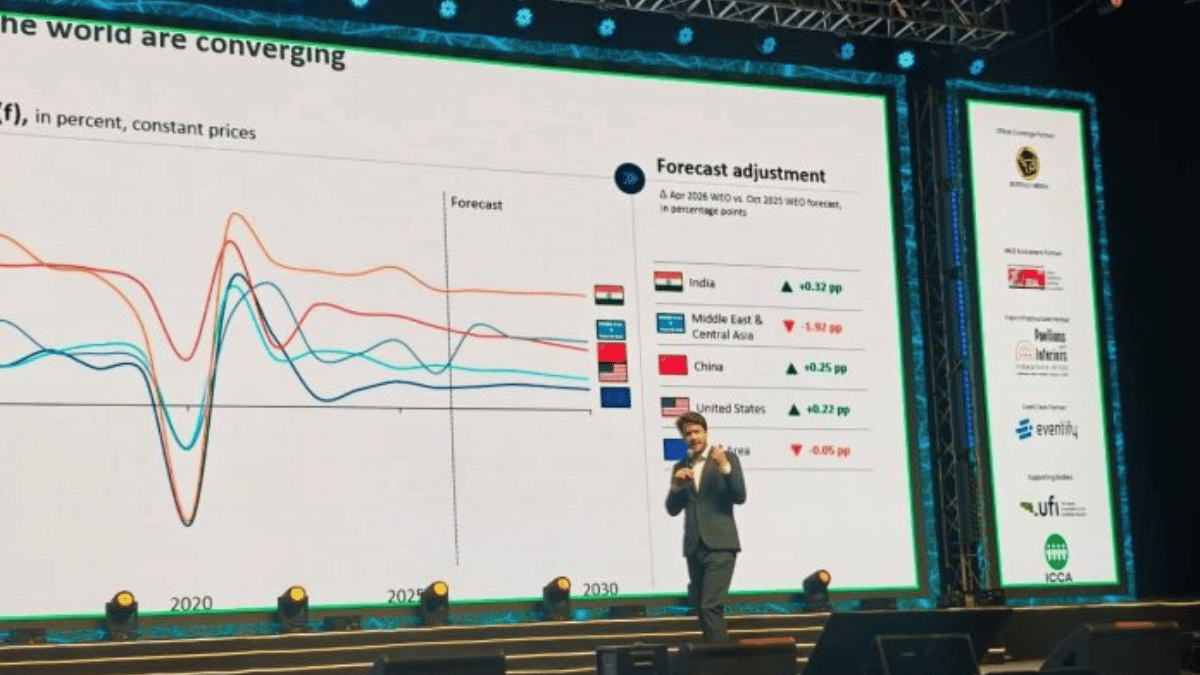
Speaking at an industry forum at the Hyderabad International Trade Expositions (HITEX) venue, Witt highlighted that India has shown remarkable resilience following the pandemic. While the global exhibition industry is expected to recover to pre-pandemic levels only by the end of 2027, India nearly returned to its pre-Covid activity levels by 2023 and exceeded them in 2024.
According to jwc’s latest market analysis, global recovery continues to be affected by economic slowdowns in China and geopolitical uncertainties across several regions. In contrast, India’s exhibition market has maintained strong momentum, positioning itself as a leading growth destination.
India Expected to Record 8.5% Annual Growth
jwc forecasts indicate that India’s exhibition sector will expand at an average annual growth rate of approximately 8.5% in net rented exhibition space. By 2027, India is projected to surpass its 2019 exhibition activity levels by more than 50%, making it one of the fastest-growing exhibition markets globally.
The consultancy also expects India to remain the world’s fastest-growing major economy through 2030, further strengthening demand for trade fairs, conferences, and business events.
Strong Economic Fundamentals Driving MICE Growth
Witt noted that India possesses all the essential ingredients for a thriving exhibition industry, including rapid economic expansion, a growing middle-class population, increasing industrial activity, and favorable demographic trends.
These factors make India one of the most attractive markets worldwide for exhibition organizers, exhibitors, and investors seeking long-term growth opportunities.
Exhibition Infrastructure Remains a Key Concern
Despite the positive outlook, India faces a major challenge in the form of inadequate exhibition infrastructure. While some mature markets struggle with excess venue capacity, India continues to face a shortage of high-quality exhibition spaces.
According to jwc’s global market attractiveness model, India ranks highly in growth potential but falls behind in ecosystem readiness due to limited availability of world-class exhibition venues.
Comparative studies show that India has significantly less indoor exhibition space relative to its GDP and population compared to global benchmarks. This infrastructure deficit could restrict the country’s ability to host larger international trade fairs and conventions in the future.
Industry Trends Shaping the Future of Exhibitions
The presentation also highlighted several trends transforming the global exhibitions sector. Exhibitors are increasingly focused on achieving measurable return on investment (ROI), while attendees are seeking greater return on time (ROT).
Event organizers are prioritizing visitor quality over quantity by developing content-rich experiences, specialized industry events, hosted buyer programs, and year-round engagement platforms.
Additionally, Artificial Intelligence (AI) is expected to play a growing role in improving operational efficiency, audience engagement, and event value creation. Sustainability measurement, talent acquisition, and omnichannel event strategies are also becoming key priorities across the industry.
Geopolitical Shifts Could Benefit India
jwc believes ongoing geopolitical uncertainties in several international markets may create new opportunities for India to attract global exhibition organizers and exhibitors looking for stable and high-growth destinations.
However, capitalizing on these opportunities will require significant investments in exhibition infrastructure, stronger ecosystem development, and greater policy support for the sector.
Government Support Essential for Global Competitiveness
Drawing comparisons with Germany, one of the world’s leading exhibition markets, Witt emphasized the importance of long-term government support. Public investment and recognition of exhibitions as drivers of trade, exports, innovation, and knowledge exchange have been instrumental in Germany’s success.
He concluded that if India aims to become a leading global MICE destination, the exhibitions industry must be recognized as a strategic economic sector and supported through dedicated policies and infrastructure development initiatives.