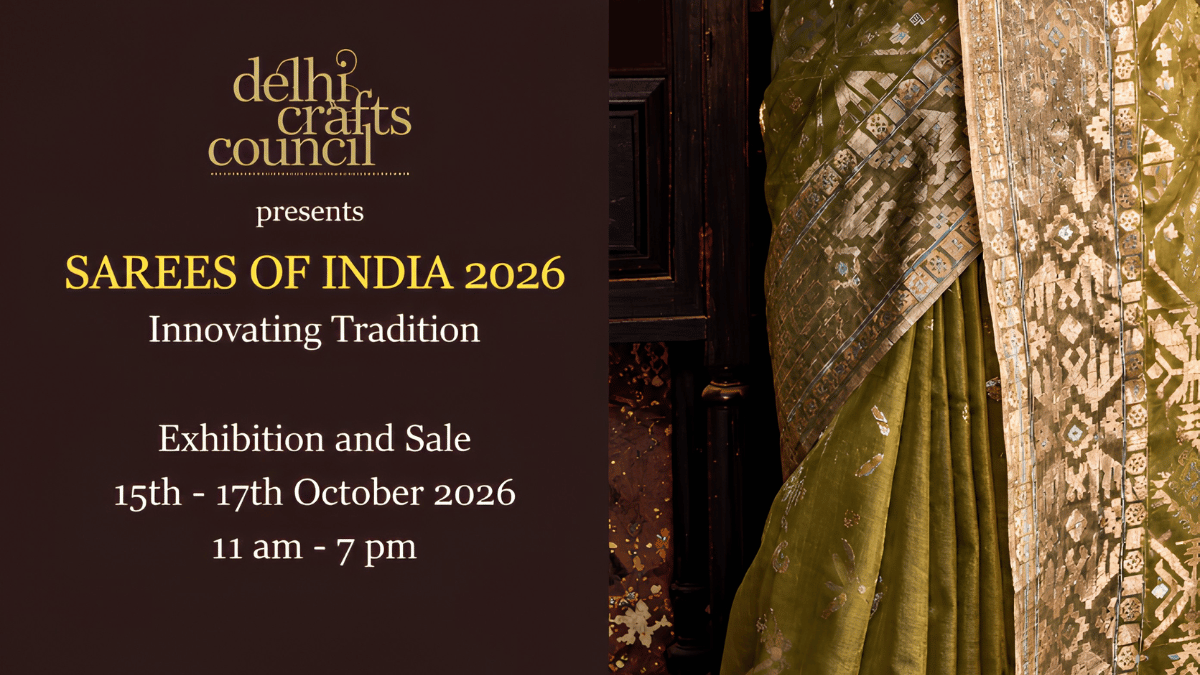
The three-day exhibition organised by the Delhi Crafts Council features 22 stalls, revival weaves and the presentation of the Sutrakar Samman 2026 to master weaver Vijay Kumar Tanti.
New Delhi, October 19, 2026: The Delhi Crafts Council’s annual exhibition, Sarees of India 2026, brought together traditional Indian saris, regional weaving techniques and textile craftsmanship at Aga Khan Hall, New Delhi. Held from 15 to 17 October 2026, the three-day exhibition featured 22 stalls showcasing the diversity of India’s handloom traditions and the skills of artisans working to preserve the country’s textile heritage.
Sarees of India 2026 Highlights India’s Regional Handloom Traditions
The Sarees of India 2026 exhibition provided a platform for showcasing saris representing different regions of the country. The displays highlighted the distinctive weaving techniques, textile designs and craftsmanship that contribute to India’s rich handloom heritage. Visitors had an opportunity to explore traditional saris and learn about the skills and cultural knowledge passed down through generations of weavers.
The exhibition also drew attention to the importance of sustaining traditional weaving practices in a changing textile market. By bringing artisans and visitors together, the event highlighted the role of handloom exhibitions in creating awareness about regional textiles and the communities responsible for producing them.
Revival Weaves Take Centre Stage
A key feature of Sarees of India 2026 was a dedicated section showcasing revival weaves. The initiative focused on traditional textile techniques that require continued attention and support to remain part of India’s living craft heritage.
Revival weaving initiatives play an important role in preserving specialised skills, traditional patterns and regional textile identities. They also provide greater visibility to artisans who continue to practise these techniques and contribute to the continuity of India’s handloom traditions.
Through this section, the exhibition highlighted the need to maintain a connection between heritage craftsmanship and contemporary demand. Preserving traditional weaving knowledge remains important for supporting artisan communities and ensuring that distinctive textile traditions continue to reach future generations.
Vijay Kumar Tanti Receives Sutrakar Samman 2026
One of the major highlights of the exhibition was the presentation of the Sutrakar Samman 2026 to Vijay Kumar Tanti, a master weaver from Bihar. The recognition acknowledged his work with the traditional Bawan Buti sari, a distinctive handloom tradition associated with the state’s textile heritage.
The honour brought attention to the contribution of master weavers in maintaining traditional techniques and sustaining the knowledge required to create heritage textiles. Artisans such as Tanti play an important role in preserving specialised weaving practices and passing their skills on to future generations.
The presentation of the Sutrakar Samman also reinforced the importance of recognising individual craftsmanship within India’s broader handloom sector. Such recognition can help bring greater visibility to traditional weavers and the textile traditions they represent.
Delhi Crafts Council Promotes Textile Heritage
The Delhi Crafts Council’s annual exhibition continues to provide a platform for presenting Indian crafts and highlighting the work of artisans. Through Sarees of India 2026, the council brought regional saris, revival initiatives and artisan recognition together in a showcase dedicated to the country’s textile traditions.
The exhibition demonstrated how handloom events can help visitors understand the cultural significance of traditional textiles beyond their appearance. Each sari reflects a combination of weaving knowledge, material selection, design practices and regional influences developed over generations.
By presenting these traditions in one venue, the exhibition encouraged greater appreciation of the craftsmanship behind Indian saris and the communities that sustain the handloom sector.
Sarees of India 2026 Concludes in New Delhi
The Sarees of India 2026 exhibition concluded on 17 October 2026 after three days of showcasing traditional saris, regional weaving techniques and heritage textiles at Aga Khan Hall, New Delhi. With 22 stalls, a dedicated revival weaves section and the presentation of the Sutrakar Samman 2026, the exhibition highlighted several important aspects of India’s handloom ecosystem.
The event brought renewed attention to the value of preserving traditional weaving practices and recognising the artisans who continue to carry them forward. By connecting visitors with regional textile traditions and skilled craftspeople, the exhibition contributed to wider awareness of India’s handloom heritage.
About Sarees of India 2026: Organised annually by the Delhi Crafts Council, Sarees of India is an exhibition focused on traditional Indian saris, regional weaving traditions and textile craftsmanship. The 2026 edition took place from 15 to 17 October at Aga Khan Hall, New Delhi, featuring 22 stalls and a special focus on revival weaves.
Author: Exhibition Globe News Desk