The global exhibition industry continues to demonstrate resilience despite ongoing economic and geopolitical uncertainties. According to the latest UFI Global Exhibition Barometer 2026, more than a quarter of exhibition companies worldwide expect their annual revenues to grow by over 5%, while the majority anticipate stable business performance over the coming year.
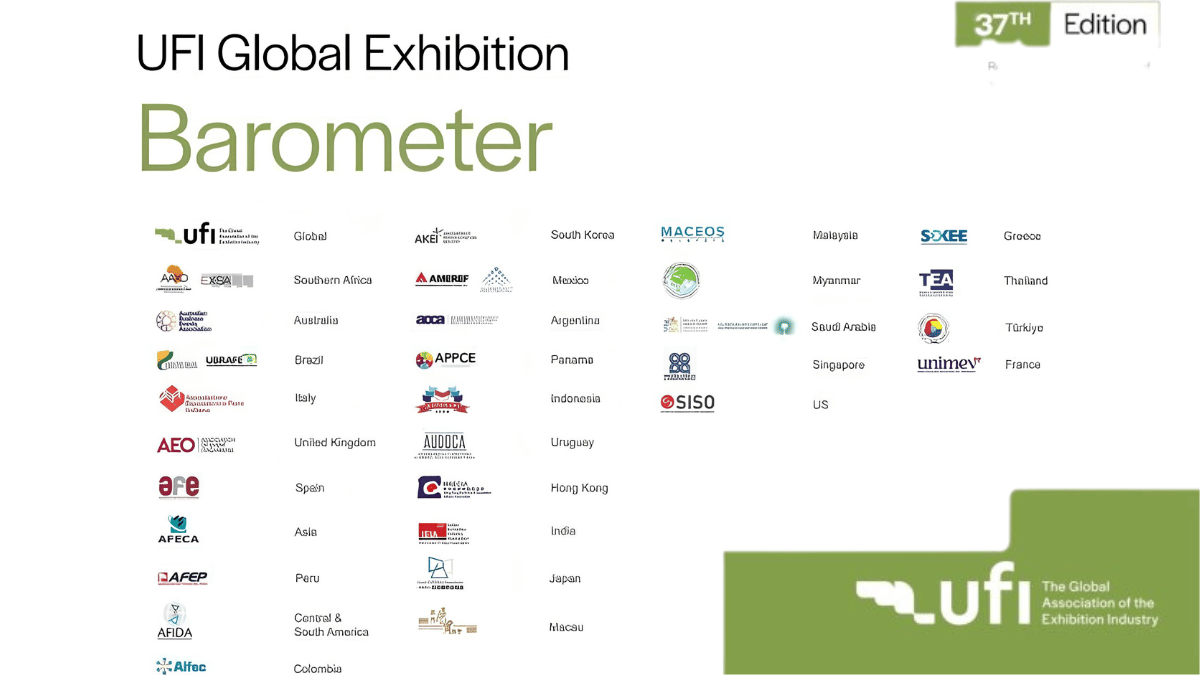
Released by UFI – The Global Association of the Exhibition Industry, the 37th edition of the Global Exhibition Barometer provides a comprehensive overview of the industry’s current health, future outlook, and key business challenges across major exhibition markets.
UFI Survey Covers 466 Companies Across 59 Countries
The latest report, completed in June 2026, is based on responses from 466 exhibition companies operating across 59 countries and regions. The study includes detailed market profiles for 20 major exhibition markets, including India, the United States, the United Kingdom, Germany, France, China, Australia, Brazil, Saudi Arabia, the UAE, South Africa, Spain, Italy, Malaysia, Thailand, Türkiye, Mexico, Colombia, Argentina, and Greece.
The report also provides broader insights across five regional zones and compares the perspectives of exhibition organisers, venue operators, and service providers.
27% of Companies Expect Revenue Growth Above 5%
Despite global economic uncertainties, the exhibition sector remains optimistic.
According to the survey:
- 27% of companies expect their annual revenue to increase by more than 5%.
- 38% anticipate revenues will remain stable within a margin of ±5%.
- Revenue expectations remain strongest in core business activities such as exhibition space rentals, service sales, and sponsorship opportunities.
When examining specific revenue streams:
- 32% expect stable income from exhibition space rentals.
- 39% foresee stable revenues from service sales.
- 32% expect sponsorship revenues to remain steady.
- 37% stated that government subsidies are not relevant to their business model.
These figures suggest that the exhibition industry continues to rely primarily on commercial revenue rather than public financial support.
Exhibition Activity Expected to Remain Stable in 2026
The report also evaluates expectations regarding exhibition activity within companies’ home markets.
Globally:
- 26% expect exhibition activity to increase by more than 5% during 2026.
- 38% believe activity will remain stable.
- 21% anticipate a decline exceeding 5%.
- 14% remain uncertain about market conditions.
These projections are more cautious than those recorded six months earlier, when significantly more companies expected strong market growth. UFI attributes the more conservative outlook largely to geopolitical developments, particularly the recent tensions in the Middle East.
Strong Operating Profits Continue Across the Industry
The industry also reported encouraging profitability.
For 2025:
- 37% of companies experienced operating profit growth exceeding 10%.
- 50% reported stable profits.
Looking ahead to 2026:
- 19% expect operating profits to rise by more than 10%.
- 54% anticipate stable profitability.
While businesses remain optimistic, companies are adopting a more cautious financial outlook amid ongoing global uncertainty.
Home Market Economy Remains the Biggest Business Concern
Economic conditions within domestic markets continue to be the most significant short-term challenge for exhibition companies worldwide.
According to the report, the top short-term business concerns include:
- State of the economy in the home market (19%)
- Geopolitical challenges (18%)
- Global economic developments (16%)
For the medium term, priorities shift slightly.
The leading mid-term concerns are:
- Global economic developments (18%)
- Geopolitical challenges (15%)
- State of the economy in the home market (13%)
These findings indicate that while local economic conditions remain critical in the immediate future, companies increasingly expect broader global economic trends to shape long-term business performance.
AI Adoption Continues to Rise in the Exhibition Industry
Artificial Intelligence is becoming an increasingly important part of exhibition business operations.
The latest UFI survey found that:
- 91% of exhibition companies are now using AI in some form.
- This represents a 4% increase compared with six months earlier.
The growing adoption reflects the industry’s focus on improving operational efficiency, customer engagement, marketing, event management, and data analysis through AI-powered technologies.
Limited Global Impact from Middle East Conflict
Despite concerns surrounding the Middle East, the survey found that its impact on the global exhibition industry remains relatively limited.
According to UFI:
- Only 14% of companies worldwide reported a strong negative business impact.
- Outside the Gulf Cooperation Council (GCC) region, only 10% experienced significant disruption.
- Approximately 90% of companies outside the GCC reported either no impact or only a moderate effect on their operations.
The findings suggest that while businesses within the GCC have experienced understandable disruptions, the broader international exhibition industry has remained largely resilient.
UFI CEO Highlights Industry Resilience
Commenting on the survey findings, Chris Skeith OBE, Managing Director and CEO of UFI, said the data shows little evidence that the recent Middle East conflict has significantly affected exhibition markets outside the GCC region.
He noted that although businesses within the Gulf region have experienced temporary challenges, conditions have improved since the survey was conducted, and the industry is expected to recover quickly.
He also emphasised that positive business trends continue globally despite concerns about national economies in several markets.
Positive Outlook Despite Global Challenges
The latest UFI Global Exhibition Barometer highlights an industry that remains fundamentally strong despite facing economic uncertainty and geopolitical risks.
Stable revenue expectations, healthy profitability, rising AI adoption, and resilient exhibition activity indicate that the global exhibition sector continues to adapt successfully to changing market conditions. While businesses remain cautious about economic developments, the industry’s long-term outlook remains positive, supported by continued demand for face-to-face exhibitions, business networking, and international trade events.