A PR event is an event built to earn media coverage and public attention, not just to fill seats. To run one well, set a measurable goal, build the event around a story journalists want to tell, pitch reporters four to six weeks ahead, and give them easy access on the day. Then follow up within 48 hours and measure the results against your goal.
Most PR events fail for a simple reason. The team plans a good gathering and then hopes reporters show up. Invitations go out late, the news angle is "we are hosting an event," and nobody captures photos, quotes, or numbers for the recap. The room looks full and the coverage is zero.
This guide covers what a PR event is and then walks through four steps that turn one into coverage. Exhibition Globe is a B2B media platform that publishes organizer announcements for the exhibition, trade show, and conference industry. The advice below reflects what editors need to see before they cover an event.
What a PR event is and when to use one
A PR event is a planned gathering, in person or online, whose main job is to earn attention from journalists, influencers, and your community. PR stands for public relations, the work of shaping how an audience sees an organization.
PR event meaning in plain terms
Think of the audience beyond the room. A product launch with 80 guests is a PR event only if it is designed so that reporters, creators, and partners publish stories about it afterward. That is what separates event PR from a company party.
The phrase "event and PR" covers two different jobs. PR for an event means promoting something you already host, such as a trade show or conference. A PR event works the other way round: the event exists to create news. Both rely on the same skills, media relations and storytelling.
A PR event succeeds when people who were not in the room tell the story.
How event PR differs from event marketing
Event marketing aims at registrations and sales through channels you control, such as email and paid ads. A PR event aims at earned coverage, which you do not control, so it needs a stronger news angle and more credibility. Strong programs combine both, and event marketing PR is the point where the two overlap.
| PR event | Event marketing | |
|---|---|---|
| Main goal | Coverage, reputation, awareness | Registrations, leads, sales |
| Key audience | Journalists, influencers, partners | Prospects and customers |
| Channels | Earned media, relationships | Email, ads, landing pages |
| Success measure | Stories published, reach, sentiment | Tickets sold, pipeline, revenue |
Common types of PR event
Pick the type that matches your news. The usual formats are:
- Product or service launch
- Press conference or media briefing
- Media preview or site tour
- Anniversary, award, or milestone celebration
- Charity or community event
- Panel discussion or research data reveal
Step 1. Set goals, audience, and budget
Start with one measurable goal, one target audience, and a budget that reserves real money for promotion. Everything else in your event PR plan depends on these three decisions.
Write a goal you can count
"Raise awareness" cannot be checked afterward. Write numbers instead. A workable goal for a product launch looks like this: 10 journalists attend, 6 stories get published, and 150 posts use the event hashtag within 14 days. Choose one primary number and treat the others as support.
Pick your audience and news angle
List the outlets, newsletters, and creators your buyers already read, then name the individual reporters who cover your topic. Your news angle is the reason they should care now. Test it by writing the headline you want. If it reads "Company hosts event," you have no news yet. If it reads "Company reveals first industry survey on supplier delays," you do.
If the headline you want does not exist yet, the event is not ready to be planned.
Build the PR plan for the event budget
Budget promotion and content capture first, because first-time planners underfund both. The split below is an illustration for a $20,000 launch event. Adjust it to your market.
| Budget line | Share | Amount |
|---|---|---|
| Venue | 30% | $6,000 |
| Catering | 20% | $4,000 |
| Promotion and media outreach | 25% | $5,000 |
| Photo and video capture | 10% | $2,000 |
| Speakers and talent | 10% | $2,000 |
| Contingency | 5% | $1,000 |
| Total | 100% | $20,000 |
Step 2. Design the event around a story
Design the event so that a reporter can understand the story in one minute and photograph it in one glance. Good PR event marketing starts with the experience, not the invitation.
Choose a format and venue that suit reporters
In-person events produce the best visuals and the best face time with spokespeople. Virtual events suit scattered audiences and tight travel budgets, and hybrid formats serve both. When you pick a physical venue, check for clear camera sightlines, power outlets, reliable Wi-Fi, and a quiet corner for interviews. A branded backdrop and good lighting make every photo usable.
Plan two or three reportable moments
Reporters cannot cover a whole evening. Give them moments to cover: a product reveal, a live demonstration, a surprising number, or a guest with a quotable view. Keep the main reveal in the first half of the program so deadline reporters can file before they leave. A 60 to 90 minute run of show is enough for most press-focused events.
Brief spokespeople and prepare backups
Name two spokespeople and give each the same three key messages. Rehearse a few hard questions. Then plan for failure: a backup speaker, a weather or power plan, and a team channel for real-time problems. Partners and sponsors can also share your promotion if their audiences overlap with yours.
Step 3. Pitch media and promote before the day
Pitch reporters four to six weeks ahead and promote through several channels at once. Reporters need lead time, and a well-prepared PR event page and press kit make it easy for them to say yes.
Prepare the press kit
A press kit saves a reporter an hour of research, which raises your odds of coverage. Include these items:
- Event overview with who, what, when, where, and why
- Speaker and spokesperson bios
- Key talking points and any data you are releasing
- A press release written as a news story
- High-resolution logos and images
- A named media contact with a phone number
Send a short pitch
Personalize every email and keep it under 150 words. Copy this template and fill in the brackets:
Subject: Invite: [Company] reveals [news] on [date], [city or live online]

Hi [First name],

I read your piece on [recent article topic], so I thought this fits your beat.

On [date] at [time], [Company] will [reveal/launch/publish] [one-line news with a number]. [Spokesperson, title] will be available for interviews, and we will show [live demo, samples, or data] on site.

Press passes and a media kit are ready. Can I reserve a spot for you, or send an embargoed briefing if you cannot attend?

Thanks,
[Name, role, phone, email]
Plan on a fraction of invited journalists attending. To land 10 attendees, a list of 40 to 50 well-matched contacts is a sensible starting point.
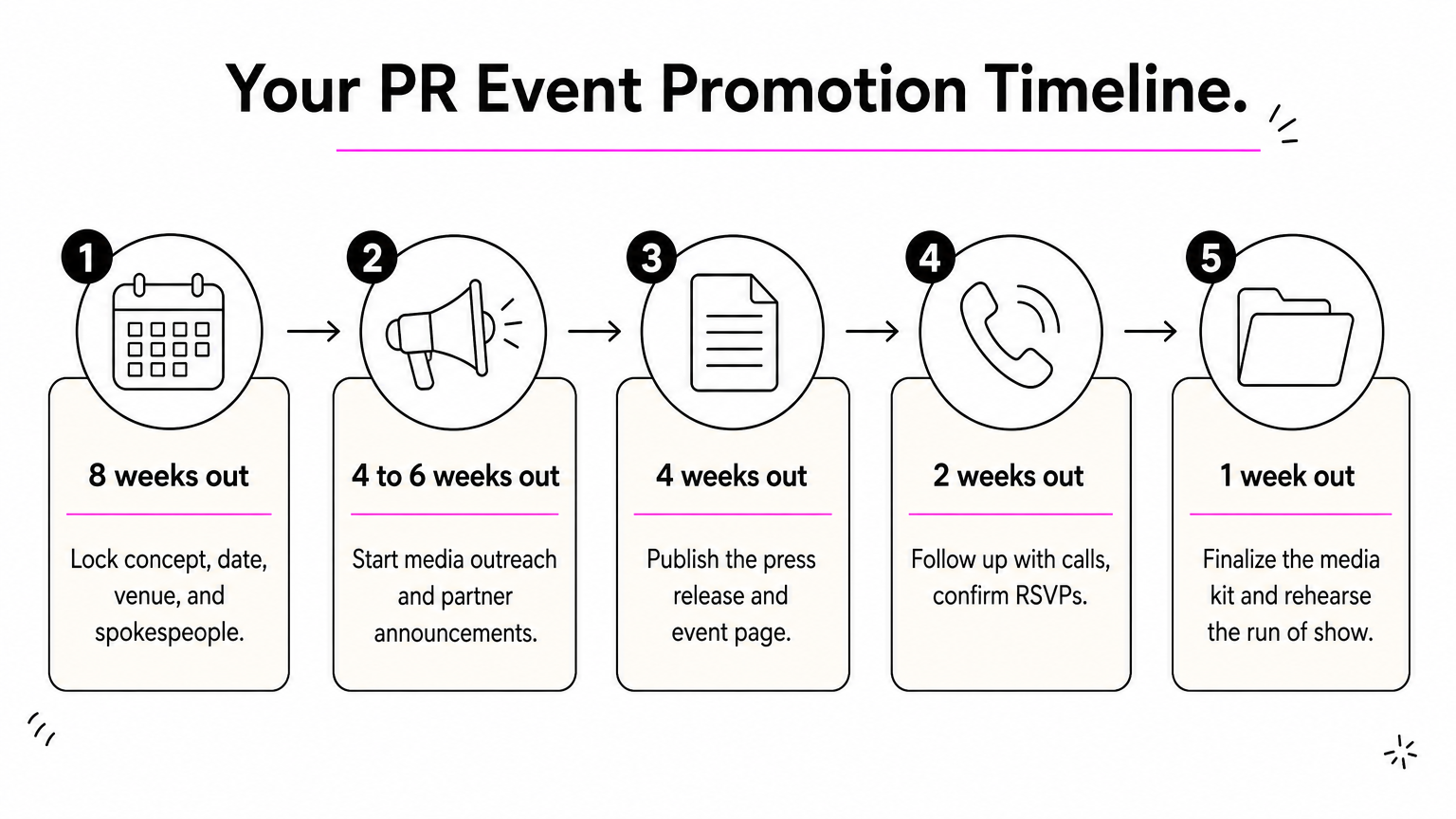
Follow a promotion timeline
Use this schedule as a baseline and compress it only if you must.
| When | Action |
|---|---|
| 8 weeks out | Lock concept, date, venue, and spokespeople |
| 4 to 6 weeks out | Start media outreach and partner announcements |
| 4 weeks out | Publish the press release and event page |
| 2 weeks out | Follow up with calls, confirm RSVPs |
| 1 week out | Finalize the media kit and rehearse the run of show |
Trade and industry media matter as much as national outlets. For exhibition and event businesses, Exhibition Globe publishes press releases from organizers and companies, which puts your announcement in front of the people who book stands and attend shows.
Reporters cover what is easy to understand and easy to verify, so give them both in one email.
Step 4. Run the day, follow up, and measure
On the day, serve the press as carefully as you serve guests. Afterward, send recap material within 48 hours and judge the event against the goal you wrote in Step 1.
Run the event for the press
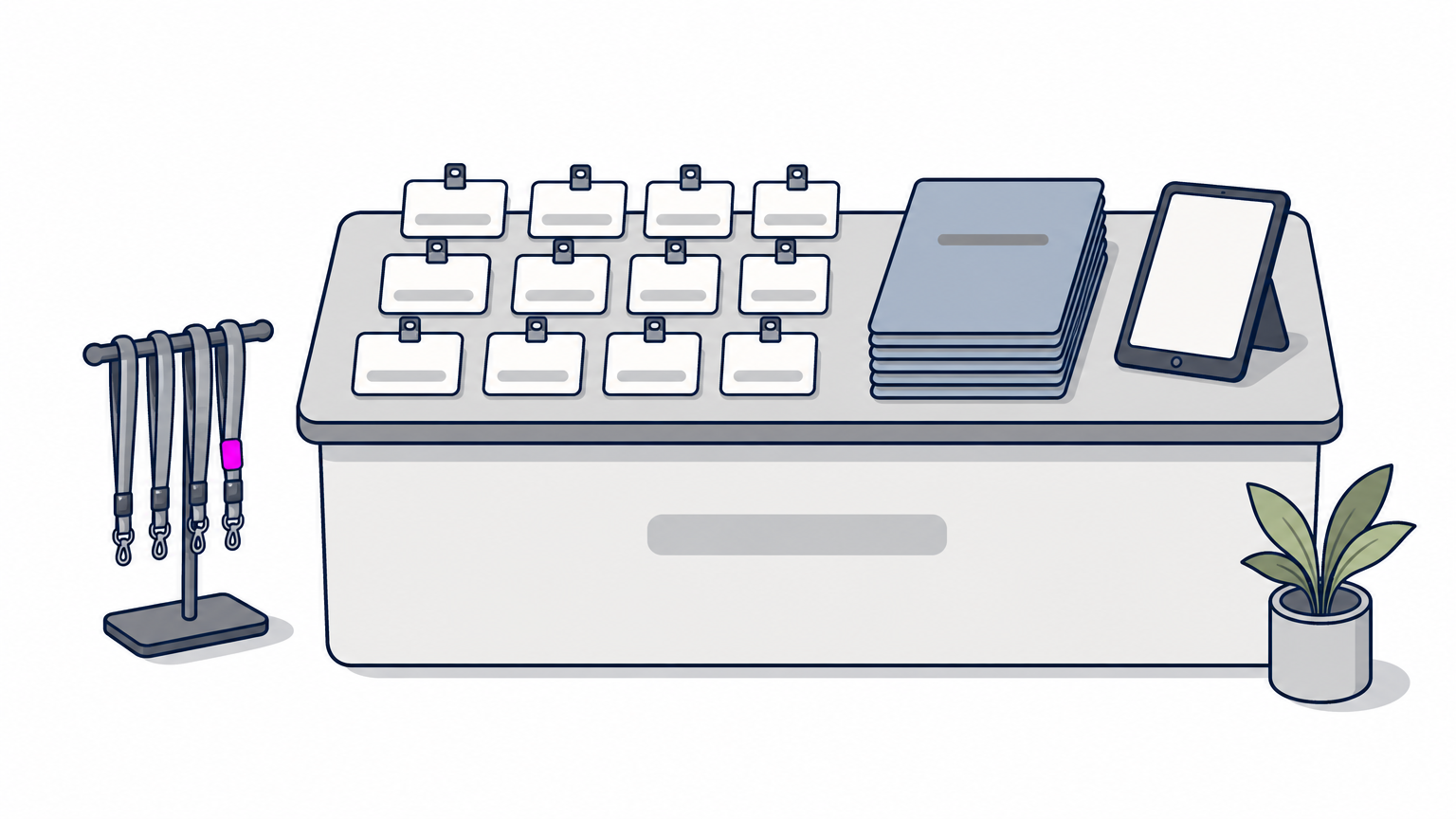
Open a media check-in desk with name badges, press kits, and a host who knows every reporter’s outlet. Schedule short interview slots with your spokespeople during the program. Post live photos and clips on social channels, and print the event hashtag on signs and slides so attendees use it. If you stream the event, assign one person to handle only the stream.
Follow up within 48 hours
Coverage keeps arriving after the event if you feed it. Send a recap release with photos, a short video, and the best quotes. Email thank-you notes to attendees with links to usable assets, and offer exclusive interviews to journalists who missed the event. Reporters who skipped the event still cover it when you hand them ready material.
Measure against your goal
Compare results to the numbers you set. Track attendance, number and quality of stories, social engagement, site traffic, and leads or sales in the following weeks. Suppose your goal was 10 journalists, 6 stories, and 150 hashtag posts. The result was 9 journalists, 7 stories, and 120 posts. You met one of three targets, and the miss on posts tells you to build more shareable moments into the next event.
The point of measuring is to learn what to change, not to prove the event was a success.
Plan the story first, then the party
A PR event works when the story comes first. Define one countable goal, pick the audience, and write the headline you want. Then build a format, a few reportable moments, and a pitch that make that headline easy to write. Promote early, serve reporters well on the day, and follow up while the news is fresh.
Every event you run builds the case for the next one. Keep your results, your media list, and your best photos in one place so the second event starts ahead of the first.
If you organize or exhibit at trade shows, conferences, or expos, the quickest way to reach industry readers is trade media. You can publish your event press release on Exhibition Globe and put your announcement in front of organizers, exhibitors, and buyers.