1. ROI is the New Benchmark
The most defining shift in the exhibition industry today is the growing emphasis on return on investment. Earlier, participation decisions were often based on visibility metrics such as footfall or brand impressions. However, in 2026, exhibitors are adopting a much sharper financial lens. Every square foot of booth space, every interaction, and every lead is being evaluated in terms of its conversion potential. Companies are calculating cost per lead, cost per acquisition, and ultimately the revenue generated from each exhibition.
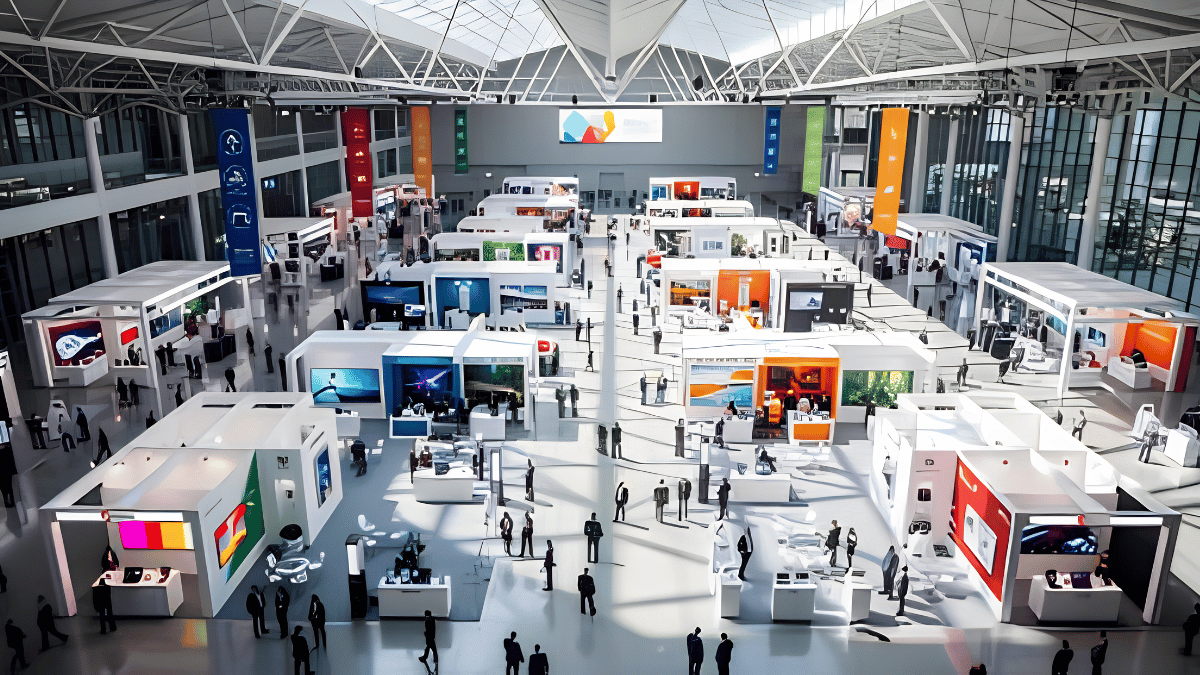
This tactile and personal experience cannot be fully replicated online. In industries such as manufacturing, infrastructure, food exports, and technology, buyers often prefer to see and understand products in real time before making commitments. Exhibitions, therefore, act as a bridge between interest and decision, compressing what might otherwise be a long sales cycle into a few impactful interactions. In an increasingly digital world, the value of physical presence has become even more pronounced.
2. The Power of Physical Presence in a Digital World
Despite the exponential growth of digital platforms, physical exhibitions continue to thrive, and for good reason. Business decisions—especially high-value ones—are still deeply influenced by human interaction. Exhibitions provide a unique environment where trust can be built quickly through face-to-face engagement. Buyers can physically experience products, evaluate quality, and have direct conversations with decision-makers
3. Reach: From Local Events to Global Marketplaces
One of the most remarkable transformations in the exhibition landscape is the expansion of reach. Exhibitions are no longer limited by geography. A well-curated trade show in India today can attract participants and buyers from across the globe, turning local events into international business hubs. This convergence creates a powerful ecosystem where businesses can explore multiple markets simultaneously.
For exhibitors, this means unprecedented access to global opportunities without the need for extensive travel or prolonged market entry strategies. A single exhibition can open doors to distributors, partners, and clients from different countries. This ability to connect with diverse markets under one roof significantly enhances the strategic value of exhibitions, making them one of the most efficient tools for international expansion.
4. Relevance: The Rise of Niche, HighImpact Events
As the industry matures, relevance has emerged as a critical success factor. Broad, generic exhibitions are gradually losing their effectiveness, giving way to highly specialized, sector-focused events. These niche exhibitions bring together a concentrated audience with shared interests, resulting in more meaningful interactions and higher conversion rates.
For example, exhibitions dedicated specifically to electric vehicles, organic food, artificial intelligence, or logistics create an environment where every participant is aligned with the core theme. This alignment ensures that conversations are purposeful, decisions are faster, and outcomes are more tangible. In this context, relevance is not just about the industry—it is about ensuring that every interaction contributes to a clear business objective.
5. The Anatomy of a Successful Exhibitor in 2026
Success in exhibitions today is the result of strategic planning rather than spontaneous participation. The most effective exhibitors begin their journey well before the event itself. They identify target audiences, schedule meetings in advance, and create awareness about their participation through marketing efforts. This preevent groundwork ensures that their time at the exhibition is focused and productive.
During the event, the emphasis shifts to delivering a compelling booth experience. This includes interactive product demonstrations, clear communication of value propositions, and a team that is trained to engage with visitors effectively. Equally important is the use of digital tools to capture leads in real time, ensuring that no opportunity is lost. Post-event follow-up then becomes the final and crucial step, where structured engagement converts leads into business outcomes. This end-to-end approach defines the modern exhibitor’s success.
6. Technology: The Silent Force Behind Results
Technology has become an integral part of the exhibition ecosystem, quietly enhancing every stage of participation. From AI-powered matchmaking that connects the right buyers with the right exhibitors to smart tracking systems that analyze visitor behavior, technology is enabling a more efficient and targeted experience. Exhibitors can now access detailed insights into who visited their booth, how long they stayed, and what interests they showed.
These insights allow for better decision-making and more personalized follow-ups. Additionally, hybrid platforms are extending the reach of exhibitions beyond physical boundaries, allowing businesses to engage with a wider audience. Rather than replacing traditional exhibitions, technology is strengthening them, making interactions more meaningful and outcomes more measurable.
7. The Economics of Exhibitions
A common question among businesses is whether exhibitions justify their cost. The answer lies in how effectively they are executed. When approached strategically, exhibitions can deliver returns that far exceed the initial investment. A single successful exhibition can generate a pipeline of opportunities that sustains business growth for months.
Beyond immediate deals, exhibitions also offer intangible benefits that are equally valuable. They enhance brand credibility, provide insights into market trends, and offer a platform to analyze competitors. These factors contribute to longterm strategic positioning, making exhibitions not just a short-term investment but a continuous growth driver.
8. Exhibition Industry as a Business Opportunity
While many businesses focus on participating in exhibitions, there is a growing recognition of the opportunities within the exhibition ecosystem itself. The industry is expanding rapidly, creating demand for a wide range of services, including event organization, booth design, technology solutions, and logistics support.
Entrepreneurs and investors are increasingly exploring these avenues, recognizing the scalability and recurring nature of the business. As industries continue to rely on exhibitions for growth, the ecosystem surrounding them is also set to expand, offering multiple entry points for those looking to capitalize on this momentum.
9. Exhibition Globe’s Strategic Positioning
In this evolving environment, platforms like Exhibition Globe have the potential to play a transformative role. By acting as a bridge between exhibitors, organizers, and industry stakeholders, such platforms can facilitate meaningful connections and drive business outcomes. The focus is no longer just on sharing information but on enabling action.
By integrating insights, opportunities, and networking capabilities, Exhibition Globe can position itself as a central hub within the exhibition ecosystem. This strategic role goes beyond publishing—it contributes directly to the growth and efficiency of the industry.