
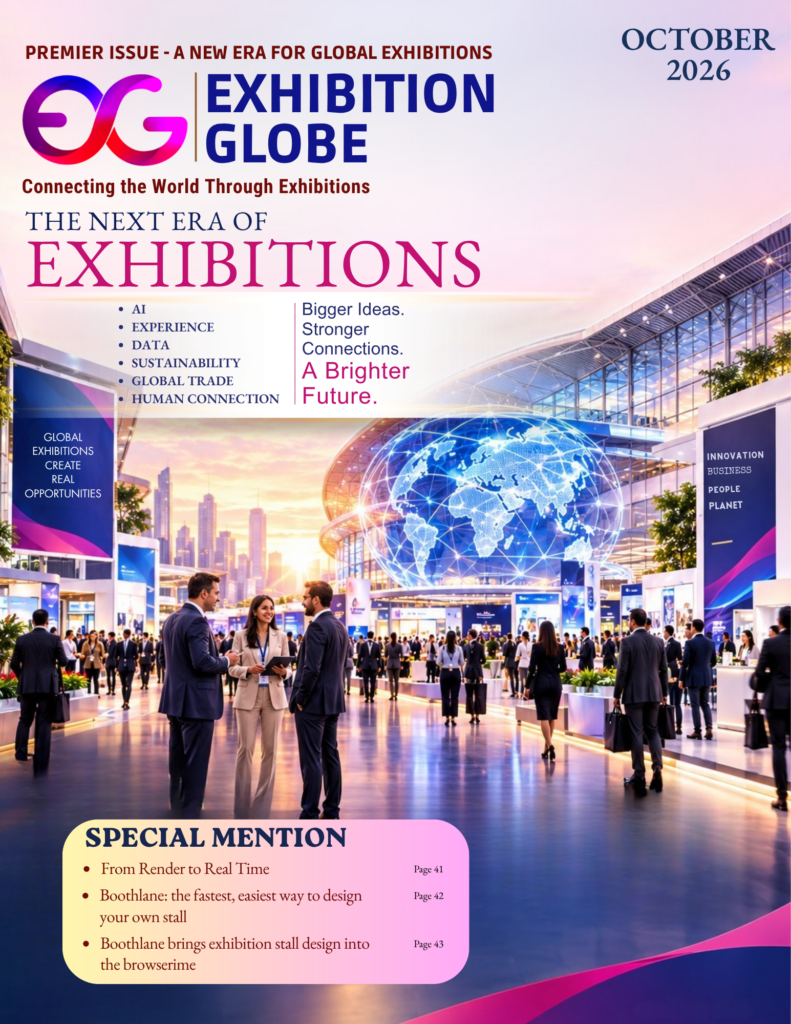
The exhibition industry is undergoing a major transformation. Traditional trade shows are evolving into dynamic business platforms that combine technology, data analytics, sustainability, and personalised visitor experiences. As businesses seek better networking opportunities, qualified leads, and measurable returns on investment (ROI), exhibitions are becoming more strategic than ever. The future of exhibitions will be shaped by artificial intelligence (AI), digital engagement, data-driven decision-making, and stronger global business connections.
Here are 10 key exhibition industry trends that will shape the future of trade shows, business events, and exhibition management.
1. Exhibitions Will Become AI-Powered Business Platforms
Artificial intelligence is transforming how exhibitions are planned, managed, and experienced. From visitor registration to lead generation, AI tools are helping organisers improve efficiency and deliver more relevant experiences.
AI-powered matchmaking systems can analyse attendee profiles, business interests, and purchasing intentions to recommend valuable connections. Exhibitors can identify potential customers more effectively, while visitors can discover relevant suppliers and solutions.
AI chatbots can also answer visitor questions, provide event information, and assist with navigation. Meanwhile, predictive analytics can help organisers understand attendance patterns, improve marketing campaigns, and optimise event operations.
In the coming years, AI will become an essential tool for exhibition organisers seeking smarter operations, better visitor engagement, and stronger business outcomes.
2. The End of the Static Exhibition Stand
Traditional exhibition stands are evolving into interactive brand experiences. Instead of relying only on printed banners, product displays, and brochures, exhibitors are creating engaging environments that encourage visitors to participate.
Interactive screens, product demonstrations, augmented reality (AR), virtual reality (VR), and immersive presentations are making exhibition booths more memorable.
For example, manufacturers can demonstrate complex machinery through interactive digital models, while technology companies can allow visitors to experience software through live demonstrations.
A well-designed exhibition stand should communicate a brand’s value quickly, encourage meaningful conversations, and support lead generation.
The future exhibition stand will focus on experience, interaction, and measurable engagement rather than appearance alone.
3. Data Will Become the New Exhibition Currency
Data is becoming one of the most valuable assets in the exhibition industry. Organisers and exhibitors increasingly need reliable information to measure event performance and understand visitor behaviour.
Registration forms, QR-code interactions, digital badges, meeting bookings, and lead-capture platforms can provide useful insights into attendee engagement.
These insights help organisers identify popular sessions, understand audience interests, and improve future editions. Exhibitors can evaluate lead quality, follow up with prospects, and calculate the return on their participation.
However, effective data collection requires transparency, appropriate consent, and responsible handling of personal information.
By combining analytics with clear business objectives, exhibition professionals can move beyond counting visitors and focus on meaningful commercial results.
4. Exhibitions Will Move from Footfall to ROI
High visitor numbers have traditionally been considered a major indicator of exhibition success. However, businesses increasingly want evidence that participation generates tangible commercial value.
Exhibitors are looking beyond footfall to evaluate qualified leads, product demonstrations, business meetings, sales opportunities, and partnerships created during an event.
Organisers can support this shift by providing better lead-management tools, appointment scheduling, exhibitor analytics, and post-event performance reports.
For businesses, defining objectives before an exhibition is essential. Goals may include generating qualified leads, launching a product, entering a new market, or strengthening relationships with distributors.
The future of exhibitions will be measured not only by how many people attend, but also by the business value they create.
5. The Exhibition Industry Will Become a Year-Round Community
Exhibitions are no longer limited to the dates printed on an event calendar. Digital platforms allow organisers, exhibitors, and visitors to remain connected before, during, and after physical events.
Pre-event webinars, online exhibitor directories, digital networking sessions, industry newsletters, and post-event discussions help maintain engagement throughout the year.
These communities create opportunities for continuous knowledge sharing, product discovery, and business development. Organisers can also use digital channels to promote upcoming editions and build stronger relationships with returning participants.
For exhibitors, year-round engagement provides additional opportunities to nurture leads and remain visible to potential customers.
The exhibition of the future will operate as an ongoing business community, with the physical event serving as a major networking milestone.
6. Personalisation Will Redefine the Visitor Experience
Modern visitors expect relevant information and experiences tailored to their professional interests. Generic event schedules and broad marketing messages are becoming less effective as exhibition audiences become more specialised.
Personalised event applications can recommend exhibitors, sessions, networking opportunities, and product demonstrations based on attendee preferences.
For example, a procurement manager attending an industrial exhibition may receive recommendations for machinery suppliers, logistics providers, and manufacturing technology companies.
Organisers can also use segmented email campaigns and personalised notifications to help visitors prepare for their attendance.
Personalisation benefits exhibitors by connecting them with more relevant prospects and helps visitors use their time more efficiently.
The goal is to make every interaction more useful, relevant, and valuable.
7. Human Connection Will Become More Valuable, Not Less
As automation and digital communication become increasingly common, face-to-face interaction will remain a defining advantage of physical exhibitions.
Trade shows provide opportunities to build trust, demonstrate products, discuss complex requirements, and establish relationships that may be difficult to develop through digital channels alone.
Personal conversations can reveal customer needs, uncover partnership opportunities, and support negotiations. Live demonstrations also allow visitors to evaluate product quality and ask detailed questions directly to experts.
Technology should strengthen these interactions rather than replace them.
The most successful exhibitions will combine digital convenience with authentic human engagement, creating environments where business relationships can develop naturally.
8. Sustainability Will Move from Promise to Performance
Sustainability is becoming an important consideration for exhibition organisers, venues, exhibitors, and visitors. The industry is increasingly exploring practical ways to reduce waste, conserve resources, and improve environmental performance.
Reusable exhibition stands, recyclable materials, digital brochures, energy-efficient lighting, responsible catering, and waste-separation systems can help reduce the environmental impact of events.
Organisers can also encourage exhibitors to adopt modular booth designs that can be reused across multiple exhibitions.
Venue selection, transportation planning, and energy management are additional areas where improvements can make a difference.
However, sustainability claims should be supported by measurable actions and transparent reporting.
The future of sustainable exhibitions will depend on practical implementation, responsible resource use, and measurable progress.
9. Global Exhibitions Will Become More Accessible
International exhibitions connect manufacturers, suppliers, buyers, distributors, investors, and service providers across borders. As digital tools improve, these events can offer greater opportunities for international participation.
Online exhibitor profiles, virtual product presentations, digital matchmaking, multilingual event information, and remote meeting options can help businesses discover international opportunities before travelling.
For small and medium-sized enterprises (SMEs), these tools can make global markets easier to explore. They can identify relevant exhibitions, research potential partners, and plan participation more efficiently.
Physical exhibitions will continue to play an important role in building trust and developing commercial relationships. Digital services can complement them by extending their reach.
The future of global exhibitions will combine international networking with accessible digital tools, helping businesses explore new markets and build cross-border partnerships.
10. Experiential Exhibitions Will Become More Immersive
Visitor expectations are changing, and exhibitions are increasingly competing to deliver memorable experiences. Immersive technologies and creative event design are helping organisers make complex information easier to understand.
Large-format displays, interactive product zones, AR demonstrations, VR simulations, and experiential installations can transform conventional exhibition spaces into engaging environments.
For example, an automotive exhibitor might create an immersive vehicle experience, while a construction technology company could demonstrate a building project through a virtual walkthrough.
These experiences can increase visitor interest and encourage social sharing, provided they serve a clear purpose.
Successful experiential exhibitions balance creativity with usability, accessibility, and business objectives. Technology should enhance the message rather than distract from it.
Conclusion: Building the Next Generation of Exhibitions
The exhibition industry is entering a new era driven by artificial intelligence, interactive experiences, data analytics, personalisation, sustainability, and global connectivity.
These trends are changing how organisers plan events, how exhibitors engage with audiences, and how visitors discover business opportunities.
To succeed, exhibition organisers must invest in relevant technology, prioritise meaningful networking, adopt responsible practices, and measure performance through clear business outcomes. Exhibitors should focus on engaging experiences, qualified leads, and consistent follow-up.
The future will belong to exhibitions that combine digital innovation with human connection and measurable value.
For organisers, exhibitors, and businesses planning their next event, understanding these exhibition industry trends is an important step towards creating more competitive and impactful trade shows.