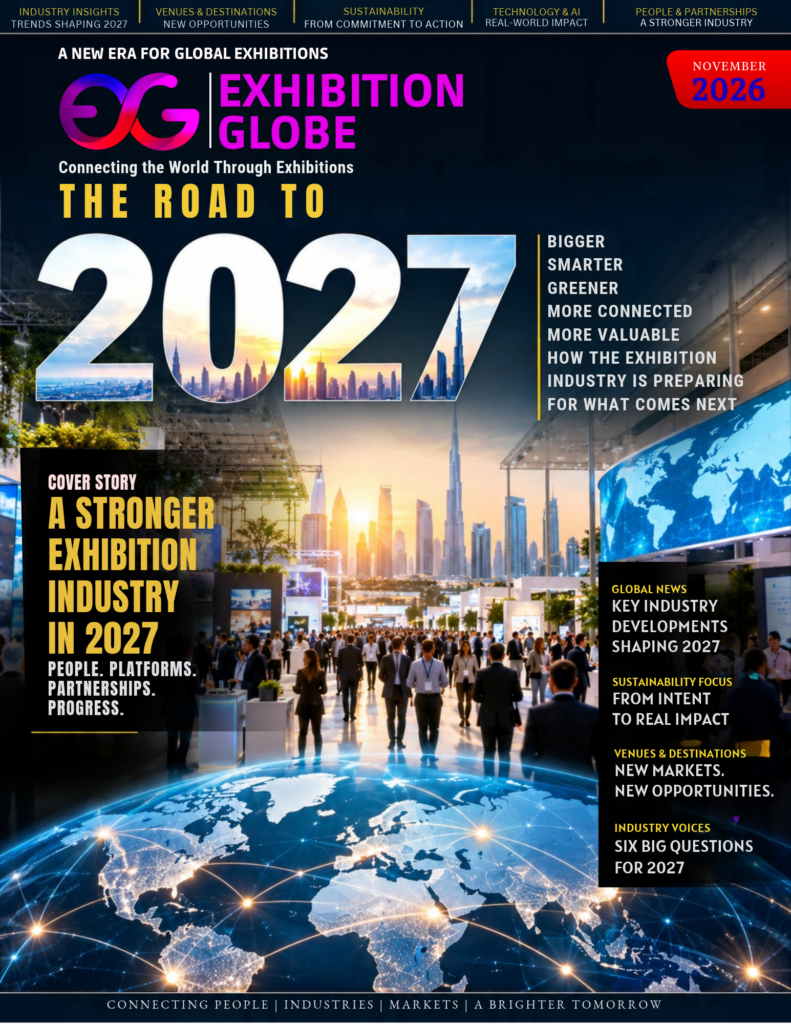
The global exhibition industry is entering a new phase of growth, innovation and international collaboration as businesses increasingly recognise the importance of face-to-face networking, industry events and global trade platforms. As the industry moves towards 2027, exhibitions, trade shows and business conferences are expected to play an increasingly important role in connecting companies, creating commercial opportunities and supporting international business development.
From advanced technology and artificial intelligence to sustainable event management and international market expansion, several developments are influencing the future direction of the global exhibition industry. Organisers, exhibitors, venue operators and industry stakeholders are adapting their strategies to meet changing business expectations and deliver more valuable event experiences.
Global Exhibition Industry at a Glance
The global exhibition industry continues to represent an important part of the international business ecosystem. Trade shows provide dedicated platforms where manufacturers, suppliers, distributors, buyers, investors and industry professionals can meet, exchange knowledge and explore business opportunities.
Exhibitions also support the development of international trade by bringing together companies from different countries and industries under one roof. From manufacturing and healthcare to technology, construction, automotive, food processing and consumer goods, industry-specific exhibitions help businesses showcase products, introduce innovations and develop long-term commercial relationships.
As global markets evolve, the importance of exhibitions extends beyond product displays. Modern trade shows increasingly combine networking, knowledge-sharing, product demonstrations, business meetings and industry discussions to create comprehensive business environments.
Global Exhibition Industry Size and Growth Outlook
The exhibition industry is supported by growing business demand for direct engagement, product discovery and professional networking. The industry outlook highlighted in the accompanying infographic indicates a projected compound annual growth rate (CAGR) of approximately 5.8%, reflecting positive expectations for continued market expansion.
This growth outlook also highlights the importance of exhibitions as business development platforms. Companies are increasingly investing in exhibition participation to strengthen brand visibility, generate qualified leads, enter new markets and connect with potential business partners.
The industry’s expansion is also influenced by the development of modern exhibition infrastructure, increasing international participation and the adoption of new event technologies. As more businesses explore cross-border opportunities, international trade fairs are becoming valuable platforms for market discovery and commercial collaboration.
Regional Market Overview: Different Markets, New Opportunities
Regional markets are expected to contribute differently to the development of the global exhibition industry as economic conditions, industrial priorities and business requirements continue to evolve.
North America: North America remains an important exhibition market, supported by established business networks, advanced industries and a strong presence of professional trade shows. Technology, healthcare, manufacturing, automotive and business services are among the sectors creating opportunities for exhibitions across the region.
Europe: Europe continues to be an influential destination for international exhibitions, particularly in industrial manufacturing, engineering, automotive, healthcare, consumer goods and sustainability. Its established exhibition venues and international business connections support participation from companies across global markets.
Asia-Pacific: The Asia-Pacific region is positioned as an important growth market for the exhibition industry. Expanding manufacturing capabilities, infrastructure investment, technology development and increasing international trade are creating opportunities for exhibitions in countries such as India, China, Japan, South Korea, Thailand and Singapore.
Middle East and Africa: The Middle East is strengthening its position as an international business and exhibition destination through investment in convention infrastructure, tourism and industry development. Dubai, Abu Dhabi and other regional business centres continue to attract international events and commercial delegations.
Latin America: Latin America offers opportunities for exhibitions across agriculture, food processing, energy, manufacturing, mining and industrial technology. Regional trade events can help businesses establish partnerships and explore emerging commercial markets.
Key Industry Indicators Driving Exhibition Growth
The exhibition industry’s development is supported by several important indicators, including the number of international trade shows, professional visitors, exhibiting companies and business opportunities generated through events.
Exhibitions create value for different stakeholders. For exhibitors, they offer opportunities to demonstrate products, generate enquiries and build brand recognition. For visitors, they provide access to new technologies, suppliers, industry information and potential business partners.
For organisers and venue operators, growing participation creates opportunities to develop larger events, introduce specialised exhibition formats and strengthen international event portfolios. These interconnected activities contribute to the wider business and economic impact of the exhibition ecosystem.
Top Industry Sectors Influencing the Future of Exhibitions
Several industries are expected to remain important contributors to global exhibition activity as businesses invest in innovation and respond to changing market requirements.
Manufacturing and industrial technology exhibitions will continue to provide platforms for machinery, automation, engineering and production solutions. Technology and artificial intelligence events are also gaining importance as businesses explore digital transformation, cybersecurity, robotics and emerging technologies.
Healthcare and medical exhibitions will support knowledge exchange, medical equipment demonstrations and connections between healthcare professionals and manufacturers. Meanwhile, agriculture and food processing exhibitions will provide opportunities to showcase agricultural machinery, food technologies, sustainable farming solutions and supply-chain innovations.
Automotive and electric mobility exhibitions are also evolving as manufacturers introduce new vehicle technologies, battery solutions and smart mobility systems. Energy and sustainability events will further contribute to discussions around renewable energy, resource efficiency and environmentally responsible business practices.
Key Exhibition Trends Shaping the Industry in 2027
The road to 2027 is expected to be influenced by several important developments that will shape how exhibitions are organised, promoted and experienced.
Artificial intelligence and automation are becoming increasingly relevant to event planning, visitor engagement and business matchmaking. Organisers can explore technology-driven solutions to improve registration processes, understand visitor interests and connect exhibitors with relevant audiences.
Hybrid and digital event experiences are also influencing the exhibition landscape. Although physical exhibitions remain essential for product demonstrations and face-to-face networking, digital platforms can extend event visibility and engagement beyond the exhibition venue.
Sustainability is another important priority. Organisers and exhibitors are increasingly exploring responsible material usage, energy-efficient infrastructure, waste reduction and environmentally conscious event practices.
Personalised visitor experiences, data-driven marketing, international buyer programmes and specialised networking opportunities are also expected to influence future exhibition formats.