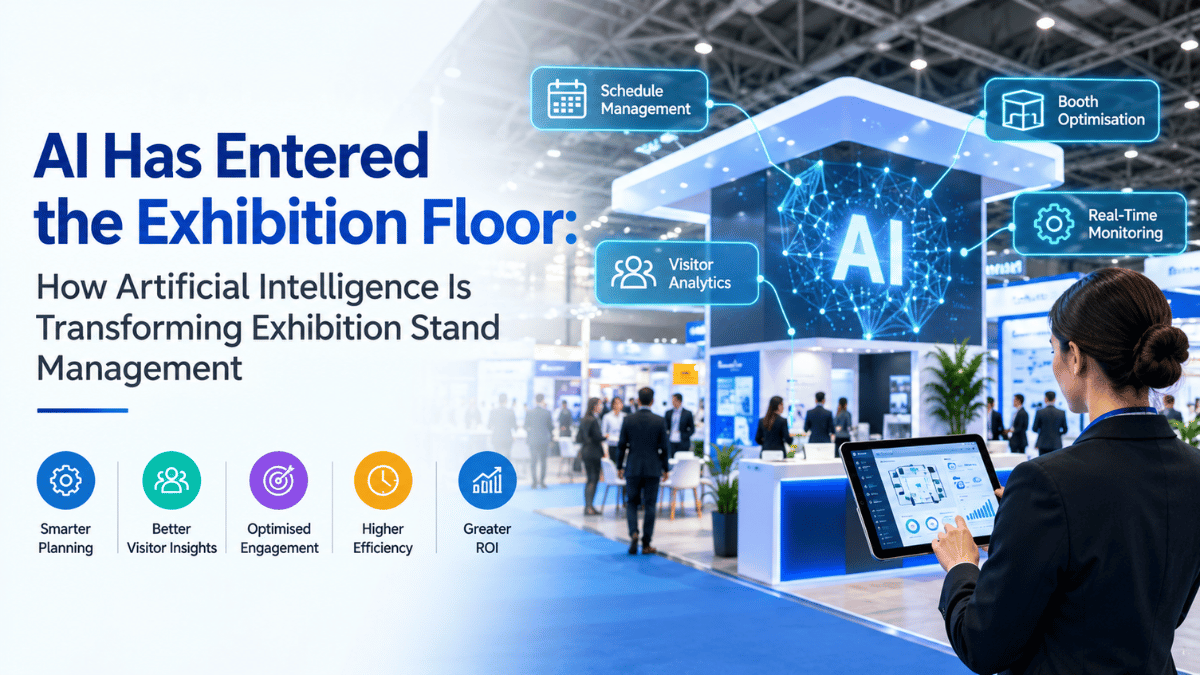

Artificial intelligence is changing the way businesses plan, design and manage exhibitions and trade shows. From intelligent visitor assistance to automated lead capture, AI-powered technologies are helping exhibitors create more efficient, interactive and personalised experiences. As the exhibition industry embraces digital transformation, AI in Exhibition Stand Design is emerging as an important opportunity for exhibitors, event organisers and exhibition stand builders.
Traditionally, exhibition stand management has involved coordinating design teams, managing visitor enquiries, collecting business leads and ensuring that every aspect of the stand operates smoothly. These activities can require significant time, resources and manual effort. AI-powered assistants can support many of these processes by providing information, analysing visitor interactions and helping exhibition teams make faster decisions.
The concept of an exhibition stand with its own AI assistant introduces a new approach to trade show participation. Instead of relying entirely on human staff for every interaction, exhibitors can use intelligent digital systems to answer common questions, guide visitors and support lead qualification throughout an event.
What Is AI in Exhibition Stand Design?
AI in Exhibition Stand Design refers to the use of artificial intelligence technologies to improve the planning, visualisation, personalisation and management of exhibition spaces. These technologies can assist with layout planning, visitor experience design, digital content creation and the integration of interactive features.
AI tools can help exhibition stand designers explore different layouts, test branding concepts and develop visual ideas according to specific business objectives. When combined with three-dimensional design software, these tools can support faster concept development and help exhibitors evaluate different stand configurations before construction begins.
However, AI’s role extends beyond the physical design of an exhibition booth. An AI assistant can also become part of the stand’s digital infrastructure, helping visitors access product information, discover relevant services and connect with the right representatives.
This combination of physical design and intelligent digital assistance creates opportunities for more responsive and engaging exhibition experiences.
How an Exhibition Stand Can Have Its Own AI Assistant
An AI-powered exhibition stand can incorporate a virtual assistant through a touchscreen kiosk, interactive display, QR code, website interface or compatible messaging platform. Visitors can ask questions and receive information about the company’s products, services, demonstrations and business offerings.
For example, a manufacturing company exhibiting at an industrial trade show could use an AI assistant to explain product specifications, share technical documents and direct visitors to the appropriate sales representative. A technology company could use the same approach to demonstrate software features, answer frequently asked questions and identify visitors interested in a product demonstration.
The assistant can be configured using approved company information, product catalogues, service descriptions and frequently asked questions. This helps provide consistent responses while reducing the workload associated with repetitive enquiries.
AI assistants can also support multilingual interactions when suitable language capabilities are available. This can be particularly valuable at international exhibitions, where exhibitors meet visitors from different countries and professional backgrounds.
Six Ways AI Can Transform Exhibition Stand Management
1. Smarter Visitor Identification and Lead Capture
Lead generation is one of the primary objectives of participating in exhibitions. AI-powered systems can help exhibitors organise visitor enquiries, collect information through consent-based forms and classify potential leads according to their stated interests.
When integrated with a compatible customer relationship management system, these tools can help sales teams organise follow-ups and prioritise relevant prospects. Staff can then focus on meaningful conversations rather than spending excessive time on manual data entry.
AI does not automatically guarantee better leads. The quality of the results depends on the information collected, the accuracy of the classification process and the follow-up strategy used by the exhibitor.
2. AI Analytics for Better Business Decisions
Exhibitors often need to understand which products attract attention, what visitors want to know and which conversations lead to business opportunities. AI-assisted analytics can help organise available information and identify patterns in visitor interactions.
For example, an exhibitor may discover that visitors frequently ask about pricing, installation requirements or product compatibility. This information can help the team improve demonstrations, prepare clearer answers and adjust its marketing materials for future events.
Depending on the technology installed, analytics may also incorporate visitor counts, interaction data or digital enquiry records. These insights should be interpreted carefully because individual data sources may not represent every visitor or interaction at the exhibition.
3. Automated Exhibition Stand Operations
Exhibition stands involve multiple operational activities, including displaying product information, coordinating demonstrations, responding to common enquiries and distributing marketing materials.
AI assistants can automate or support selected tasks by making approved information available on demand. Visitors may access brochures, product specifications, presentation materials and appointment links without waiting for a staff member to become available.
This approach can help exhibitors maintain consistent communication during busy exhibition periods. Human staff remain essential for complex questions, negotiations, technical discussions and relationship building.
4. Personalised Visitor Experiences
Every exhibition visitor has different interests, business needs and purchasing priorities. AI can help tailor digital content to the information a visitor requests or voluntarily provides.
For instance, a visitor interested in automation equipment could receive relevant product information, while someone researching distribution opportunities could be directed towards partnership details.
Personalisation can make an exhibition stand more useful by reducing the effort required to locate relevant information. Businesses should ensure that any personalisation follows applicable privacy requirements and does not rely on inappropriate or unapproved profiling.
5. AI Chatbots for Instant Visitor Assistance
An AI chatbot can act as a digital information desk for an exhibition stand. It can answer common questions about products, services, company details, demonstrations and available meeting slots using a defined knowledge base.
Chatbots can be particularly useful when several visitors approach a stand simultaneously or when staff are occupied with presentations. They can also direct visitors to a human representative when a question requires specialised knowledge.
For reliable performance, exhibitors should regularly update the assistant’s information and establish clear rules for handling uncertain questions. The system should avoid inventing product specifications, prices, promises or other business information.
6. Real-Time Reporting and Follow-Up Support
After an exhibition, businesses need to evaluate their participation and identify opportunities for continued engagement. AI-supported reporting can help organise enquiry records, summarise common questions and prepare follow-up drafts based on available information.
When integrated with authorised business systems, an AI assistant may help categorise leads and remind teams about agreed next steps. Sales representatives should verify important details before sending messages or making commercial commitments.
These capabilities can connect exhibition activity with longer-term sales and marketing processes, helping businesses measure the value of their trade show participation more systematically.
AI in Exhibition Stand Design: Benefits for Exhibitors
The adoption of AI in Exhibition Stand Design can provide several potential advantages for exhibitors. One important benefit is operational efficiency, as automated assistance can reduce repetitive administrative tasks and make information easier to access.
AI-supported design tools may also help teams explore creative concepts, compare layout options and develop presentation materials. This can improve collaboration between marketing departments, exhibition stand designers and event management teams.
Another advantage is availability. A properly configured digital assistant can provide information whenever visitors interact with it, including during periods when human representatives are busy. This does not mean that every AI system operates independently or continuously; availability depends on the equipment, software, connectivity and support arrangements.
Businesses may also gain better visibility into visitor questions and content engagement. When these insights are collected appropriately, they can help exhibitors improve future stand designs and refine their exhibition marketing strategies.
The Role of AI in Exhibition Marketing and Lead Generation
Exhibition marketing increasingly combines physical experiences with digital communication. AI can support this process by helping exhibitors prepare targeted content, organise campaign information and respond to enquiries across compatible channels.
Before an event, AI tools can assist with promotional copy, product descriptions, email drafts and visitor information. During the exhibition, digital assistants can provide immediate access to relevant content and support lead collection. After the event, AI can help organise records and prepare personalised follow-up communications for review.
For exhibition organisers, similar technologies can support attendee information services, programme discovery and responses to frequently asked questions. The exact capabilities depend on the platform and its integration with registration, event management and customer relationship systems.
Successful implementation requires more than installing a chatbot. Businesses should establish clear objectives, prepare accurate information and decide how AI-generated insights will support their sales and marketing activities.
Challenges of Using AI on the Exhibition Floor
Although AI offers significant opportunities, exhibitors should consider several practical challenges before implementation. Internet connectivity, hardware compatibility and software reliability can affect the visitor experience. A digital assistant that cannot access accurate information may create confusion instead of reducing it.
Data protection is another important consideration. Businesses should explain what information is collected, why it is required and how it will be used. Access to personal information should be controlled, and integrations should follow applicable privacy and security requirements.
Cost is also a factor. The overall investment may include software subscriptions, hardware, system integration, content preparation, maintenance and staff training. Exhibitors should evaluate these costs against their expected business outcomes rather than assuming that AI will automatically reduce expenditure.
Finally, human supervision remains important. AI systems can misunderstand questions or generate inaccurate responses. Providing a clear escalation process and allowing visitors to speak with a real representative can help maintain trust.
The Future of AI-Powered Exhibition Stands
The future of AI-powered exhibition stands is likely to involve closer integration between intelligent assistants, interactive displays, three-dimensional visualisation, augmented reality and business software. These technologies could make it easier for visitors to explore products, compare solutions and access relevant information during exhibitions.
Advances in conversational AI may also enable more natural interactions, while improved analytics could help exhibitors understand engagement patterns and evaluate their marketing activities. These developments will depend on the availability, cost and reliability of the underlying technologies.
For exhibition stand builders and event agencies, AI creates an opportunity to expand their services beyond physical booth construction. They can explore digital visitor assistance, interactive content, data-informed design and integrated lead management as additional service offerings.
Businesses that adopt these tools thoughtfully may be better positioned to create relevant visitor experiences while maintaining the personal interactions that make exhibitions valuable.
Conclusion: The Exhibition Stand of the Future Is Intelligent
AI is creating new possibilities for how exhibition stands are designed, managed and experienced. From visitor assistance and lead capture to analytics and follow-up support, intelligent technologies can help exhibitors improve selected parts of their trade show operations.
The idea that an exhibition stand could have its own AI assistant represents a shift towards more interactive and information-driven exhibition environments. However, technology works best when it supports knowledgeable staff, accurate business information and a well-defined exhibition strategy.
As the exhibition industry continues to evolve, AI in Exhibition Stand Design will remain an important area for businesses exploring smarter booth experiences, digital engagement and more efficient exhibition management. The strongest results will come from combining innovative technology with effective design, responsible data practices and meaningful human connections.
Frequently Asked Questions
What is AI in Exhibition Stand Design?
AI in Exhibition Stand Design involves using artificial intelligence to support booth planning, layout concepts, digital interactions, visitor assistance and selected exhibition management tasks.
Can an exhibition stand have its own AI assistant?
Yes. An exhibition stand can use an AI chatbot or virtual assistant through a touchscreen, QR code, digital display or compatible messaging platform to answer visitor questions and provide approved company information.
How does AI help with exhibition lead generation?
AI can help organise enquiry information, classify leads based on stated interests, summarise interactions and support follow-up workflows when integrated with compatible business systems.
Can AI replace exhibition stand staff?
AI can handle some routine questions and administrative tasks, but it should complement rather than completely replace exhibition staff. Human representatives remain important for negotiations, complex enquiries and relationship building.
Is AI useful for small exhibitors?
Yes. Small exhibitors can begin with relatively simple tools, such as an AI chatbot, digital product catalogue or automated enquiry form. The appropriate solution depends on their budget, objectives and technical requirements.