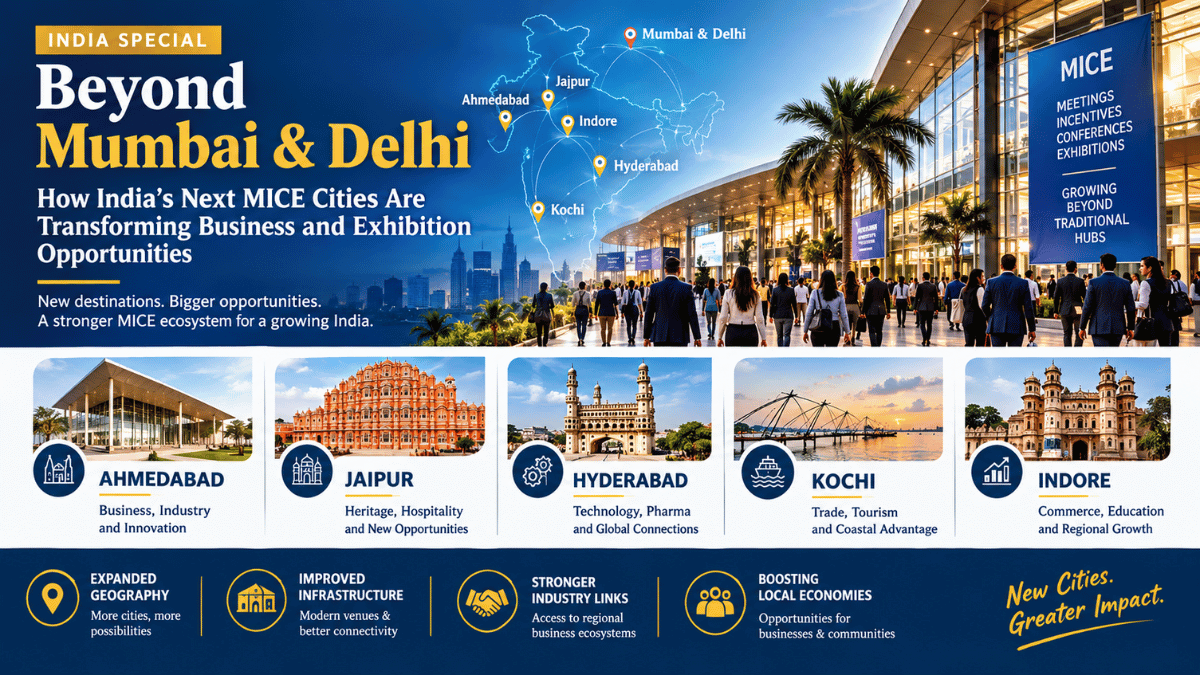
India’s Meetings, Incentives, Conferences and Exhibitions (MICE) industry is expanding beyond established metropolitan destinations such as Mumbai and Delhi. As businesses explore new markets, several emerging cities are developing the infrastructure, connectivity and hospitality services needed to attract national and international business events.
India’s Next MICE Cities are gaining attention because of their growing commercial ecosystems,
This shift reflects a broader opportunity for India’s business events industry. By distributing events across more destinations, organisers can connect with regional industries, reach new audiences and create business opportunities beyond the country’s traditional exhibition centres.
What Is MICE and Why Does It Matter to India?
MICE refers to Meetings, Incentives, Conferences and Exhibitions, a segment of business tourism that brings together professionals, companies, industry associations and decision-makers. It includes corporate meetings, incentive trips, international conferences, trade fairs, product launches and networking events.
The sector supports multiple industries, including hotels, transport, event management, exhibition construction, catering, tourism and local services. A major business event can generate demand for accommodation, logistics, technical production and hospitality while creating opportunities for local suppliers.
India’s expanding industrial base and domestic business market provide a strong foundation for MICE growth. However, the ability to attract events depends on several factors, including suitable venues, air and rail connectivity, accommodation capacity, professional event services and the destination’s ability to deliver a reliable visitor experience.
India’s Next MICE Cities have the potential to strengthen this ecosystem by offering organisers additional locations for industry-specific exhibitions, regional conferences and corporate gatherings.
1. The Geography of Indian MICE Is Expanding
Mumbai and Delhi remain important destinations for exhibitions and business conferences because of their commercial significance, established event infrastructure and international connectivity. However, demand for business events is creating opportunities in other parts of the country.
Regional cities can provide organisers with closer access to manufacturing clusters, technology companies, tourism markets and specialised industries. Hosting events near these business communities may help improve participation and encourage stronger connections between exhibitors and local buyers.
The expansion of India’s MICE geography also supports a more diversified approach to event planning. Organisers can select destinations according to their target industries, delegate locations, venue requirements and travel budgets instead of relying exclusively on the largest metropolitan centres.
India’s Next MICE Cities could therefore play a growing role in connecting regional economic development with the national exhibitions and conferences market.
2. Ahmedabad: A Business and Industry Destination
Ahmedabad is an important commercial centre in Gujarat, with established connections to manufacturing, textiles, pharmaceuticals, engineering and other industrial sectors. Its business ecosystem creates opportunities for conferences, trade fairs, investor meetings and industry-focused exhibitions.
The city benefits from road and rail connections, air access and a range of hospitality options. Exhibition and convention facilities in the wider Ahmedabad-Gandhinagar region also support the potential to host business gatherings of different sizes.
For organisers, Ahmedabad offers access to businesses operating across Gujarat’s industrial and commercial landscape. Events related to manufacturing, textiles, engineering, chemicals and entrepreneurship can benefit from proximity to relevant companies and suppliers.
Ahmedabad’s cultural heritage and food scene can also complement corporate programmes and incentive travel. Continued investment in event infrastructure, accommodation and visitor services could strengthen its position among India’s emerging MICE destinations.
3. Jaipur: Where Heritage Becomes an Economic Asset
Jaipur combines a distinctive architectural identity with hospitality, tourism and commercial activity. Known for its heritage sites, traditional crafts and cultural experiences, the city offers an appealing setting for corporate gatherings, incentive programmes and selected conferences.
Heritage tourism can be an advantage in MICE planning because business travellers increasingly look for experiences beyond meeting rooms and exhibition halls. Cultural visits, local cuisine and curated activities can add value to incentive trips and delegate programmes.
Jaipur can also serve businesses interested in handicrafts, jewellery, textiles, tourism and other regional industries. Trade events and business meetings can create opportunities for local enterprises to connect with buyers, distributors and international visitors.
To attract larger and more frequent events, the destination needs appropriate venue capacity, dependable transport, accommodation options and professional event services. Its combination of cultural appeal and commercial activity nevertheless makes Jaipur a notable contender among India’s Next MICE Cities.
4. Hyderabad: The Metropolitan MICE Model
Hyderabad has developed a strong business profile across information technology, pharmaceuticals, biotechnology, healthcare and advanced manufacturing. These sectors create demand for specialised conferences, corporate meetings, technology showcases and industry exhibitions.
The city’s airport connectivity, hotel infrastructure and established convention facilities support its ability to host domestic and international business events. Its technology and life sciences ecosystems also provide a foundation for events that connect companies, researchers, investors and industry professionals.
Hyderabad illustrates how a major regional business centre can build a diversified MICE market around established industries. Technology conferences, healthcare events, pharmaceutical exhibitions and corporate gatherings can benefit from access to relevant companies and professional networks.
As India’s business events market grows, Hyderabad’s experience offers a useful model for destinations seeking to align event infrastructure with local economic strengths.
5. Kochi and Indore: Destinations for Regional Growth
Kochi offers a combination of commercial activity, coastal tourism, port-related industries and hospitality. Its position in Kerala makes it relevant for business events connected with logistics, maritime trade, tourism, healthcare and regional commerce.
The city can also offer incentive travel programmes that combine professional meetings with cultural and leisure experiences. Such combinations can be attractive to companies planning smaller conferences, leadership retreats and corporate gatherings.
Indore, meanwhile, is an important commercial centre in Madhya Pradesh, with connections to manufacturing, trade, education and emerging business services. Its regional accessibility and business environment create opportunities for industry meetings, corporate events and exhibitions serving central India.
Both destinations can benefit from stronger venue development, event-sector partnerships and targeted promotion. By attracting events aligned with their economic strengths, Kochi and Indore can expand regional business participation while supporting local hospitality and service providers.
6. Connectivity, Infrastructure and Local Suppliers
Connectivity is one of the most important factors in choosing a MICE destination. Organisers need to assess airport access, rail connections, road networks and the ease of travelling between transport hubs, hotels and event venues.
Venue infrastructure is equally important. Exhibition organisers require appropriate floor space, loading access, electricity, internet connectivity, safety systems, meeting rooms and facilities for exhibitors and visitors. Conference organisers may also prioritise audiovisual technology, flexible seating, catering and accommodation nearby.
Local suppliers can influence the overall quality and cost of an event. Exhibition stand builders, production companies, logistics providers, interpreters, caterers and event management agencies help deliver the services required for successful business gatherings.
India’s Next MICE Cities can improve their competitiveness by coordinating these elements and ensuring that organisers have access to reliable information about venues, suppliers, transport and accommodation.
The Role of Government Support and Destination Promotion
Government support can help emerging MICE destinations attract investment and improve their readiness for business events. Relevant initiatives may include infrastructure development, tourism promotion, industry partnerships, streamlined event permissions and collaboration between public agencies and private operators.
Destination marketing organisations, convention bureaux, hotel groups and venue operators can also work together to promote local capabilities. Clear information about venue capacities, transport connections, accommodation, technical facilities and event services makes it easier for organisers to evaluate potential locations.
Industry associations and exhibition organisers can contribute by identifying suitable event categories, developing regional partnerships and creating opportunities for local businesses to participate.
For India’s Next MICE Cities, consistent destination promotion and coordinated planning will be important in turning potential into sustained event activity.
How Emerging MICE Cities Benefit Local Businesses
Business events can create opportunities for hotels, restaurants, transport providers, event agencies, exhibition contractors and local suppliers. They can also introduce regional companies to new customers, investors, distributors and technology partners.
For exhibitors, regional events may offer access to buyers who are difficult to reach through larger metropolitan exhibitions. Local businesses can participate as exhibitors, sponsors, service providers or delegates, helping strengthen commercial networks.
MICE activity can also encourage repeat visits when conferences and exhibitions become regular features of a destination’s business calendar. However, the economic benefits depend on event attendance, visitor spending, local participation and the ability to deliver events efficiently.
Careful planning is therefore essential to ensure that business events generate meaningful opportunities for the destination and its wider commercial ecosystem.
Challenges Facing India’s Emerging MICE Destinations
Despite their potential, emerging MICE destinations face challenges. These may include limited availability of large exhibition halls, inconsistent transport links, shortages of specialised event services and competition from destinations with more established international profiles.
Event organisers also need dependable information about venue availability, capacities, technical facilities, costs and local suppliers. Differences in service standards or insufficient coordination can complicate planning and affect the visitor experience.
Cities can address these issues by investing in suitable infrastructure, developing skilled event-sector workforces and encouraging collaboration among government bodies, venues, hotels and professional service providers.
Sustainability is another consideration. Energy-efficient venues, responsible waste management, public transport options and locally sourced services can help reduce the environmental impact of business events.
The Future of India’s MICE Industry
The future of India’s MICE industry will depend on the ability of destinations to combine business relevance with reliable event infrastructure and memorable visitor experiences. While Mumbai and Delhi will continue to serve as major business-event hubs, other cities can capture opportunities by focusing on their particular strengths.
Ahmedabad can build on its industrial ecosystem, Jaipur can combine business events with heritage experiences, Hyderabad can draw on its technology and life sciences sectors, and Kochi and Indore can strengthen their regional business-event offerings.
Other Indian destinations may also enter the market as investment, connectivity and professional event services develop. The most successful cities will be those that understand the requirements of organisers and deliver consistent value to exhibitors, delegates and visitors.
Conclusion: A Broader Future for Business Events in India
India’s MICE industry is entering a period of geographic diversification, creating opportunities for destinations beyond the traditional metropolitan centres. With the right combination of infrastructure, connectivity, hospitality and industry partnerships, emerging cities can attract conferences, exhibitions, corporate meetings and incentive programmes.
India’s Next MICE Cities represent more than alternative locations for business events. They offer ways to connect regional industries with national and international markets, support local enterprises and distribute the benefits of business tourism across a wider range of destinations.
For event organisers, exhibitors and corporate planners, evaluating these emerging destinations can open new possibilities for audience development, networking and commercial growth. Continued investment and coordinated destination promotion will determine how effectively these cities translate their potential into long-term MICE success.