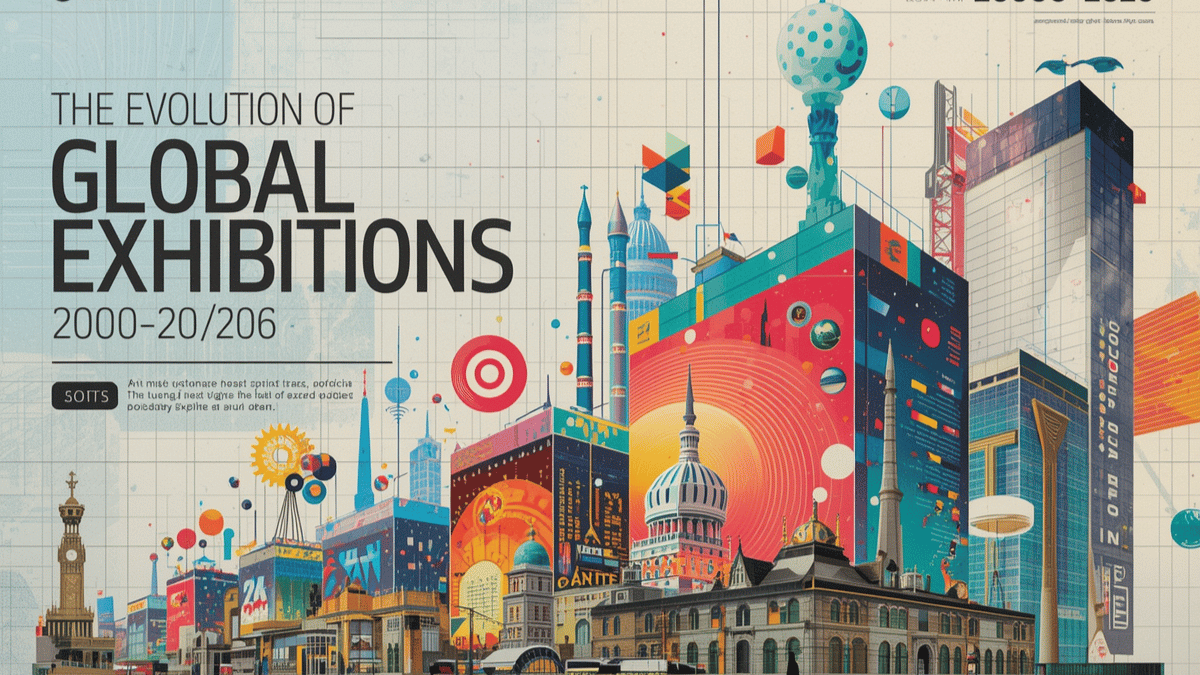
2000–2010: The Era of Expansion and Globalization
The early 2000s marked a period of rapid expansion for the exhibition industry. As globalization accelerated, companies began looking beyond domestic markets, and exhibitions became critical gateways to international trade.
During this period, large-scale trade fairs in cities like Frankfurt, Dubai, Las Vegas, and Hong Kong gained prominence. Participation in exhibitions was often seen as a prestige factor, especially for companies aiming to establish global credibility.
However, the approach remained largely traditional. Success depended heavily on booth size, physical presence, and direct sales conversations. Marketing efforts were limited to email campaigns, print invitations, and basic websites. Data tracking and ROI measurement were minimal, and decisions were often based on intuition rather than analytics.
Despite these limitations, this decade laid the foundation for exhibitions as a global business tool, connecting industries across borders.
2010–2019: The Digital Awakening
The second decade brought a significant shift as digital technologies began to influence the exhibition landscape. Smartphones, social media, and cloud computing transformed how businesses engaged with their audiences.
Exhibitors started integrating digital elements into their booths — LED displays, interactive kiosks, and product demos powered by software. Event organizers introduced mobile apps for navigation, scheduling, and networking, enhancing the overall visitor experience.
Marketing strategies also evolved. Pre-event promotions became more targeted through social media campaigns, email automation, and search engine marketing. Exhibitions were no geographical boundaries.
The pandemic forced stakeholders to rethink their strategies, making resilience and adaptability key priorities. longer standalone events; they became part of a larger marketing funnel.
Importantly, data began to play a role. Organizers started tracking visitor registrations, engagement levels, and feedback, enabling exhibitors to measure their performance more effectively.
This era marked the beginning of exhibitions transitioning from static displays to interactive platforms.
2020–2022: The Pandemic Disruption and Reinvention
The COVID-19 pandemic was a turning point that disrupted the global exhibition industry like never before. With travel restrictions and lockdowns in place, physical events came to a sudden halt.
What followed was a rapid and unprecedented shift to virtual exhibitions. Platforms offering webinars, virtual booths, and online networking became the new norm. While these solutions ensured continuity, they also exposed the limitations of fully digital experiences — lack of human connection, engagement fatigue, and reduced deal closures.
However, this period was not just about survival; it was about innovation. The industry began experimenting with hybrid models, combining physical and digital elements. Organizers realized that technology could extend the reach of exhibitions beyond.
2023–2024: The Rise of Hybrid Experiences
As the world gradually reopened, exhibitions made a strong comeback, but with a new identity. Hybrid events emerged as the preferred format, blending the best of both physical and digital worlds.
Physical exhibitions regained their importance for networking and relationship-building, while digital platforms enhanced accessibility and engagement. Attendees could now participate remotely, schedule meetings in advance, and access event content on demand.
This phase also saw increased investment in technology. AI-powered matchmaking tools connected buyers and sellers based on interests and behavior. Data analytics provided deeper insights into visitor engagement, helping exhibitors refine their strategies.
The focus shifted from quantity to quality — from footfall numbers to meaningful interactions and measurable outcomes.
2025–2026: The Era of Intelligent Exhibitions
Today, in 2026, exhibitions have evolved into intelligent, data-driven ecosystems. Artificial Intelligence, Augmented Reality (AR), Virtual Reality (VR), and automation are redefining how events are designed and experienced.
AI is now used to:
- Match exhibitors with potential buyers
- Predict visitor behavior
- Personalize event experiences
AR and VR enable immersive product demonstrations, allowing visitors to experience products without physical limitations. Smart badges and facial recognition technologies streamline entry and track visitor movement, providing real-time analytics
Sustainability has also become a central theme. Organizers are adopting eco-friendly practices such as digital brochures, reusable booth materials, and carbon-neutral events.
Exhibitions are no longer isolated events; they are continuous engagement platforms where businesses interact with their audience before, during, and after the event.
Key Transformation Drivers
The evolution of exhibitions has been driven by several key factors. Globalization opened new markets, while digital transformation transformation introduced new tools and possibilities. The pandemic accelerated innovation, forcing the industry to adopt technology at an unprecedented pace.
Additionally, changing buyer behavior has played a crucial role. Modern attendees expect personalized experiences, instant information, and meaningful interactions. Exhibitions have had to adapt to meet these expectations
Government policies and infrastructure development, particularly in countries like India and the UAE, have further supported the growth of the exhibition industry.
India’s Emerging Role in the Global Exhibition Landscape
India is rapidly positioning itself as a major player in the global exhibition industry. With world-class venues, increasing international participation, and strong government support, the country is attracting global attention.
Cities like Mumbai, Delhi, Bangalore, and Hyderabad are becoming key exhibition hubs. Initiatives such as “Make in India” and “Startup India” are further driving participation in trade shows.
For businesses, India offers a unique combination of scale, diversity, and opportunity, making it an attractive destination for exhibitions and trade fairs.
transformation introduced new tools and possibilities. The pandemic accelerated innovation, forcing the industry to adopt technology at an unprecedented pace.
Additionally, changing buyer behavior has played a crucial role. Modern attendees expect personalized experiences, instant information, and meaningful interactions. Exhibitions have had to adapt to meet these expectations.
Government policies and infrastructure development, particularly in countries like India and the UAE, have further supported the growth of the exhibition industry.
The Road Ahead: What Lies Beyond 2026
The future of exhibitions will be defined by deeper integration of technology, greater emphasis on sustainability, and increased focus on personalization.
We can expect:
- Fully immersive virtual environments
- AI-driven event planning and execution
- Blockchain-based ticketing and contracts
- Hyper-personalized visitor journeys
Exhibitions will continue to evolve as powerful platforms for business growth, innovation, and global collaboration.
Conclusion:
From Events to Ecosystems
The journey of exhibitions from 2000 to 2026 reflects a broader transformation in how businesses connect, communicate, and grow. What began as physical marketplaces has now become intelligent ecosystems driven by technology and strategy.
For businesses, the message is clear — exhibitions are no longer optional marketing channels; they are essential growth engines. As the industry continues to evolve, those who embrace innovation, data, and global thinking will lead the way.