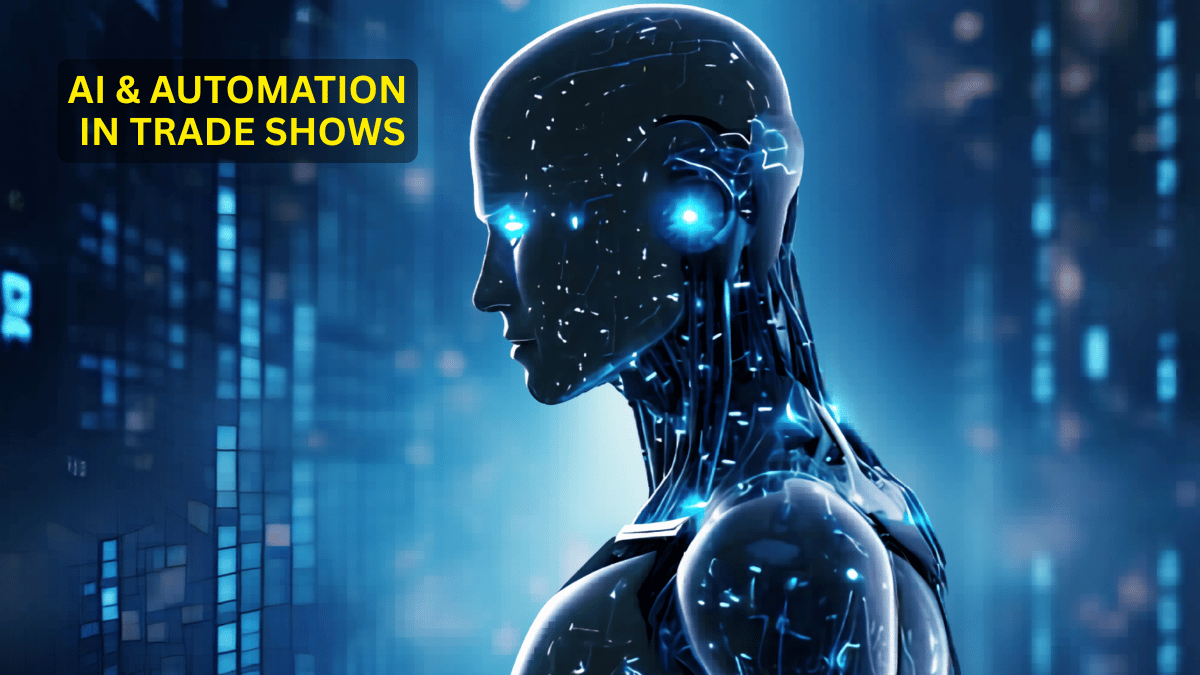
AI & AUTOMATION IN TRADE SHOWS

AI & AUTOMATION IN TRADE SHOWS

Introduction: A New Era of Exhibitions

The exhibition industry is undergoing a silent yet powerful revolution—one driven by Artificial Intelligence (AI) and automation. What was once a human-intensive, intuition-led domain is now evolving into a data-driven, technology-powered ecosystem. 

In 2026, AI is not merely an add-on feature in trade shows; it is the backbone of planning, execution, and engagement. From predicting visitor behavior to automating lead generation, AI is redefining how exhibitions function and how businesses extract value from them. 

This transformation is not about replacing human interaction but enhancing it—making every conversation more relevant, every meeting more productive, and every event more impactful. 

AI-Powered Matchmaking: Connecting the Right People 

One of the most significant breakthroughs in trade shows is AI-driven matchmaking. Traditionally, exhibitions relied on chance encounters and manual networking, often leading to missed opportunities. 

Today, AI algorithms analyze attendee profiles, business interests, past behavior, and engagement patterns to connect exhibitors with the most relevant buyers. Meetings are no longer random— they are strategically curated. 

This intelligent matchmaking ensures that exhibitors spend time with high-potential leads, while visitors connect with solutions that truly meet their needs. The result is a dramatic improvement in conversion rates and overall event ROI. 


Predictive Analytics: Anticipating Visitor Behavior

 AI has introduced the power of prediction into exhibitions. By analyzing historical data and real-time inputs, predictive analytics can forecast visitor preferences, peak engagement times, and high-traffic zones within the venue. 

Organizers can use these insights to optimize floor layouts, schedule sessions strategically, and enhance crowd management. Exhibitors, on the other hand, can prepare targeted pitches based on anticipated visitor interests. 

This shift from reactive to proactive planning is transforming exhibitions into highly efficient and strategically aligned events. 

Automation in Lead Capture and Management

Lead generation has always been a core objective of trade shows, but traditional methods—business cards, manual entries, and follow-up emails—were often inefficient and prone to errors. 

In 2026, automation has streamlined this entire process. Smart badges, QR code scanning, and mobile integrations allow instant lead capture with detailed visitor information. These leads are automatically categorized, scored, and integrated into CRM systems. 

Follow-ups are no longer delayed or generic. Automated workflows enable personalized emails, meeting reminders, and post-event engagement, ensuring that no opportunity is lost. 

Automation has turned lead management into a seamless, real-time process. 

AI Chatbots & Virtual Assistants: 24/7 EngagementDL93ZtAmEEAAAAASUVORK5CYII=

AI-powered chatbots and virtual assistants are becoming integral to both physical and virtual exhibitions. These digital agents can handle visitor queries, provide event information, schedule meetings, and even recommend booths. 

Available round the clock, chatbots ensure continuous engagement without the limitations of human availability. They also collect valuable data on visitor interests and interactions, further enhancing personalization. 
Personalized Marketing & Visitor
Journeys

AI is revolutionizing how exhibitions are marketed. Instead of generic campaigns, organizers can now create highly targeted marketing strategies based on audience segmentation. 

Attendees receive personalized invitations, content recommendations, and event agendas tailored to their interests. During the event, AI continues to guide their journey, suggesting sessions, booths, and networking opportunities. 

This level of personalization enhances visitor satisfaction and increases the likelihood of meaningful interactions. 

Smart Booths: The Future of Exhibitor Experience 

The concept of exhibition booths has evolved significantly with the integration of AI and automation. Smart booths are now equipped with sensors, interactive displays, and datatracking systems. 

These booths can: 

  • Detect visitor presence and engagement
    levels
  • Display customized content based on
    visitor profiles
  • Capture interaction data for analysis


Some advanced setups even use facial recognition and emotion analysis to understand visitor reactions, enabling exhibitors to refine their approach in real time. 

Booths are no longer static spaces—they are intelligent engagement hubs. 

Workflow Automation for Event Management

Behind every successful exhibition is a complex web of operations. AI and automation are simplifying these processes, from registration and ticketing to logistics and vendor management. 

Automated systems handle attendee registrations, generate badges, allocate spaces, and manage schedules with minimal human intervention. This not only reduces operational costs but also minimizes errors and enhances efficiency.

Organizers can focus more on strategy and experience, rather than being bogged down by administrative tasks. 

Data Security & Ethical Considerations

 As AI becomes more deeply embedded in exhibitions, concerns around data privacy and ethics are gaining prominence. The collection and analysis of large volumes of personal and behavioral data require robust security measures. 

Organizers must ensure compliance with global data protection regulations and maintain transparency in how data is used. Ethical AI practices—such as avoiding bias in algorithms— are also becoming critical. 

Trust is the foundation of business interactions, and safeguarding data is essential to maintaining that trust. 

Integration with Global Digital Ecosystems

AI is enabling exhibitions to integrate seamlessly with broader digital ecosystems. CRM platforms, marketing automation tools, and enterprise systems are now interconnected, creating a unified flow of information. 

This integration ensures that insights gained from exhibitions are not isolated but contribute to overall business strategies. Sales teams, marketing departments, and leadership can all access and leverage this data. 

Exhibitions are no longer standalone events— they are integral components of a company’s digital strategy. 

India’s Adoption of AI in Exhibitions

India is rapidly embracing AI and automation in its exhibition industry. Leading event organizers and platforms are investing in technology to enhance efficiency and global competitiveness. 

With a strong IT ecosystem and growing startup culture, India is uniquely positioned to lead innovation in this space. AI-driven exhibitions are not just improving local events but also attracting international participation. 

This technological adoption is strengthening India’s position as a global exhibition hub. 

The Future: Fully Autonomous Exhibitions?

Looking ahead, the role of AI and automation in exhibitions will only expand. We may soon witness fully autonomous event management systems, where AI handles everything from planning to execution. 

Virtual environments powered by AI could replicate real-world interactions with remarkable accuracy. Hyper-personalization will become the norm, with every attendee experiencing a unique event journey. 

While human interaction will always remain central, AI will continue to enhance its quality and impact. 

Conclusion: Intelligence as the New Infrastructure

AI and automation are not just technological upgrades—they are redefining the very infrastructure of exhibitions. They are making events smarter, more efficient, and more aligned with business objectives. 

For exhibitors and organizers, embracing AI is no longer a choice—it is a necessity. Those who leverage these technologies effectively will gain a significant competitive advantage in the global marketplace. 

In 2026 and beyond, the success of trade shows will be measured not just by participation, but by intelligence. 

SHARE