Marketing the event works when you pick a few channels that reach your exact buyers, start early, and track registrations per channel. The best picks depend on who you are. Organizers of B2B shows and conferences should start with trade media and a registration-ready event page. Small meetups and webinars get the most from email, social posts and partner shares. Ticketed events with undecided audiences gain from early-bird pricing and paid ads.
Most events do not fail on content. They fail because the right people never hear about them, or hear too late. You see it as a quiet registration page, a low show rate, or a room full of the wrong audience. Spreading effort across every channel makes this worse, because each channel then gets too little attention to work.
This guide gives you a plain definition of event marketing, a timeline for sequencing it, and ten ways to put it into practice, each with the same breakdown so you can compare them. Exhibition Globe is a B2B media platform for the exhibitions, trade show and conference industry, active since 2017, so the examples lean toward trade shows, conferences and expos. The methods work for most event types.
What marketing an event actually involves
Event marketing is the work of promoting an event so the right people register and attend. It has a second meaning, using events to promote a brand, product or cause. This guide covers the first meaning, with notes on the second where it matters.
Two meanings of event marketing
The two meanings overlap. A trade show organizer does marketing for an event: it needs visitors, exhibitors and sponsors. A manufacturer that books a stand at that show uses the event as a marketing channel. It is the same word with a different budget and a different goal.
You will also see experiential marketing for live brand experiences and event promotion for the task of filling seats. Venue, speaker and production costs are fixed early, so a half-empty room costs almost as much as a full one. That is why promotion deserves its own plan and budget.
How it differs from event management
Event management builds the event: venue, vendors, schedule, staffing and safety. Marketing fills it. Marketing and event management share one calendar and one budget, and each depends on the other. Marketing cannot promote until dates, speakers and prices are confirmed, and management needs registration numbers to size catering, floor space and staffing. A short weekly check-in between the two teams prevents most surprises.
Where each tactic fits on the timeline
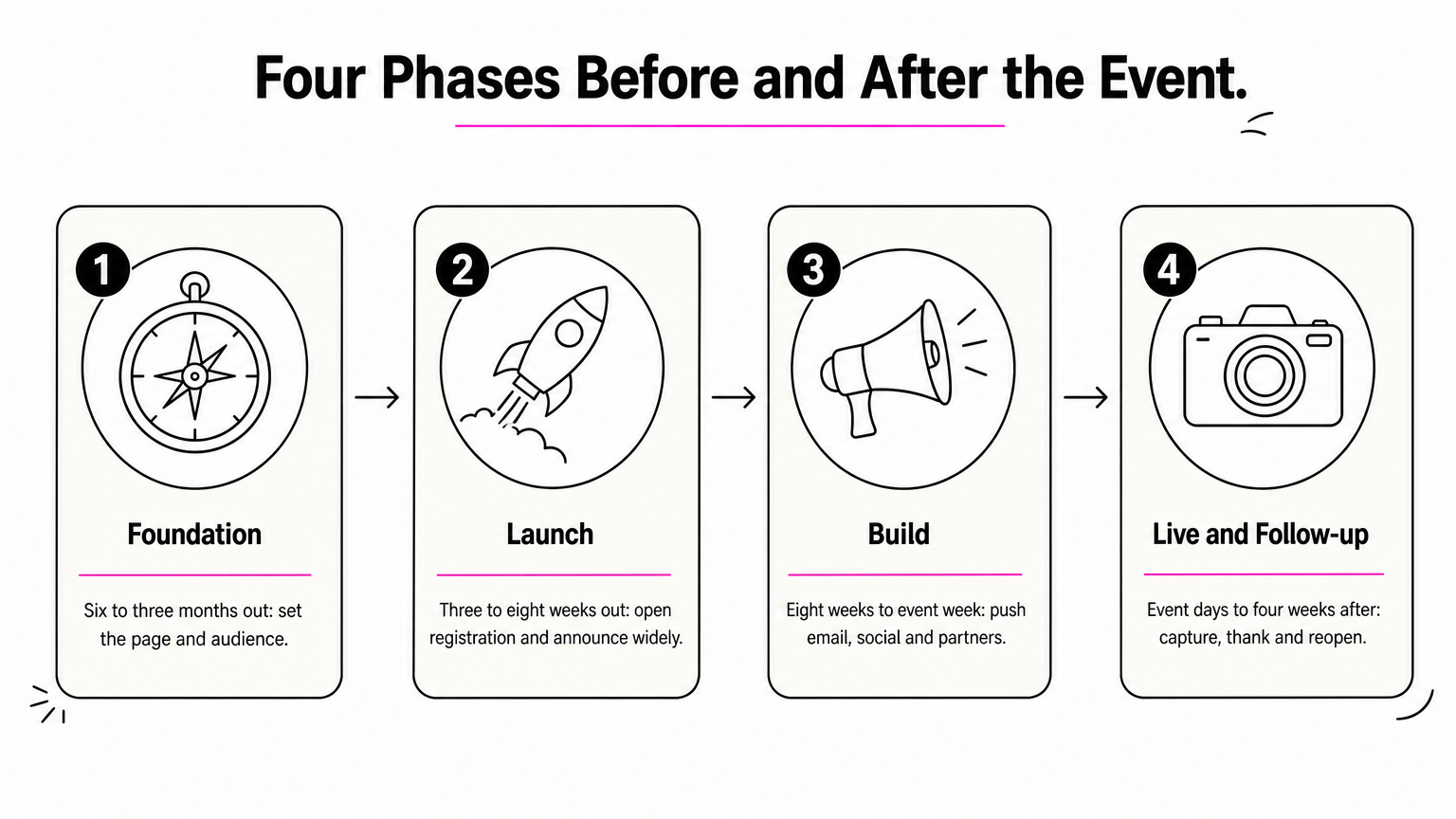
The ten ways below are not in strict time order, so use this table to sequence them. The timings suit a trade show or conference. A webinar or meetup can run the same sequence in about eight weeks. These are rules of thumb, not fixed laws.
| Phase | Timing before the event | Ways to use |
|---|---|---|
| Foundation | 6 months to 3 months | 2, 3, 6 |
| Launch | 3 months to 8 weeks | 1, 4, 8, 9 |
| Build | 8 weeks to event week | 5, 7 (email continues) |
| Live and follow-up | Event days to 4 weeks after | 10 |
Marketing an event is a sequence, not a pile of channels: foundation first, launch second, push third, follow-up last.
1. Trade media, press releases and directory listings
Trade media puts your event in front of buyers who already read about your industry. For B2B events this is often the cheapest way to reach qualified people, because the outlet has already filtered the audience.
How to run it
Start with a press release for each real announcement: dates, venue, headline speakers, a new feature. Add an interview with a founder or exhibition director, then a bylined article that offers genuine insight rather than a sales pitch. Exhibition Globe publishes all of these for the exhibition industry and also lists companies in its business directory. Here is what each format costs there.
| Format | What it is | Price |
|---|---|---|
| Press release | News published on the platform | Rs. 15,000 |
| Author post submission | Your article, reviewed before publishing, original and not published elsewhere | Rs. 10,000 |
| Interview | In-depth interview with founders, CEOs, CXOs, owners or investors | Rs. 20,000 |
| EG Business Listing | Directory page for businesses, service providers, jobs, services and venues | – |
Trade media works because the audience is already filtered, so every reader is closer to a buyer than a social follower is.
Who it suits and what to track
This route suits B2B shows, conferences and expos, especially when your buyers are in India or wider Asia, where Exhibition Globe’s readers concentrate. If your buyers are elsewhere, choose the outlets they actually read. Consumer events gain less from trade coverage.
Whatever outlet you choose, ask for audience details and make sure every placement links to your registration page. Add UTM tags to each link so you can see registrations per placement, not just page views.
2. Define your audience, goal and budget
Before you produce any material, write down one primary audience, one goal and one number. Without them, every other tactic is guesswork, and you cannot tell which channel earned its cost.
How to run it
Work through four decisions in order:
- Goal: registrations, qualified leads, sponsor sales or brand reach. Pick one as the lead.
- Audience: describe the ideal attendee in one sentence, with job title, industry and the problem your event solves.
- Target and deadline: a number of registrations by a date.
- Budget split: how much goes to paid channels, tools and partner costs.
Work backward from the room. Say you want 300 people on site for a free event and expect 60% of registrants to show up (an assumption, so use your own past rate). You need 300 divided by 0.6, which is 500 registrations.
A registration target is not an attendance target, and the gap between them is where free events lose their audience.
Who it suits and what to track
Every event needs this step, but first-time organizers need it most because they have no past data. Use past attendee lists, exhibitor enquiries and survey answers to describe your audience. If you have none, interview ten people you would like in the room.
Track cost per registration and show rate. Both numbers tell you more than raw sign-ups do, and they carry forward to your next edition.
3. Build one event page that converts
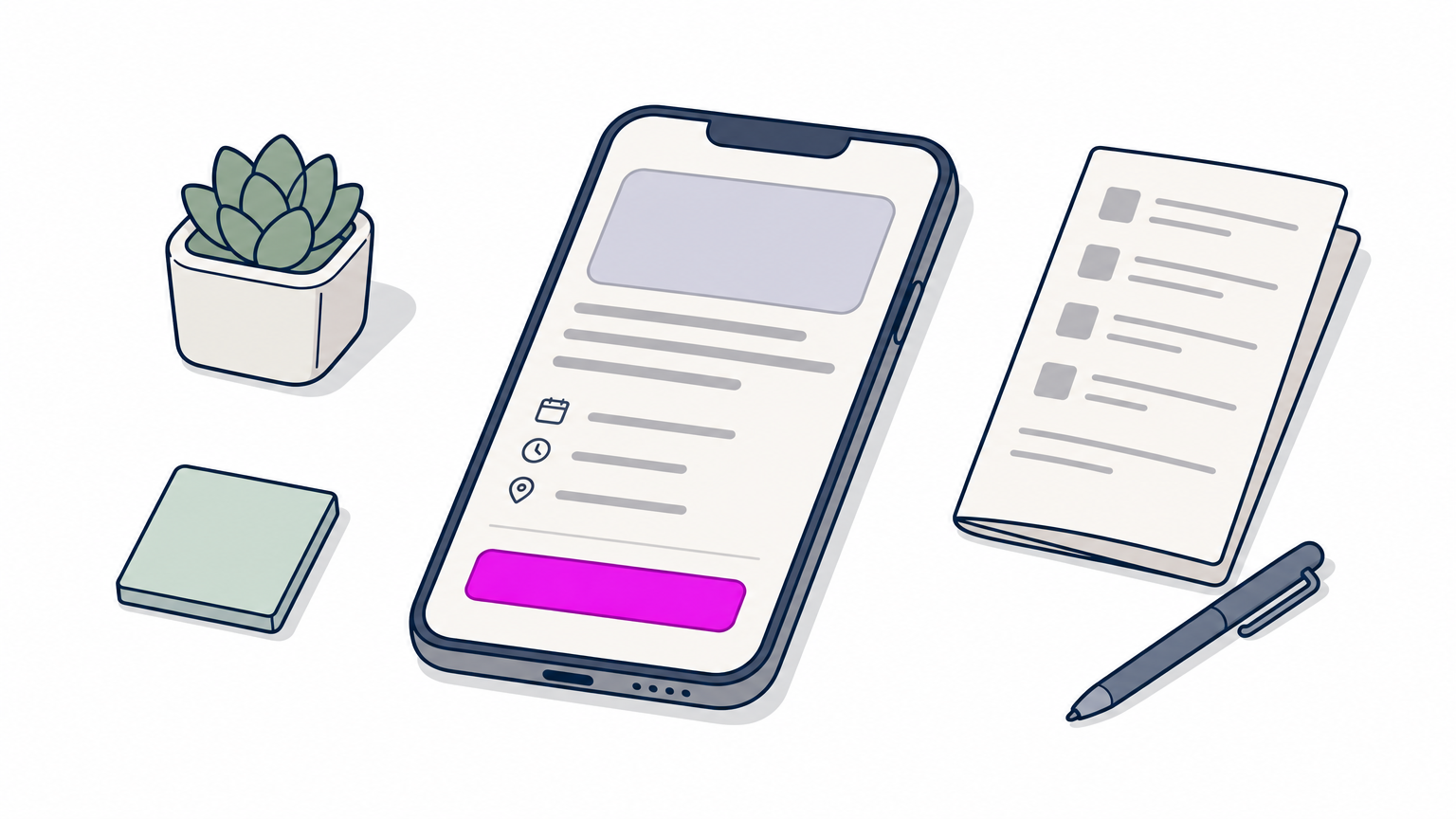
A single event page that holds every detail and a clear registration button is the base of marketing the event. Every email, post, ad and press mention should point to it.
How to run it
Visitors decide in seconds, so put the essentials above the fold. Include these elements:
- Event name, dates and venue or platform
- Who should attend and what they will get
- Agenda and speaker names, even if partial
- Ticket price and what it includes
- A registration button that repeats down the page
- FAQs covering travel, refunds and access
- A contact email or phone number
Most visitors will arrive on a phone, so test the page there first. Keep the form short: name, email, company and role are usually enough. Each extra field costs you registrations.
Keep the page at one stable web address for every edition of a recurring event. That helps search engines and keeps old links useful.
Your event page is the only place every channel agrees to send people, so make it do one job well.
Who it suits and what to track
All events need this page, whether the registration runs on your site or a ticketing platform. The page matters most for paid events, where visitors compare the price with the value.
Track the conversion rate, meaning registrations divided by visits. Compare it by traffic source. If email converts well and ads convert poorly, the problem is the targeting, not the page.
4. Run an event email sequence
Email is the channel you own, so use it for people who already know you: past attendees, exhibitors, enquirers and subscribers. A short, segmented sequence beats a long newsletter blast.
How to run it
Plan the sequence around real news, not filler. A workable run from registration opening to event week looks like this:
- Registration opens: the invitation, with dates, venue and the single call to action.
- About six weeks out: speaker or agenda reveal.
- Early-bird deadline: a reminder two weeks and two days before it closes.
- Two weeks out: a proof email with who is attending or exhibiting.
- Event week: logistics, with a last call for stragglers.
- Day after: thank-you and survey.
Segment before you send. First-time contacts need an introduction, past attendees need what is new, and exhibitors need lead-generation details. Skip purchased lists. They hurt deliverability and reach people with no interest.
Segment your list before you write the first email, because a message built for everyone persuades no one.
Who it suits and what to track
Email suits any organizer with a list, even a small one. If you have none, build it from exhibitor contacts, speaker networks and sign-ups at your previous events.
Watch click rate and registrations per email. Open rates are distorted by privacy features in mail apps, so treat them as a rough guide. Fix the email with the weakest clicks first.
5. Promote on social media with a hashtag
Social media works best when you choose two platforms where your buyers actually spend time and post something new at each step. Posting everywhere thinly gets less result than posting well in two places.
How to run it
Match the platform to the audience. LinkedIn suits B2B and professional events. Instagram and TikTok suit visual, consumer-facing experiences. Facebook works for local and community events. X is useful for announcements and live updates.
Plan a content calendar around moments you can reveal:
- Speaker and exhibitor announcements
- Behind-the-scenes venue or setup clips
- Countdowns and early-bird deadlines
- Short agenda previews
- Polls that ask what attendees want to hear
Choose one short, unique event hashtag and print it on your page, emails, slides and badges. Then give speakers and exhibitors ready-made graphics and suggested copy, since people share more when it costs them no effort.
One consistent hashtag turns scattered posts into one conversation you can follow and measure.
Who it suits and what to track
Small teams with limited budgets get the most from this route because organic posts cost only time. Use your own accounts and your team’s personal profiles together for wider reach.
Track registrations from tagged social links and engagement from target accounts. Ten comments from decision makers beat a thousand likes from people who will never attend.
6. Make your event findable in search
Event SEO helps people find your page when they search for your topic, city or show name. It is slow, so start it early and expect results over months, not days.
How to run it
Treat the event page as a normal web page with a clear purpose. Follow these steps:
- Put the event name, year and city in the title and the main heading.
- Write the dates and venue as plain text, not only in an image.
- Add Event structured data so search engines can read dates and locations. Google documents the markup in its event structured data guide.
- Answer real questions in an FAQ: tickets, parking, who attends, what is included.
- Earn links from exhibitors, sponsors, associations and trade media.
Google’s SEO starter guide covers the basics if your team is new to this. Reuse the same page address each year so the page keeps its history.
Event SEO compounds for recurring shows, so the page you build this year is the head start for next year’s edition.
Who it suits and what to track
SEO suits recurring events, conferences with a searchable topic, and shows tied to a city or industry. A one-off event with a short runway gains less, because search needs time to pick up the page.
Use Google Search Console to watch impressions and clicks for your event name and topic. Growth in searches for your event name is a clear sign that other channels are working too.
7. Add paid ads once the page converts
Paid ads buy speed and precise targeting. They work best after your event page converts reasonably, because ads multiply whatever the page does, good or bad.
How to run it
Match the platform to the intent. Google Ads captures people already searching for your topic or event name. LinkedIn lets you target by job title and industry, which suits B2B. Meta ads suit visual, consumer and community events. Add retargeting for people who visited your page but did not register.
Work out the budget from the target, not from a round number. Take a conference that wants 90 of its 300 registrations from ads. The cost per click and conversion rate below are assumptions, so replace them with your own.
| Step | Figure |
|---|---|
| Registrations wanted from ads | 90 |
| Page conversion rate (assumed) | 3% |
| Visits needed (90 ÷ 0.03) | 3,000 |
| Cost per click (assumed) | $1.50 |
| Ad budget (3,000 × $1.50) | $4,500 |
| Cost per registration ($4,500 ÷ 90) | $50 |
Judge ads by cost per registration, never by clicks, because clicks do not fill seats.
Who it suits and what to track
Ads suit events where a ticket, a sponsor sale or a lead is worth more than the cost per registration. In the example, a $50 cost works for a $400 ticket but not for a $40 one.
Start with a small test budget, run two or three creative versions, and move money toward what registers people. Track cost per registration by campaign and how many ad registrants actually attend.
8. Recruit partners, speakers and sponsors
People with their own audiences can promote your event more credibly than you can. Speakers, exhibitors, associations, sponsors and media partners all have newsletters, followers and customer lists you cannot reach directly.
How to run it
Ask each group for something specific and make it effortless. Give them a partner kit with short copy, graphics, key dates and a personal tracking link or discount code. Put promotion duties in sponsor and exhibitor agreements, so sharing is part of the deal rather than a favor. Associations and media partners can place your event in a newsletter in exchange for a logo, a discount for members or coverage.
A short message you can adapt:
Hi [Name], we're delighted you're [speaking at / exhibiting at] [Event Name] on [dates] in [city].
Here is your personal link and a ready-to-use post and graphic: [link]
Would you share it by [date]? Attendees who register with your link get [offer].
Influencers and affiliates work the same way: a unique code or link per person, and a clear reward for registrations they drive.
Partners share what is easy to share, so a ready-made kit with a tracking link doubles the odds of a post.
Who it suits and what to track
Partner promotion suits B2B shows, community events and any event with named speakers or exhibitors. Choose partners whose audience matches yours, not the ones with the biggest follower counts.
Give every partner a unique link or code and track registrations per partner. After the event, share the results with them, so the next request is easier to make.
9. Use early-bird, group and referral offers
Deadlines give undecided people a reason to register now instead of later. Tiered pricing also tells you early whether demand is strong enough or marketing needs to change.
How to run it
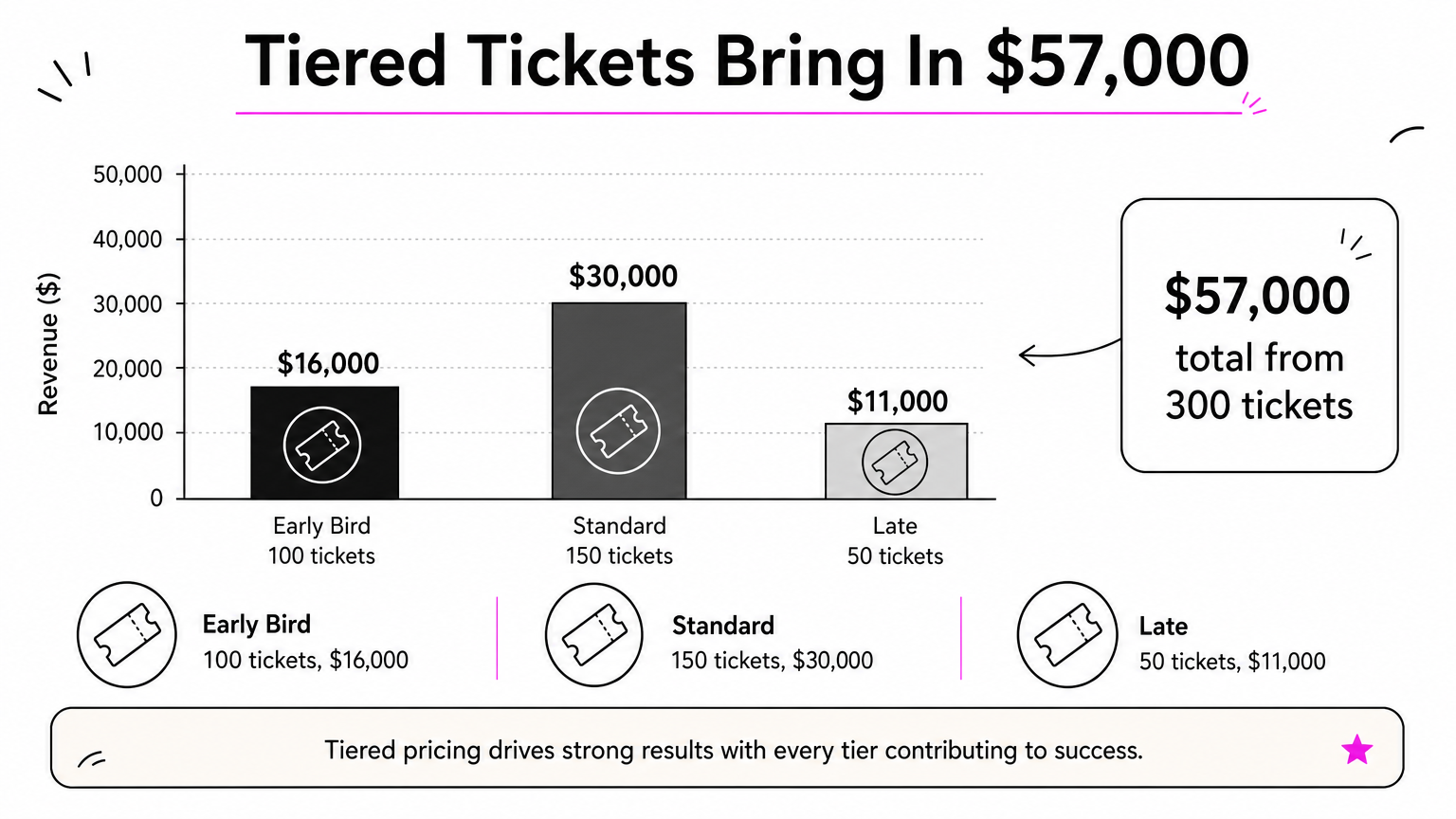
Set three tiers with dates: early bird, standard and late. Promote each deadline on the event page, in email and on social. Add a group rate for teams, such as a discount when three or more register together, and a referral perk for attendees who bring a colleague. Here is a worked example for a 300-seat conference.
| Tier | Price | Tickets | Revenue |
|---|---|---|---|
| Early bird (20% off) | $160 | 100 | $16,000 |
| Standard | $200 | 150 | $30,000 |
| Late (10% above standard) | $220 | 50 | $11,000 |
| Total | 300 | $57,000 |
A flat $200 ticket sold out would bring $60,000, so the tiers give up $3,000 on paper. The trade is early cash, an earlier read on demand and fewer last-minute dropouts. Decide whether that is worth it for your event.
Deadlines sell tickets only when they are real, so never extend an early-bird date you promised would end.
Who it suits and what to track
Tiers suit paid conferences, workshops and consumer events with an undecided audience. For free events, use limited capacity, a waitlist or an early-access slot as the deadline instead.
Track your registration curve: how many people signed up before each deadline and how many in the final week. If registrations bunch right before every deadline, the offer works. If they never move, the problem is the message or the audience.
10. Keep marketing during and after the event
The event itself is your best promotional material for the next edition. Capture it as it happens, then follow up while attendees still remember it.
How to run it
During the event, assign one person to capture content. They should post live updates, record short speaker clips and photograph busy moments. Ask exhibitors and speakers to post with your hashtag. Collect contacts and feedback on site, not afterward.
After the event, use this order:
- Within 24 hours: send a thank-you email with a short recap and a survey link.
- Within a week: share photos, highlights and any recordings.
- Within two weeks: send exhibitors and sponsors a results summary with attendance and lead numbers.
- Within four weeks: open early registration for the next edition, with a rate reserved for this year’s attendees.
Your best marketing for the next event is a good recap of this one, sent while attendees still remember it.
Who it suits and what to track
This step matters most for recurring events, trade shows and anything that depends on sponsors, because sponsors renew when they see results. One-off events benefit too, since the content feeds your organization’s later events.
Track survey scores, repeat registration rate and sponsor renewals. Record what each channel cost and delivered, so next year’s plan starts from real numbers instead of guesses.
Choose three ways and start early
Marketing the event comes down to a clear audience and goal, one strong event page, and a few channels run well from the right point on the timeline. For most B2B events that means trade media, email and partner shares. For ticketed consumer events it means social, offers and paid ads. Fit the channel to where your buyers are, then measure registrations per channel.
If you organize or exhibit at trade shows and expos, the first practical step is to get your announcement in front of industry readers. You can publish a press release or list your business on Exhibition Globe and start building visibility before registration opens.