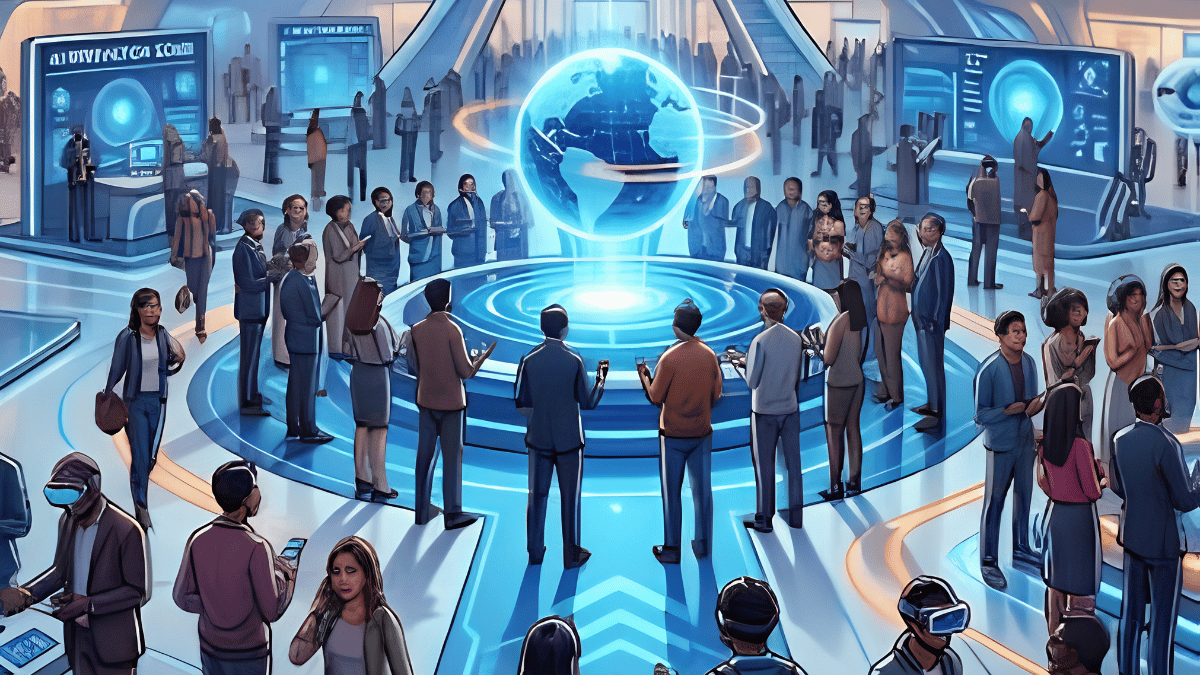
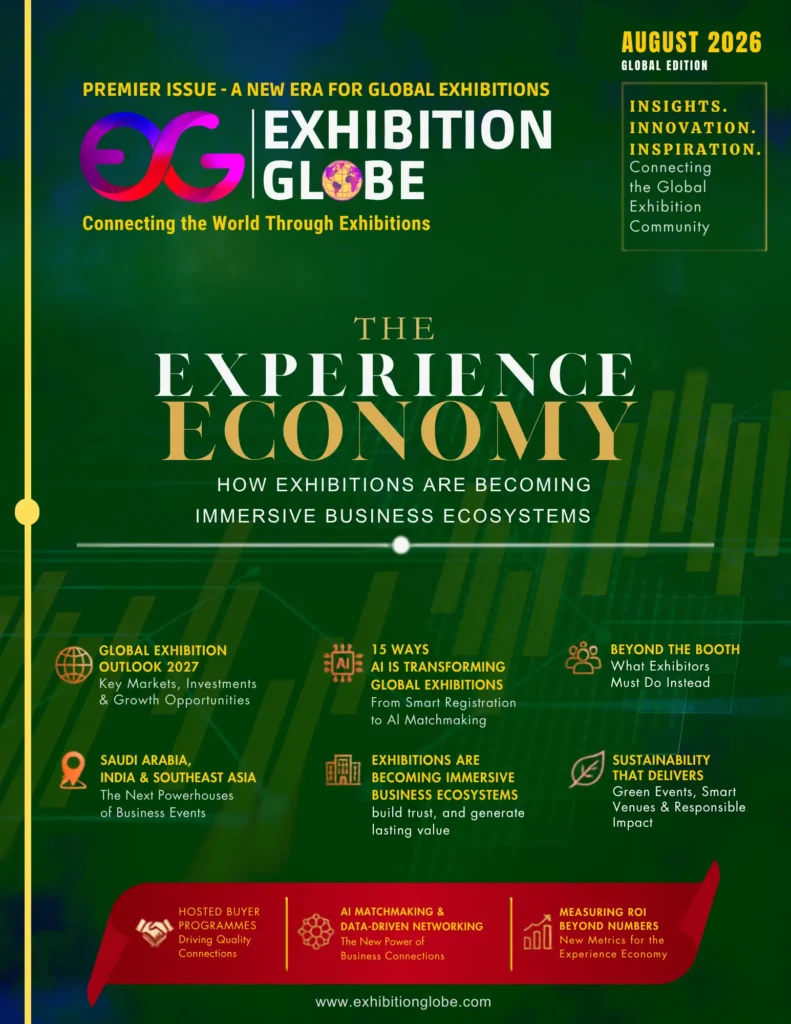
Every major technological revolution has fundamentally altered the way industries operate. The arrival of electricity transformed manufacturing. The internet reshaped communication and commerce. Smartphones placed information into the hands of billions of people around the world. Today, Artificial Intelligence represents the next great transformation, and its influence is already redefining the future of the global exhibitions and business events industry. For decades, exhibitions have relied on human expertise,
operational experience, and meticulous planning to bring thousands of exhibitors and visitors together under one roof. Organisers have continuously refined registration systems, improved visitor services, expanded conference programmes, and introduced digital tools that simplified event management. Yet the core structure of exhibitions remained largely unchanged. Artificial Intelligence is now challenging that convention by introducing a level of intelligence, automation, and personalisation that was previously unimaginable.
The impact of AI is not confined to one aspect of an exhibition. It extends across the entire event lifecycle—from the first marketing campaign that encourages registration to the post-event analysis that measures business outcomes. Every interaction, every visitor journey, every exhibitor engagement, and every operational decision can now be supported by intelligent systems capable of learning, adapting, and continuously improving.
This transformation is occurring at a time when visitor expectations are evolving rapidly. Business professionals no longer compare one exhibition with another; they compare every experience with the best digital services they use in their daily lives. They expect instant responses, personalised recommendations, seamless navigation, intelligent search, and frictionless interactions. These expectations are compelling organisers to rethink traditional event management and adopt technologies capable of delivering smarter, faster, and more meaningful experiences.
Artificial Intelligence provides exactly that opportunity.
Rather than replacing the people who organise exhibitions or the relationships that make business events valuable, AI is becoming an intelligent partner that enhances decisionmaking, simplifies complex operations, and enables every participant to focus on what truly matters—building relationships, discovering opportunities, and creating business value.
The organisations that embrace Artificial Intelligence thoughtfully will not simply operate more efficiently; they will redefine what a successful exhibition looks like in the years ahead.
From Registration to Relationship: The AI-Powered Visitor Journey
Imagine receiving an invitation to attend one of the world’s largest manufacturing exhibitions.
Only a few years ago, your experience would have been fairly predictable. You would receive a promotional email, visit the event website, complete a registration form, print your visitor badge, browse hundreds of exhibitor listings, and eventually arrive at the venue hoping to discover companies that matched your business requirements. Much of the exhibition experience depended on careful planning, personal effort, and, quite often, a degree of luck.
Artificial Intelligence is rapidly changing that journey. Consider the experience of Sarah, a Procurement Director for a multinational manufacturing company based in Singapore. Her organisation is exploring new suppliers for advanced industrial automation systems, and she is planning to attend an international manufacturing exhibition featuring more than 2,000 exhibitors from over 40 countries.
Long before Sarah registers, Artificial Intelligence has already begun working in the background. Based on her previous interactions with industry publications, professional networking platforms, online searches, and marketing preferences, AI-powered advertising systems recognise her interest in manufacturing technologies and present carefully targeted invitations to the exhibition. Instead of generic promotional messages, she receives content highlighting conference sessions, exhibitors, and product launches directly related to her responsibilities.
The invitation feels less like an advertisement and more like a personalised recommendation. Once Sarah decides to attend, the registration process itself becomes significantly more intelligent. Rather than completing lengthy forms, her professional information is automatically populated, while the registration platform asks a series of carefully designed questions about her industry, purchasing priorities, investment plans, preferred suppliers, and areas of professional interest. Every response helps Artificial Intelligence develop a deeper understanding of what Sarah hopes to achieve during the exhibition.
Within seconds of completing her registration, the platform begins constructing a personalised event journey.
Instead of asking Sarah to search through thousands of exhibitors, Artificial Intelligence identifies companies whose products closely match her purchasing objectives. It recommends conference sessions aligned with current manufacturing trends, highlights keynote presentations delivered by industry leaders she follows, and even suggests networking events where procurement professionals from similar organisations are expected to participate.
The exhibition has already become personal. Several weeks before the event begins, Sarah receives another notification. Based on exhibitor profiles, product categories, and purchasing requirements, Artificial Intelligence recommends a series of one-to-one business meetings. Each suggested meeting has been selected because both parties share complementary objectives. What once required weeks of manual scheduling now happens automatically, allowing exhibitors and buyers to focus on preparing meaningful discussions rather than exchanging dozens of emails. When Sarah arrives at the convention centre, the technology becomes almost invisible.
She enters the venue through a fast digital check-in process, receives real-time directions to her first meeting, and is notified that a keynote session she planned to attend is reaching capacity. Artificial Intelligence immediately recommends an alternative session covering similar topics and adjusts her schedule without disrupting the remainder of her day.
Throughout the exhibition, Sarah receives intelligent recommendations based on her actual behaviour rather than simply her original registration details. After spending considerable time exploring robotics solutions, the event application identifies additional exhibitors specialising in industrial automation. When she attends a presentation on sustainable manufacturing, it recommends suppliers offering environmentally responsible production technologies. Every interaction helps the platform understand her evolving interests with greater accuracy.
Networking also becomes remarkably more productive. During a coffee break, Sarah receives a notification introducing another procurement executive attending the same exhibition. Their organisations operate in similar industries, face comparable supply chain challenges, and are both evaluating automation investments. Although they have never met before, Artificial Intelligence recognises the potential value of the connection and recommends an introduction. A brief conversation begins over coffee and eventually develops into a strategic partnership that continues well beyond the exhibition.
Language, once considered a significant barrier during international exhibitions, becomes far less restrictive. Sarah meets a supplier from South Korea whose technical specialists speak limited English. Real-time translation tools assist both parties throughout the discussion, ensuring technical details are communicated accurately while allowing the conversation to flow naturally. Technology quietly removes obstacles that might otherwise have prevented meaningful business engagement.
Artificial Intelligence continues supporting Sarah even when she cannot attend every conference session. During simultaneous presentations, the platform automatically records selected sessions, generates concise summaries, highlights key business insights, and recommends relevant follow-up materials based on her interests. Instead of leaving the exhibition feeling she has missed valuable information, Sarah gains access to an organised library of knowledge that remains available long after the event concludes.
As the exhibition draws to a close, the value of Artificial Intelligence becomes even more apparent. Rather than leaving with a pocket full of business cards and a collection of brochures, Sarah receives a comprehensive digital report summarising her entire exhibition journey. Every meeting, product demonstration, keynote session, exhibitor interaction, downloaded catalogue, and networking conversation has been organised into a structured follow-up plan. Artificial Intelligence prioritises potential suppliers according to engagement quality, reminds her of promised follow-up actions, and even recommends which conversations deserve immediate attention based on the objectives she established before arriving at the exhibition. For Sarah, the exhibition does not end when she boards her flight home.
The relationships she established continue through personalised communications, virtual meetings, educational webinars, and ongoing collaboration facilitated by intelligent digital platforms. What was once a three-day event has evolved into a year-round business relationship supported by technology but sustained through human trust.
Sarah’s story is fictional, yet every stage  of her journey reflects capabilities that are already available—or rapidly emerging—within today’s global exhibition industry. Artificial Intelligence is transforming exhibitions from isolated annual events into continuously connected business ecosystems where every interaction becomes more relevant, every meeting more purposeful, and every opportunity more valuable.
The true achievement of Artificial Intelligence is not that it automates tasks. Its greatest contribution is that it gives people more time to do what technology can never fully replace: build relationships, exchange ideas, negotiate partnerships, and create opportunities that drive business forward.
“The smartest exhibition is not the one with the most technology. It is the one where technology quietly works in the background, allowing people to focus entirely on meaningful human connections.”