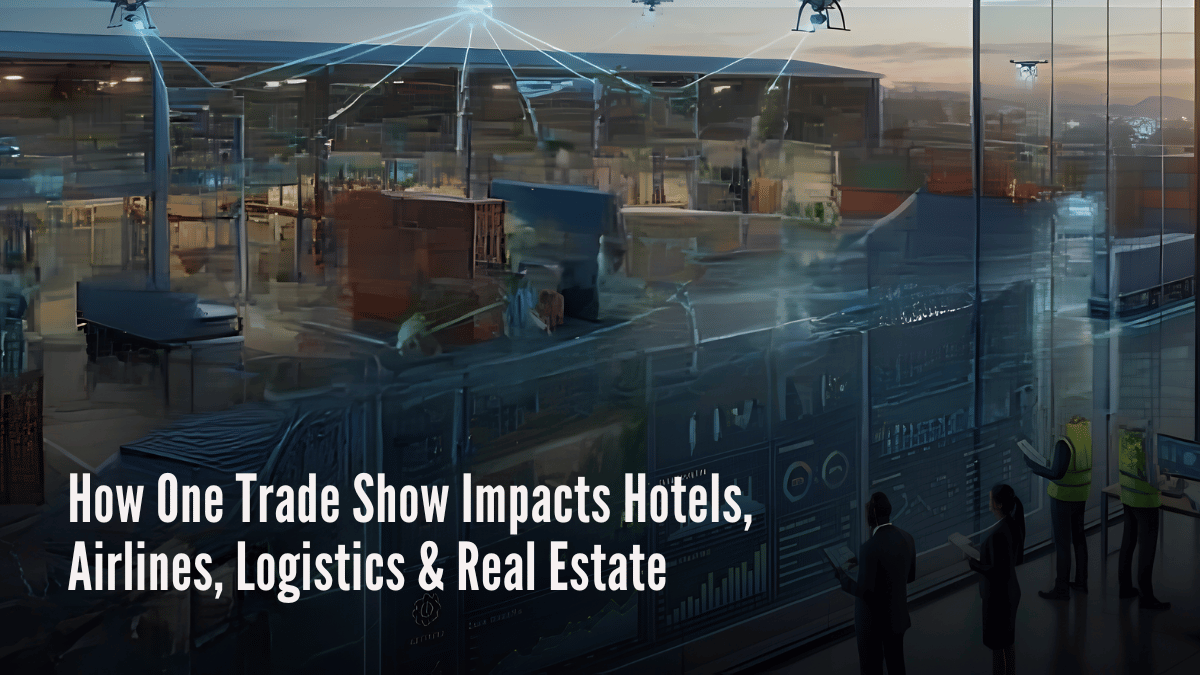
A single major exhibition can influence hundreds of businesses and generate economic activity worth millions or even billions of rupees. Its impact extends far beyond ticket sales or booth rentals. It creates jobs, drives tourism, stimulates investment, and contributes significantly to local and national economies.
In many cities around the world, exhibitions are now recognized as strategic economic assets rather than merely business events.
Understanding this broader economic impact reveals why governments, investors, venue operators, and business leaders are increasingly paying attention to the exhibition industry.
The Multiplier Effect of Exhibitions
One of the most important concepts in economic development is the multiplier effect.
This principle suggests that a single economic activity generates additional economic activity across multiple sectors. Exhibitions are a perfect example of this phenomenon. When thousands of visitors travel to attend an event, they do far more than visit an exhibition hall. They book flights, reserve hotel rooms, dine at restaurants, use local transportation, purchase goods and services, and often extend their stay for business or leisure purposes.
Each of these activities creates revenue for additional businesses, which in turn support employment and economic growth.
The economic value of an exhibition therefore extends far beyond the organizer and exhibitors. It spreads throughout the local economy, benefiting a wide range of industries and stakeholders. This ripple effect is one of the primary reasons cities actively compete to host major exhibitions and conventions.
Why Governments Support Exhibition Infrastructure
Across the world, governments are investing heavily in convention centers, exhibition venues, and event infrastructure. The reason is simple.
Exhibitions generate economic activity that extends well beyond the event itself. Every visitor who attends contributes to local spending. Every international delegate creates tourism revenue. Every business meeting creates opportunities for future investment and trade. For policymakers, exhibitions represent a relatively efficient mechanism for attracting business travelers, promoting industries, and enhancing a city’s international profile.
As a result, exhibition infrastructure is increasingly being viewed as an economic development tool rather than merely an event facility.
Hotels: The First Beneficiaries
Among all industries influenced by exhibitions, hospitality often experiences the most immediate impact. Large exhibitions can dramatically increase hotel occupancy rates, particularly when they attract participants from other cities or countries.
Business travelers generally prefer accommodations close to exhibition venues, creating strong demand for nearby hotels. Premium properties often experience full occupancy during major events, while even midrange and budget accommodations benefit from increased demand.
For hotel operators, exhibitions provide predictable business opportunities and help reduce dependence on seasonal tourism fluctuations. In many major cities, hospitality revenues during exhibition periods significantly exceed normal operating levels.
This relationship between exhibitions and hotels has become one of the strongest examples of economic interdependence within the business events industry.
Business Tourism Is Becoming a Major Revenue Driver
The rise of business tourism has further strengthened the connection between exhibitions and hospitality.
Unlike leisure travelers, business visitors often spend more per day, utilize premium services, and engage in multiple business activities during their stay. Many extend visits to meet clients, explore investment opportunities, or attend related conferences and networking events. This higher spending pattern creates substantial value for local economies and reinforces the importance of attracting business events.
For many destinations, business tourism has become one of the most lucrative segments within the travel industry.
Airlines and Transportation Networks Benefit Significantly
Every exhibition begins with a journey. Visitors, exhibitors, speakers, and organizers must travel to the event destination. This creates substantial demand for airlines, railways, taxis, ride-sharing services, and local transportation providers. Major exhibitions often lead to noticeable increases in passenger traffic, particularly on routes connecting key business centers.
Airlines frequently benefit from higher booking volumes during exhibition periods, while local transportation providers experience increased demand for mobility services. This transportation activity contributes directly to economic growth while improving connectivity between business communities.
As exhibition participation continues to expand, transportation networks are becoming increasingly integrated into the industry’s success.
Connectivity Influences Exhibition Success
One of the key factors determining whether a city can become a successful exhibition destination is connectivity. Cities with strong air networks, efficient transportation systems, and accessible infrastructure are generally better positioned to attract large-scale events.
The easier it is to reach a destination, the more attractive it becomes for organizers and attendees. This relationship creates a powerful incentive for cities to invest in transportation infrastructure that supports business tourism and exhibition growth.
Logistics: The Invisible Backbone of Every Exhibition
Few industries are as essential to exhibitions as logistics. Every booth structure, display unit, machine, promotional item, and product sample must be transported, stored, assembled, and eventually removed. This process involves a complex network of logistics providers, freight forwarders, warehousing operators, customs agents, and transportation companies. For large industrial exhibitions, the logistics operation itself can rival the complexity of the event.
Without efficient logistics, exhibitions simply cannot function. The industry’s growth is therefore creating significant opportunities for logistics providers specializing in event-related services.
Real Estate Gains Long-Term Value
One of the less obvious beneficiaries of exhibitions is the real estate sector. Major exhibition venues often become catalysts for broader urban development. Hotels, office complexes, retail centers, restaurants, and mixeduse commercial projects frequently emerge around successful convention and exhibition districts. These developments increase property values and attract additional investment.
Over time, exhibition venues can transform entire neighborhoods into business and commercial hubs. This pattern can be observed in many major cities where convention centers have stimulated long-term real estate growth and urban regeneration. The economic impact therefore extends far beyond event days and contributes to sustained regional development.
Convention Districts Are Emerging Across India
India is increasingly witnessing the development of integrated convention districts around major venues. These ecosystems combine exhibition facilities, hotels, office spaces, retail outlets, entertainment zones, and transportation infrastructure within a single business environment. Such developments create synergies that enhance visitor experiences while generating additional revenue opportunities.
As India’s exhibition industry grows, these integrated business districts are expected to play an increasingly important role in economic development. operators, customs agents, and transportation companies. For large industrial exhibitions, the logistics operation itself can rival the complexity of the event.
Without efficient logistics, exhibitions simply cannot function. The industry’s growth is therefore creating significant opportunities for logistics providers specializing in event-related services.
Employment Generation Across Multiple Sectors
Exhibitions create employment opportunities far beyond organizers and venues.Event management companies, security providers, marketing agencies, catering firms, transportation operators, technology vendors, designers, construction contractors, and hospitality businesses all contribute to event delivery.
The result is a substantial employment ecosystem that supports both skilled and semi-skilled workers. Many jobs associated with exhibitions are project-based, creating opportunities for freelancers, consultants, and specialized service providers. This employment impact strengthens the industry’s contribution to economic growth and social development.