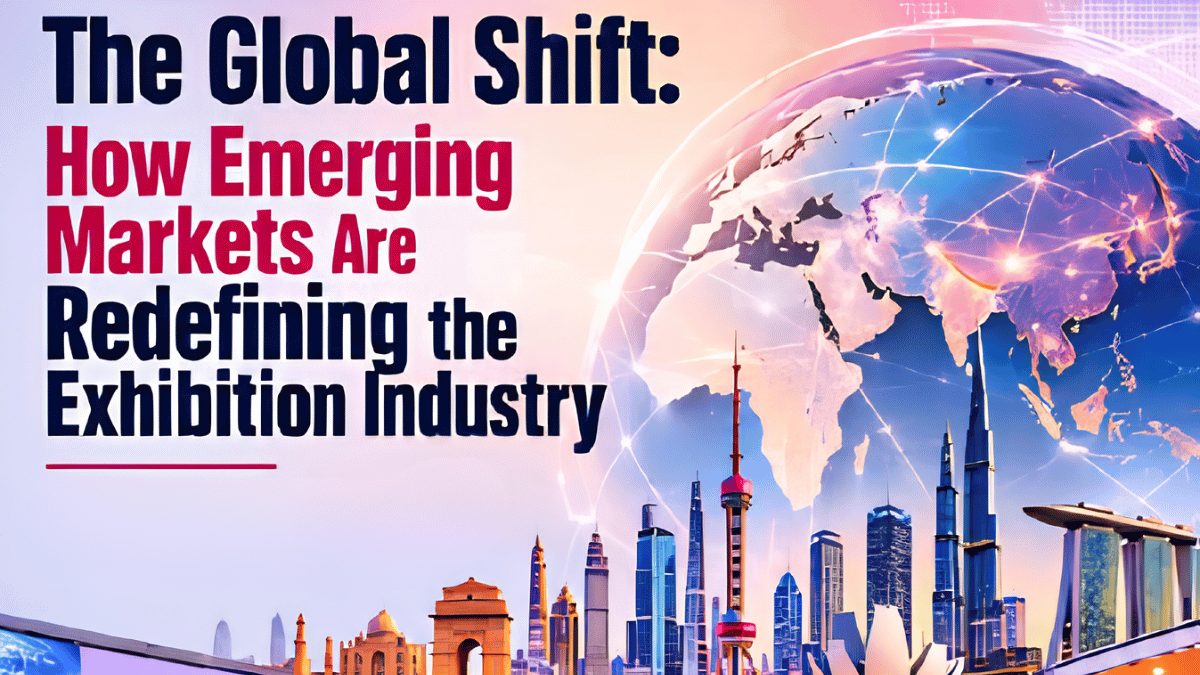
For many years, the global exhibition landscape was largely associated with established markets such as Germany, the United States, the United Kingdom, France, and Italy. These countries developed worldclass exhibition infrastructure, hosted globally recognised trade fairs, and became benchmarks for innovation within the MICE industry. Their influence remains significant, but the centre of gravity is gradually expanding. A new generation of exhibition destinations is emerging with remarkable confidence. Across Asia, the Middle East, Africa, and parts of Latin
America, governments and private investors are making unprecedented investments in convention centres, transportation networks, hospitality infrastructure, and destination marketing. Their objective is not merely to host international exhibitions but to position themselves as global centres for business, innovation, and knowledge exchange.
India stands at the forefront of this transformation. As one of the world’s fastest-growing major economies, the country offers a compelling combination of manufacturing capabilities, digital innovation, entrepreneurial energy, and a rapidly expanding consumer market. Large-scale investments in convention infrastructure, improved connectivity, and policy initiatives supporting trade and tourism are strengthening India’s position as a preferred destination for international exhibitions. Cities such as New Delhi, Mumbai, Bengaluru, Hyderabad, and Ahmedabad are steadily expanding their presence on the global MICE map, attracting events across industries ranging from technology and healthcare to renewable energy and manufacturing.
Saudi Arabia is equally redefining expectations within the global business events sector. Supported by ambitious economic diversification initiatives, the Kingdom is investing heavily in world-class venues, tourism infrastructure, smart cities, and international partnerships. Large-scale exhibitions have become an important instrument for attracting foreign investment, encouraging innovation, and positioning the country as a regional gateway connecting Asia, Africa, and Europe. The pace of development demonstrates how exhibitions can become catalysts for broader economic transformation.
The United Arab Emirates continues to reinforce its reputation as one of the world’s leading business events destinations. Its strategic location, exceptional connectivity, advanced infrastructure, and globally recognised convention facilities have enabled cities such as Dubai and Abu Dhabi to become preferred venues for international trade exhibitions across multiple sectors. Beyond infrastructure, the UAE has successfully created an ecosystem where business, tourism, hospitality, and innovation work together to deliver a seamless visitor experience.
Southeast Asia has also emerged as an increasingly influential region within the global exhibition industry. Singapore continues to set international standards for efficiency, technology integration, and event management excellence, while countries including Thailand, Vietnam, Indonesia, and Malaysia are attracting growing numbers of regional and international exhibitions through continuous investment in infrastructure and business-friendly policies. These destinations are demonstrating that strategic planning and regional collaboration can significantly enhance competitiveness in the global events market.
Africa, too, represents one of the most promising frontiers for future exhibition growth. Rapid urbanisation, expanding regional trade, digital adoption, and a young entrepreneurial population are creating demand for specialised business events across sectors such as agriculture, healthcare, mining, renewable energy, education, and financial services. As infrastructure continues to improve, African cities are increasingly positioning themselves as important venues for regional and international business engagement.
The emergence of these new destinations is creating a healthier and more balanced global exhibition ecosystem. Rather than concentrating opportunities within a limited number of mature markets, exhibitions are becoming more geographically diverse, enabling businesses to access new customers, enter emerging economies, and establish partnerships in regions that were previously underrepresented within the international events calendar.
This shift also reflects broader changes in global trade. Manufacturing networks are expanding, supply chains are diversifying, innovation is becoming more decentralised, and entrepreneurs are emerging from every corner of the world. As economic influence becomes more distributed, the exhibition industry is naturally evolving to reflect this new global reality.
The future will not belong exclusively to traditional exhibition powerhouses or emerging destinations. Instead, it will belong to those cities and countries that continuously invest in infrastructure, embrace innovation, support sustainability, and create exceptional experiences for exhibitors and visitors alike. In the Experience Economy, every destination has an opportunity to become globally relevant if it delivers value beyond the exhibition floor.