The best marketing event examples share one trait: a single clear goal that shapes every detail, from the venue to the follow-up. Oracle Code One and Spotify’s Diversify hackathon suit organizers who want to show their values in action. Audible’s beach and Red Bull Stratos suit teams chasing awareness. Google I/O and a Fortnite concert suit anyone who needs to reach people beyond the walls of a venue. SQLBits and Apple’s WWDC suit those selling expertise or a product.
A marketing event is any gathering, live or virtual, that a business runs to win attention, leads, or loyalty. The trouble with most roundups is that they show a glamorous result without the decision behind it, so you can’t tell what to copy on your own budget.
At Exhibition Globe, we have covered trade shows, conferences, and expos since 2017, so we see what separates an event people talk about from one they forget. Below are ten real examples. Each one is broken into what happened, why it worked, and how to adapt it. A short guide to matching an event type to your goal follows.
1. Oracle Code One: a conference built on values
What they did
Oracle Code One, the developer conference formerly known as JavaOne, ran a "green" initiative alongside its usual sessions and networking. Programmers from around the world got a plant-conscious menu, lessons on reducing their carbon footprint, and the option to donate food to charity.
- Event type: user conference
- Main goal: show brand values to a technical audience
- Format: in person
Why it worked
The conference did double duty. Attendees came for technical content, and they left having seen the host’s values in practice, not in a slogan.
A values message lands harder when attendees can eat, learn, and donate their way through it.
Sustainability is also a growing concern for sponsors, partners, and corporate stakeholders. A green program gives you a talking point for sponsor conversations as well as attendee ones.
How to adapt it
Start with what you already control: catering, printed materials, and travel guidance. Pick two changes you can repeat every year and announce them on your event page. Small, consistent actions look more credible than one grand claim.
Finally, report one concrete figure afterward, such as meals donated. That turns the effort into proof instead of decoration.
2. Audible Beach at Comic-Con: an activation people photograph
What they did
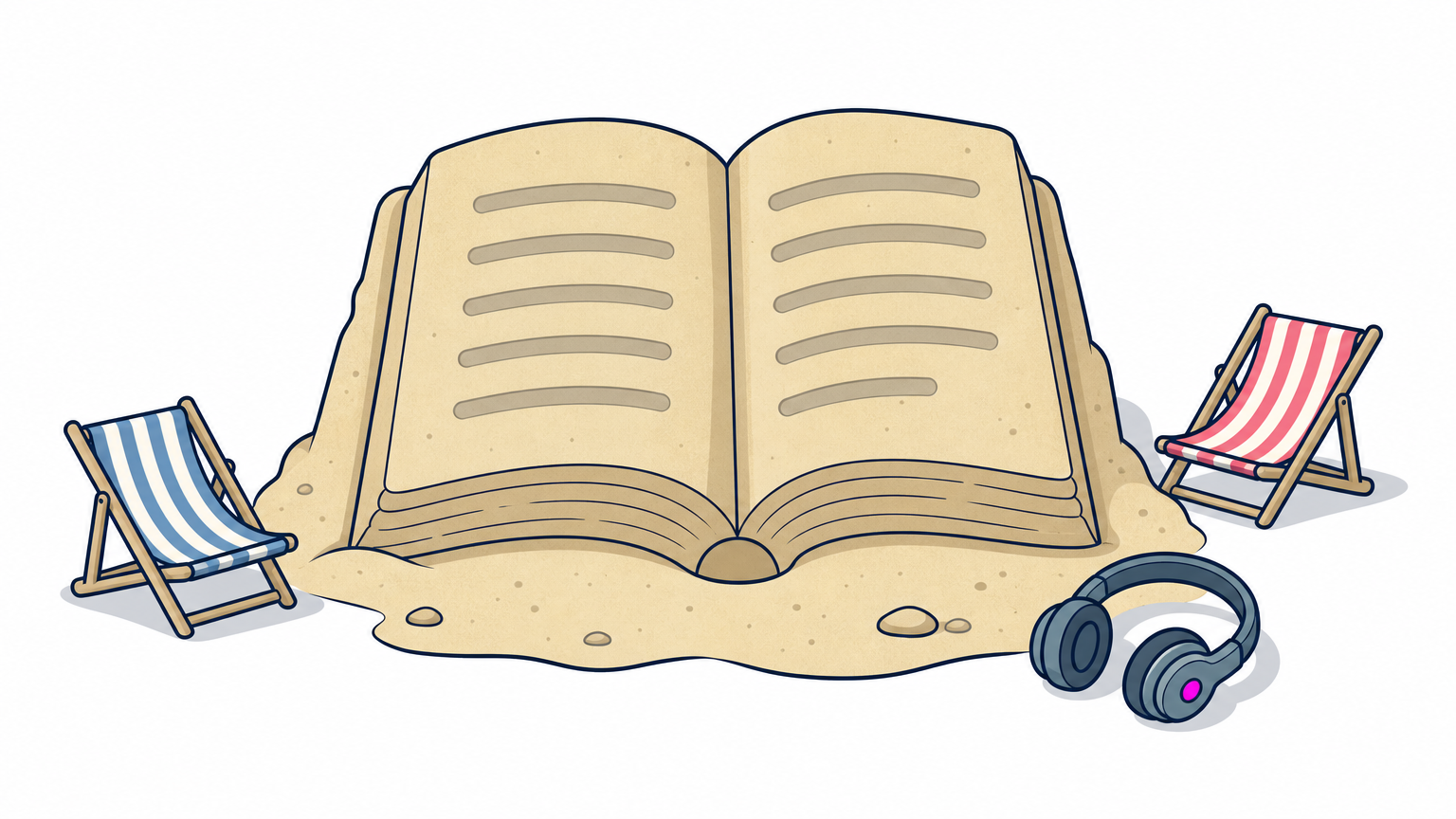
At the 2022 San Diego Comic-Con, Audible turned a beach scene into a product demo. Working with Civic Entertainment Group, it built sculptures from 150 tons of compacted sand to promote Impact Winter, The Sandman, and the launch of Moriarty: The Devil’s Game. Fans sat on the beach, took photos, sampled Audible Originals, and relaxed in branded beach chairs.
- Event type: experiential activation
- Main goal: awareness and launch buzz
- Format: in person, inside a larger convention
Why it worked
Audio is hard to show. Sand sculptures gave the product a body, and the sampling gave fans a reason to stay instead of just snapping a photo and leaving.
An experiential activation works when it makes an invisible product tangible and easy to photograph.
Placement mattered too. A crowd that already loves these stories was already in the building, so Audible did not have to buy attendance, only earn attention.
How to adapt it
Trade show exhibitors can scale this down. Choose one oversized, visual element for your stand and pair it with a sampling or demo moment. You need photos worth sharing, not tonnage.
Brief your staff to invite visitors to take pictures and use the show hashtag. Attendee posts extend your reach long after the hall closes.
3. Google I/O: a keynote that reaches the whole world
What they did
Google I/O organizers recorded keynote speeches with a 360-degree camera so virtual attendees could watch live from anywhere. They also hosted the videos on YouTube, which made the experience free and easy to reach for people who could not travel.
- Event type: developer conference with a virtual option
- Main goal: global reach for announcements
- Format: hybrid
Why it worked
Reach was the point. The room limits attendance, but a stream does not, so the keynote becomes a launch moment for the entire developer community.
The in-person event becomes the studio, and the stream becomes the audience.
Free access also builds goodwill. People who can’t attend this year still follow the brand, and some of them will attend next year after watching from home.
How to adapt it
You don’t need a developer audience or Google’s production crew. Stream your opening keynote and one or two flagship sessions on a platform your audience already uses. Keep workshops and networking for the people in the room.
Plan the recording before you book the venue. Confirm the space has reliable internet and a spot for a camera, then publish on-demand versions afterward so the content keeps working.
4. Red Bull Stratos: a live story bigger than the brand
What they did
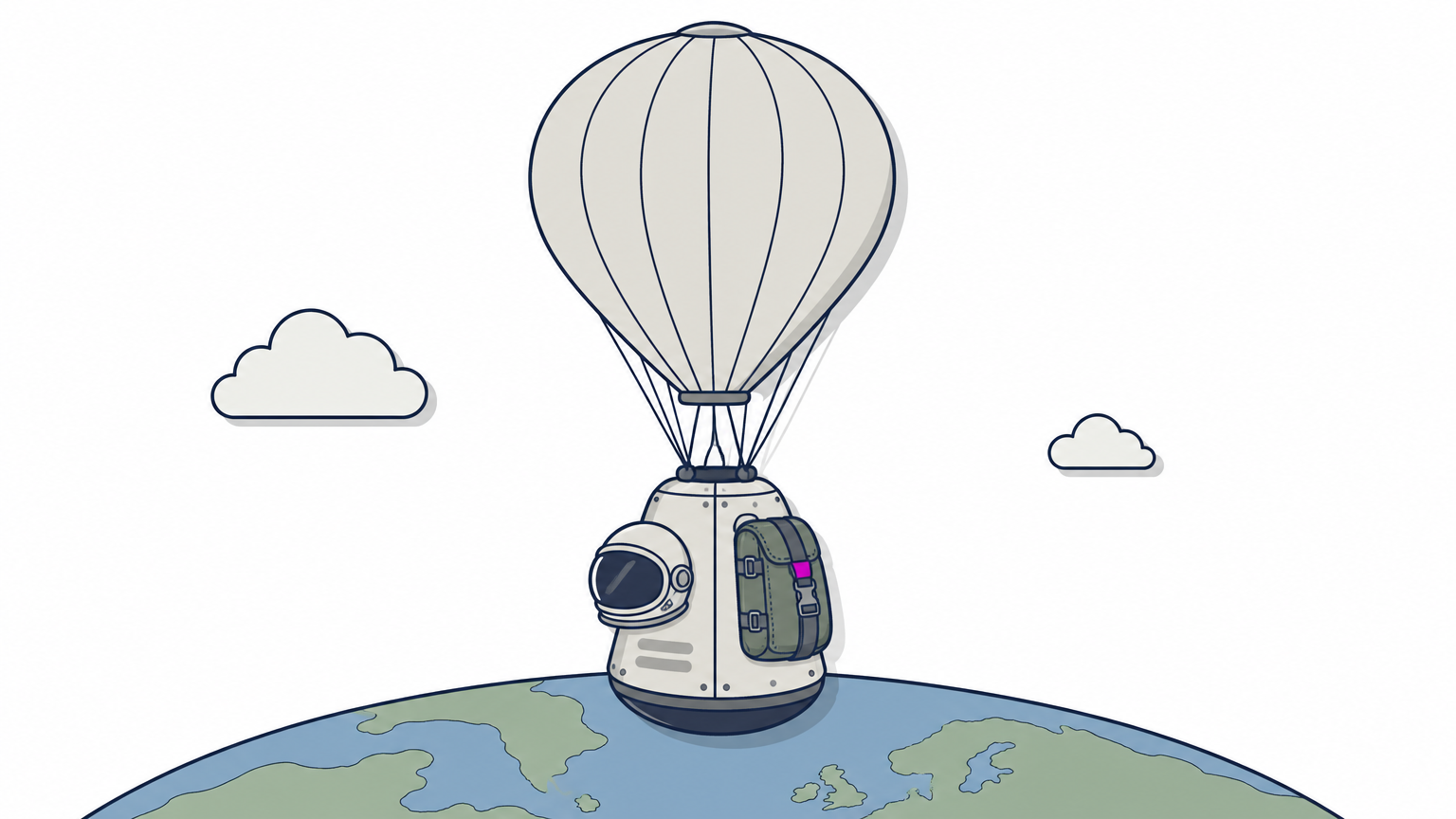
In October 2012, Red Bull backed Felix Baumgartner’s jump from a balloon roughly 24 miles above New Mexico. The livestream on YouTube drew around 8 million concurrent viewers at its peak, one of the largest live audiences the platform had seen at that time.
- Event type: brand spectacle
- Main goal: awareness and brand association
- Format: live broadcast
Why it worked
The event was never about the drink. It was about human limits, a story people would watch with no logo in sight, and the brand’s identity attached itself to the result.
Build the event around a story your audience would watch even if your logo were missing.
Live timing added urgency. Viewers had a reason to watch now, not later, and sharing it with friends turned each viewer into a small distribution channel.
How to adapt it
Few budgets reach the stratosphere, but the principle scales. Ask which story your industry cares about, such as a record, a first, or a hard problem solved, and make your event its stage.
Keep the branding light and the content strong. Capture video, quotes, and photos from the day so the story keeps circulating for months.
5. Marshmello in Fortnite: a concert inside the audience’s world
What they did
In February 2019, the DJ Marshmello performed a concert inside the game Fortnite. More than 10 million players joined, each appearing as their in-game character, with no ticket, travel, or hotel needed.
- Event type: virtual concert
- Main goal: engagement and reach
- Format: fully virtual, inside a game
Why it worked
Attendance was easy because the audience was already inside the game. There was no registration page and no travel, only a start time.
Hold the event where your audience already spends its time, and attendance stops being the problem.
The format also suited the performer. A concert in a game world could use effects a real venue cannot, so the virtual setting added something instead of replacing something.
How to adapt it
Most of us don’t run a game, but you can borrow the logic. Find the channel your audience already uses, such as a LinkedIn Live session, a webinar series, or a community forum, and host the event there.
Virtual events remove travel and usually cost less, so you can reach more people than a room allows. They still need promotion, though. Social posts and partner or sponsor shares work just as they do for in-person events.
6. Apple WWDC: a launch built for the people who build
What they did
Apple’s Worldwide Developers Conference is an annual launch event for the people who build on its platforms. Speakers explain the ideas behind Apple’s work, and the program backs them with sessions, hands-on labs, consultations, and get-togethers.
- Event type: product launch and developer conference
- Main goal: adoption and loyalty
- Format: sessions plus hands-on time
Why it worked
WWDC works because it serves the builders, not just the press. Each session teaches something attendees can use that week.
A launch converts best when attendees can try the product and talk to its makers in the same visit.
Labs and consultations turn interest into action. The keynote creates awareness, and the one-to-one time with the team moves developers toward actually using what they just saw.
How to adapt it
Smaller companies can mirror the structure. Pair your launch presentation with hands-on stations where customers try the product, and schedule short slots with your engineers or product leads.
Keep the theme simple. Apple ties its event to one promise, connecting technology and creativity. Decide on a single sentence your launch must prove, then cut any session that doesn’t support it.
7. SQLBits: a seminar that sells depth
What they did
SQLBits, a conference for the data platform community, promises attendees over 10 hours of training and offers more than 150 specialist sessions that go deep on the material. Attendees come to learn technologies they might not otherwise get access to.
- Event type: educational seminar and training conference
- Main goal: authority and community
- Format: in person, session-heavy
Why it worked
Specific promises beat vague ones. "Over 10 hours of training" is a number a manager can put in a budget request, so it helps attendees justify the ticket themselves.
Put a countable promise of value in your event headline, and attendees can justify the ticket for you.
Deep technical sessions also filter for people who really use the technology. That keeps the audience relevant to sponsors and vendors.
How to adapt it
Count what you offer and say it plainly: sessions, hours, speakers, or workshops. Then make the schedule easy to preview on your event site so a registrant can see exactly what they will learn.
Seminars suit thought leadership goals. If you want to be known as the authority in a niche, recruit practitioners as speakers and keep sales pitches out of the room.
8. Lean Startup: networking with proof of who is coming
What they did
Lean Startup scheduled networking events away from the main venue, such as an evening at the Mob Museum, and built them around its global community. It also published a frequently updated guest list, so prospective attendees could see who else was coming.
- Event type: networking event
- Main goal: higher-quality connections and more registrations
- Format: in person, offsite evening
Why it worked
Networking is the promise of most events and the disappointment of many. A public attendee list answers the question every registrant has: will the right people be there?
Show registrants who is coming, and the event sells itself to the people who belong there.
The offsite setting did a second job. A distinctive venue gives guests a ready conversation starter and a story to tell afterward.
How to adapt it
Publish a list of registered companies or job roles, and ask permission before showing individual names. Consent keeps trust intact and still gives prospects the proof they want.
Next, pick a venue with a story. A museum, a workshop, or a rooftop turns a reception into a memory and gives your photographer something to shoot.
9. Spotify Diversify: a hackathon that proves a value
What they did
Spotify aimed its Diversify hackathon at candidates from groups that are often marginalized in the industry. The team used word of mouth to collect names of women who might take part, and the final group split 50/50 between men and women.
- Event type: recruiting hackathon
- Main goal: employer brand and hiring
- Format: hackathon
Why it worked
The event proved a value instead of claiming it. Many employers say they want diverse teams, but a room split evenly is evidence anyone can see.
A measurable result at the event carries more weight than any statement on your careers page.
Personal referrals mattered as much as the format. Word of mouth reached people a standard job posting would have missed.
How to adapt it
Set a participation target before invitations go out, and tell your recruiters how you will reach it. Targets shape outreach, and outreach decides who shows up.
If travel is a barrier, look at Microsoft’s Building the Future hackathon. It challenged teams to develop solutions for electric mobility in a 100% digital experience, so location did not limit who could join.
10. Glassdoor and Plum Organics: internal events that build culture
What they did
At Glassdoor’s Board Game Tournament, employees played games such as Jenga and Boggle with colleagues they had never met, and prizes went to the winners. Plum Organics, whose branding is child-friendly, hands out crayons and markers during internal meetings so staff can color while they brainstorm.
- Event type: internal team-building and meetings
- Main goal: collaboration and culture
- Format: low-cost, in-house
Why it worked
Internal events are marketing too. Employees carry the brand’s story to customers, candidates, and friends, so how they feel at work shows up in how they describe the company.
Treat internal events as brand marketing, and your own staff become the most credible channel you have.
These examples also cost very little. A shelf of board games or a box of crayons creates the moment, and the brand’s personality does the rest.
How to adapt it
Choose an activity that reflects your brand. A playful consumer brand can run trivia or improv, while a technical firm might try a puzzle night.
Mix teams on purpose. The value comes from people who rarely work together meeting, so assign groups instead of letting friends cluster.
How to choose the right event for your goal
Choose the event type that matches your single most important goal, then borrow the details from the example above that fits it. An event that tries to build awareness, leads, and hiring at once usually delivers none of them well.
Match the event to one goal
Use this table as a starting point, and keep one primary goal per event.
| Main goal | Event type | Example to borrow from | What to track |
|---|---|---|---|
| Awareness | Experiential activation or live spectacle | Audible, Red Bull Stratos | Social shares, press coverage, live viewers |
| Leads and authority | Conference or seminar | Oracle Code One, SQLBits | Registrations, qualified leads, attendance |
| Product adoption | Launch or developer event | Apple WWDC | Attendance, demo participation, follow-up leads |
| Reach beyond the venue | Hybrid or virtual event | Google I/O, Fortnite concert | Live and on-demand views |
| Relationships | Networking event | Lean Startup | Survey feedback, repeat attendance |
| Hiring and employer brand | Hackathon | Spotify Diversify | Applicants, participant mix |
| Culture | Internal event | Glassdoor, Plum Organics | Staff feedback |
Set the numbers before you book
Define success measures before you spend anything. The usual ones are revenue, attendance, qualified leads, brand awareness, and post-event feedback. Compare registrations with actual attendance to see your drop-off rate.
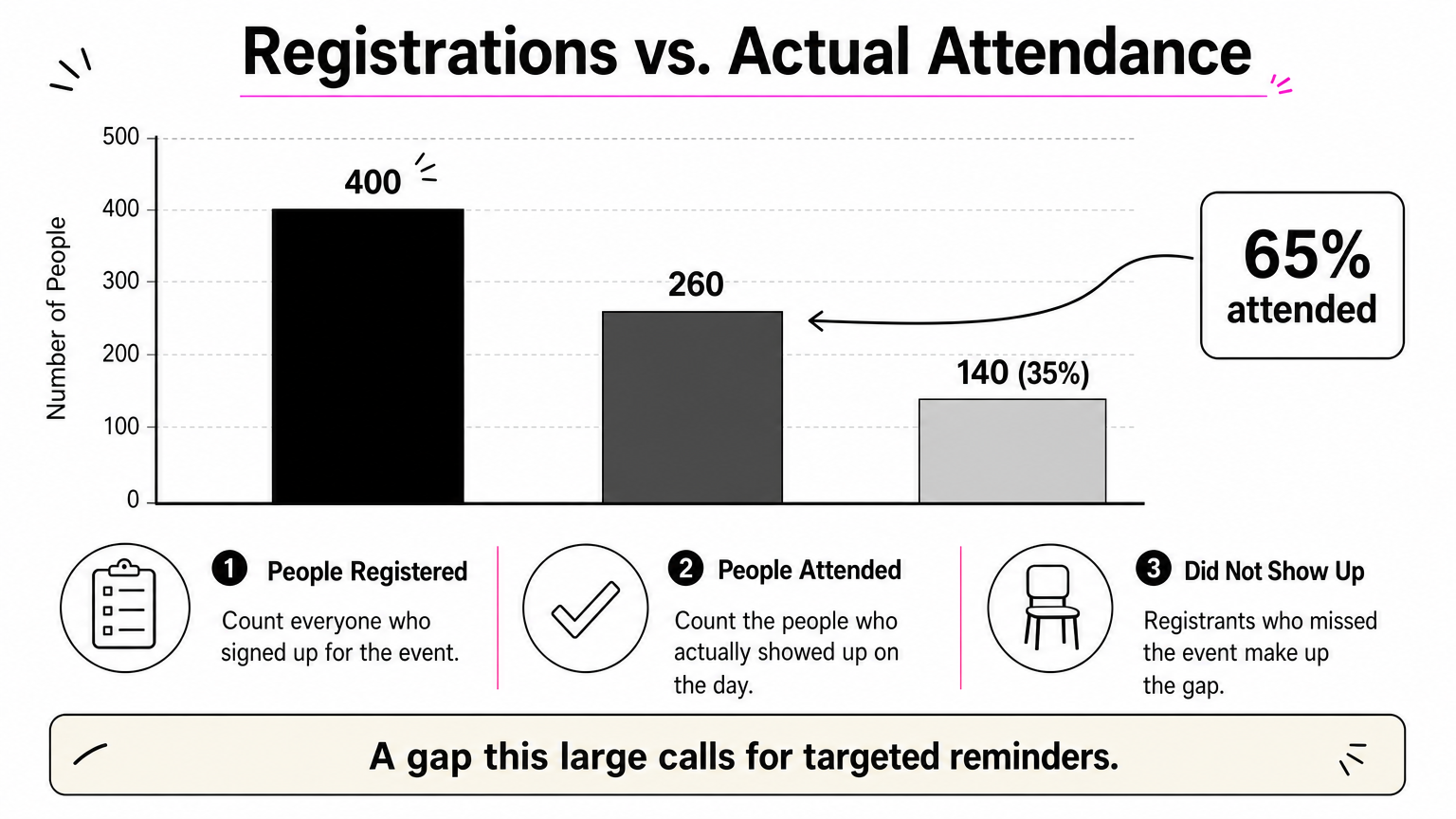
For example, if 400 people register and 260 attend, attendance is 65% and 140 registrants, or 35%, did not show up.
Measure registrations against actual attendance, because the gap tells you where your reminders failed.
A gap that large is a signal to send targeted reminders and to check whether the event page promised something the program didn’t deliver.
Promote before, during, and after
Promotion does not stop when the doors open. Post live updates during the event, then repurpose recordings, clips, and photos afterward to promote the next one.
For B2B events, trade media coverage reaches buyers directly. Platforms such as Exhibition Globe publish press releases and interviews from organizers, which helps your event get found by exhibitors and visitors in the industry.
What to take from these examples
Every example above worked because the organizer picked one goal and built the details around it. Audible made an audio product touchable. Google I/O turned a keynote into a global broadcast. Spotify proved a hiring value with a 50/50 hackathon. The scale differed enormously, but the logic did not.
So pick your goal first, choose the matching event type, set your attendance and lead targets, and plan promotion for before, during, and after the day. Borrow one idea from this list and adapt it to your budget instead of copying the spectacle.
When your event is ready for an audience, share your news with the exhibition and trade show industry through Exhibition Globe, where organizers can publish press releases and founder interviews that reach organizers, exhibitors, and buyers.