The best corporate event production companies are the ones whose size and specialty match your event. Encore fits hotel ballroom meetings. Freeman fits conventions and expo floors. PRG and 4Wall fit technically heavy shows. Hargrove fits branded launches and activations. 360 Destination Group fits events in travel markets. For a local provider near your venue, start with the EG Business Listing and verify every name yourself.
Most lists of production companies cover one city, or are ranked by the company that wrote them. You need to know which firms can handle your scale, which are built for your kind of event, and how to find a crew that will actually show up at your venue. A national name is no use if it cannot serve your city, and a local name is no use if it cannot handle your stage.
Exhibition Globe has covered the events and exhibition trade since 2017, which is why the first pick below is a directory and not a vendor. The list covers seven starting points, then explains how production differs from AV and planning, how to vet providers in your own area, and what budgets look like.
1. EG Business Listing for local providers
What it does
The EG Business Listing is a directory page on Exhibition Globe where visitors find local businesses, service providers, jobs, services and venues in the events trade. It is not a production company and it will not produce your event. Use it to build a first shortlist of nearby producers, AV suppliers and venues before you request quotes.
Companies add their own listings, so the directory shows who chose to be visible, not who passed an audit. That makes it good for discovery and weak as proof of quality. Treat each listing as a lead to check.
A directory gets you names. Your own vetting decides who you hire.
Who it suits
It works best when no national brand obviously fits, or when you want a local team that knows your venue. It also suits event vendors who want to be found.
- Buyers running a first corporate event in a market they do not know well
- Small teams that want a local producer instead of a national account
- Planners who need a venue, stage builder or AV supplier in one search
- Production companies that want a listing in front of event buyers
What to ask before you hire
Once you find a listing, run the same checks you would run on any vendor. Confirm the company still operates and ask for two recent events similar to yours. Request a certificate of insurance and one reference you can call. If a listing offers none of this, move on to the next name.
2. Freeman for conventions and expo floors
What it does
Freeman is one of the largest exhibition and corporate event production organizations in the world. It is known for heavy labor and logistics capability, strong convention and expo support, and a global footprint.
That scale matters when your event is more than a stage. If you are moving materials onto a show floor, coordinating labor across a convention center, or supporting events in several countries, a firm built for infrastructure is the safer choice.
Pick Freeman when the hard part of your event is logistics, not lighting.
Who it suits
Freeman fits large conventions, trade shows and global corporate events. It is usually the wrong tool for an 80-person offsite in one room, where its scale adds cost and layers you do not need.
- Multi-day conventions with a show floor
- Corporate events that run in several regions
- Programs where labor coordination is the main risk
What to ask before you hire
Ask who your day-to-day contact will be and whether they have worked in your specific venue. Ask how labor is scheduled and billed, since labor is where large-venue budgets drift. Request a minimum project size, so you do not discover it after you have started planning.
3. PRG for technically complex shows
What it does
PRG, short for Production Resource Group, is known for advanced lighting systems, touring-grade video technology and deep engineering expertise. It is also associated with large-scale LED integration and show automation.
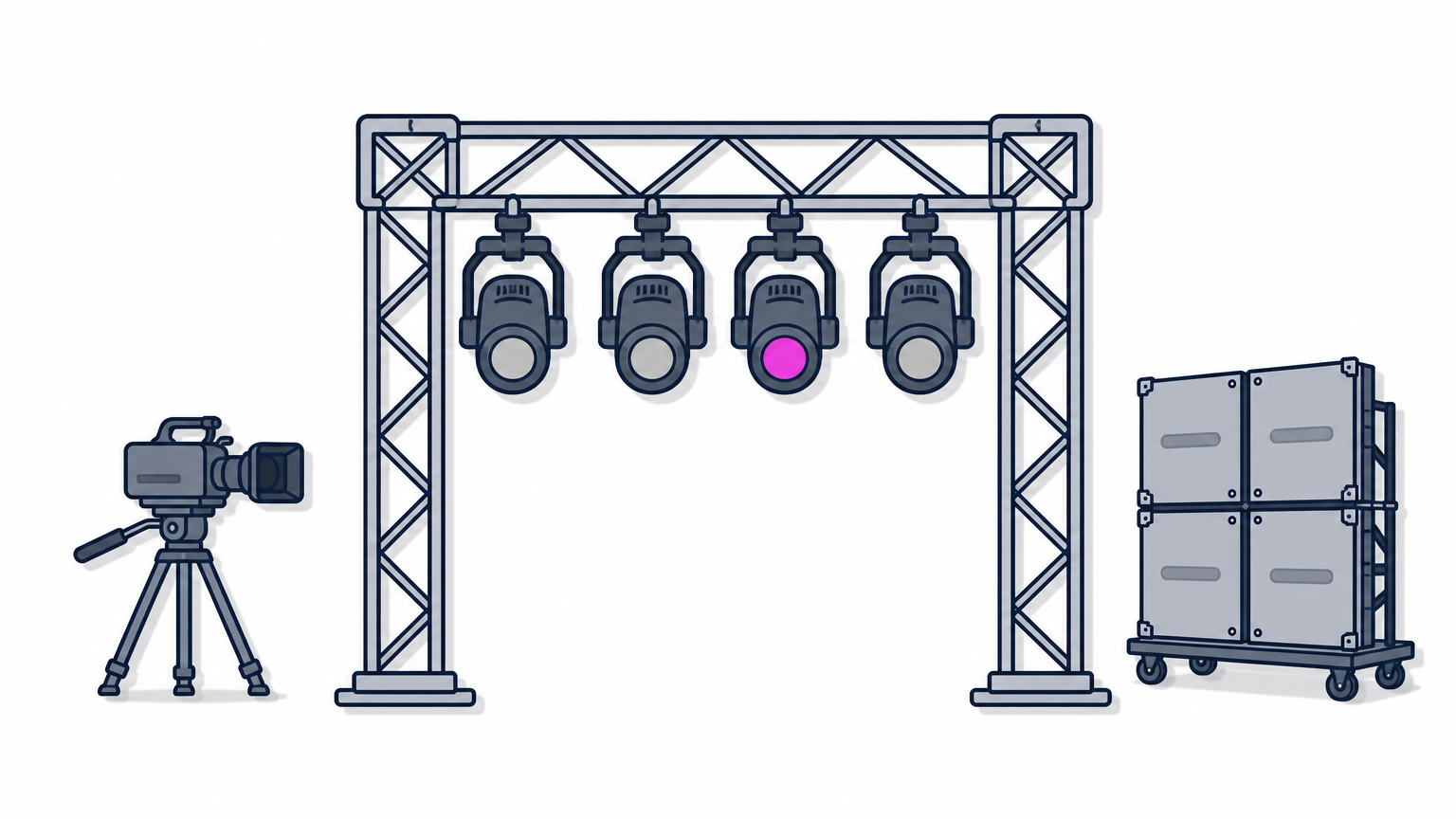
Those strengths suit events where production is the point. A keynote with moving scenic pieces, a launch staged like a concert, or a broadcast-style show with camera-ready lighting all rely on engineering, not just equipment.
Who it suits
PRG fits shows in which technical complexity is the centerpiece. It is overkill for a podium, a screen and two microphones.
- Product launches with automation or heavy video content
- Executive summits that will be filmed or streamed
- Multi-day shows with several technical departments
What to ask before you hire
Ask who will design the show and who will operate it on site. Ask for pre-visualization so you see the stage before load-in. Then press on redundancy: spare video processors, backup audio paths and power plans for anything show-critical.
For a complex show, ask what fails and what takes over, before you ask what it costs.
4. Encore for hotel-based meetings
What it does
Encore operates inside many major hotel venues nationwide, which makes it a common choice for ballroom-based corporate meetings. It is often strong with standardized general session and breakout packages.
You may meet Encore whether or not you went looking for it, because many hotels use an in-house AV partner. Its advantage is consistency: the same package structure across properties, and staff who already know the room.
Who it suits
Encore fits recurring conference programs and hotel meetings where speed and predictability beat custom design. It is less natural for a heavily scenic or branded build.
- Annual sales meetings held in hotels
- Programs that rotate between properties
- Planners with little time and a clear room setup
What to ask before you hire
Ask the venue whether you may bring an outside vendor, and whether it charges an outside-vendor fee. Get an itemized quote from the in-house provider and a competing quote from an independent producer. Compare them line by line, including labor minimums and power or rigging charges.
In a hotel, the in-house quote is a starting point, not the only option.
5. 4Wall Entertainment for large AV inventory
What it does
4Wall Entertainment is known for a large inventory of AV equipment, lighting rigs and LED displays. It also offers CAD drawings, pre-visualization and project management, so planners can see the layout before the event.
Experience with touring productions helps in high-pressure environments. Tight load-in windows and fast changeovers are normal in that work.
Who it suits
It fits large conventions, trade shows and corporate programs that need precision and scale. Planners who want drawings and renderings before they approve a design will value its process.
- Events that need a lot of LED or lighting hardware
- Teams that want CAD plans signed off in advance
- Programs with tight load-in and strike schedules
What to ask before you hire
Ask which location would serve your venue and where the equipment would ship from, since freight affects the quote. Confirm what the drawings and previsualization include in the base price. Ask who runs the show on site and how many technicians are assigned to your room.
A good quote shows you the stage on a drawing before it shows you a total.
6. Hargrove for branded experiences
What it does
Hargrove is recognized for immersive fabrication and experiential brand environments. It is frequently chosen for launches, activations and highly designed corporate experiences where the physical space carries the message.
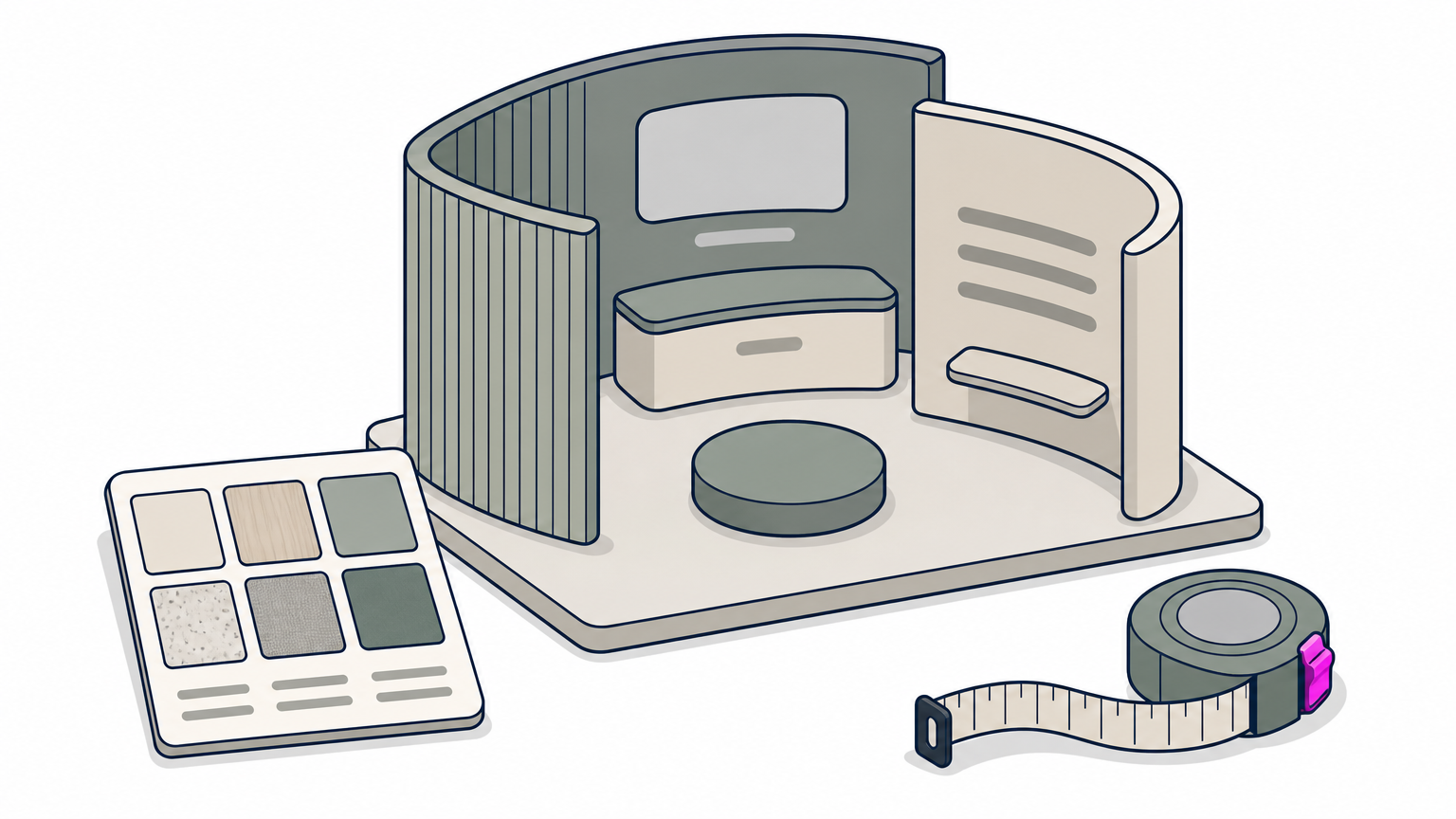
This is a different job from running audio and screens. A fabricated environment is designed, built, shipped, installed and removed, so the process has more steps and a longer timeline.
Who it suits
Hargrove fits product launches, customer events and brand activations where the room itself is the message. It is a poor match when all you need is reliable sound and a screen.
- Launches with a custom set or theme
- Customer events built around a branded environment
- Activations with several designed zones
What to ask before you hire
Ask what is built in-house and what is subcontracted. Confirm the lead time for builds and how many design revisions are included. Ask what happens to scenic pieces after the event, because storage and reuse can save money on a recurring program.
The more custom the build, the earlier you should sign the contract.
7. 360 Destination Group for destination events
What it does
360 Destination Group blends destination management with production services. For companies hosting events in major travel markets, that means local logistics and production can sit under one contract.
The value is local knowledge. A destination partner already knows which venues work, which suppliers are reliable and how transport and permissions run, which a visiting planner usually has to learn the hard way.
Who it suits
It suits incentive trips, retreats and conferences held away from your home base. It is less relevant when your event is in your own city and you already have trusted vendors.
- Out-of-town conferences and leadership retreats
- Incentive programs that combine travel and a main event
- Teams that want one point of contact for ground services
What to ask before you hire
Ask which services the company delivers itself and which it subcontracts. Request the markup on ground services and decide whether you want one contract or separate ones. Ask for a recent event in your destination, not just in the company’s strongest market.
With a destination partner, the question is who actually does the work on the ground.
Production company, AV vendor, or planner: which you need
How the three roles differ
A production company designs and runs the technical show. An AV vendor supplies equipment and technicians. An event planner manages logistics. Hiring the wrong one is the most common early mistake, because the three overlap in conversation and not in contract.
| Role | What it handles | Best for |
|---|---|---|
| AV vendor | Sound, projectors, microphones, basic ballroom setup | Internal meetings with one room |
| Event planner | Venue, catering, schedules, guest experience, vendor coordination | Logistics-heavy events |
| Production company | Staging, lighting, LED, scenic builds, rehearsals, show control | Brand-defining or executive events |
Most planners do not own production equipment, and most AV vendors do not design scenic environments. Each is good at its own job.
When a production company is worth it
Hire a production company when executives, press, investors or cameras will be in the room, or when your event has several rooms that must work together. Choose an AV vendor when you need a podium, a screen and clean audio in one room.
If a technical failure would embarrass your executives, you want production, not just rented gear.
How to find reputable providers in your own area
Start with venues, planners and trade groups
Ask your venue for its preferred or approved vendor list, since those companies already know the loading dock, power and rules. Then ask local event planners who they call. Local chapters of groups such as Meeting Professionals International and the International Live Events Association are another source of names.
When you search online, search around the venue’s location, not your office. The crew has to work where the event happens.
Vet a shortlist with five checks
Narrow to three companies and run each one through the same checks.
- Do they own their inventory or broker it from others?
- Can they show two recent events at your scale and type?
- Will they provide a certificate of insurance?
- Who calls the show on site, and will you meet that person beforehand?
- What is the backup plan for show-critical systems?
A company that answers all five clearly is rarely a risky hire. One that dodges the redundancy question usually has none.
When a small local company is the better pick
Small firms often win on direct access and flexibility. You talk to the person who will run your event, and last-minute changes are easier to absorb. That suits single-room events, galas and mid-size meetings.
The limit is depth. A small team may have little backup gear and few extra technicians. Ask what happens if a unit fails mid-show, and whether they can borrow equipment from a partner.
Small is fine for a single room. Ask about backup gear before you trust it with a stage.
What corporate event production costs
Typical budget tiers
Production costs vary with audience size, scenic scope, labor, venue complexity and technical integration. These are rough planning ranges for professionally produced events, not quotes.
| Budget | What it usually covers |
|---|---|
| $25,000 to $75,000 | Hotel general session, podium and screens, clean audio, basic lighting |
| $75,000 to $175,000 | Branded staging, moderate LED walls, multi-room breakouts |
| $175,000 to $350,000 | Scenic environments, large-format LED, show automation, multi-day conferences |
| $350,000 and up | Arena-level builds, national launches, complex rigging, broadcast integration |
A worked example: comparing two quotes
Say you plan a 400-person conference with a branded main stage, a moderate LED wall and three breakout rooms. That sits in the $75,000 to $175,000 tier. You receive two quotes. Quote A is $138,000 with labor and rigging included. Quote B is $112,000 for equipment, plus $18,000 for labor and $9,000 for rigging.
Add up Quote B and it comes to $139,000, which is $1,000 more than Quote A. The cheaper headline price was not cheaper. Always normalize quotes to the same scope before you compare.
What drives the price
LED video is one of the biggest cost drivers in modern production, so ask for the wall size and processing on its own line. Labor, load-in time and venue rules come next. Book early: for a major conference, three to six months is a sensible window, and smaller meetings often need six to ten weeks. Rush bookings cost more and narrow your choice.
Planners are a separate cost. They commonly charge a flat fee, an hourly rate or a percentage of the budget, so confirm which before you sign.
Compare quotes by scope first and price second.
Where to start your search
Pick the provider type that matches your event: a logistics giant for show floors, an engineering-led firm for complex shows, an in-house hotel partner for ballrooms, a fabrication specialist for branded environments, or a destination partner when you are traveling. Then verify each shortlisted company with the same five checks, and compare quotes by scope.
For a local provider, do not rely on any single list, including this one. Combine your venue’s preferred vendors, planner recommendations and directory leads, then ask for recent work, insurance and a clear backup plan.
If you want a place to begin that shortlist, start on Exhibition Globe, where you can find the EG Business Listing, event industry news and providers across the trade.